
Review · MEGALITHIC TEMPLE TOURS
Malta Prehistoric Temples Tour
Malta’s oldest stones still ask big questions. This half-day outing links Ghar Dalam Cave with the UNESCO-listed Hagar Qim and Mnajdra Temples, giving you a useful introduction to the island’s prehistoric past without requiring a full day. I especially like that entry fees and hotel transport are included, and that guides such as Mario and Mark have brought strong historical knowledge to the outing.
The main caution is time. The tour lasts roughly four to five hours, but hotel pickups, bus changes, and road transfers can eat into your visiting time. Groups may reach 40 people, and a few departures have suffered from late buses or unclear pickup arrangements.
In This Review
- Key points to know before booking
- Why Malta’s prehistoric sites matter
- Ghar Dalam Cave: Malta’s earliest chapter
- Hagar Qim: giant stones and uncertain purpose
- Mnajdra: where stone meets the sun
- Guides can turn stones into a story
- Transport, pickups, and the real length of the morning
- Is $59.91 a fair price?
- Who will enjoy this tour most?
- Should you book the Malta Prehistoric Temples Tour?
- FAQ
- How long does the Malta Prehistoric Temples Tour last?
- What sites does the tour visit?
- Are entrance fees included?
- Is hotel pickup available?
- What time does the tour start?
- Is the tour offered every day?
- Is food included?
- What language is the tour offered in?
- What happens if I need to cancel?
Key points to know before booking
- Three major prehistoric sites: Visit Ghar Dalam Cave, Hagar Qim, and Mnajdra in one morning.
- Temples older than the pyramids: Hagar Qim and Mnajdra date to Malta’s megalithic temple period, roughly 5,500 years ago.
- Hotel pickup is included: Service covers listed areas from Cirkewwa and Mellieha to Valletta, Attard, Sliema, St. Julian’s, Bugibba, and Qawra.
- A strong guide makes the difference: Mario, Mark, and Miriam have received especially warm praise for clear explanations and historical insight.
- Allow for transport delays: Some departures involve changing buses, and the actual time at the sites can feel short.
- Best for history fans: You will get the most from this tour if ancient cultures, archaeology, and astronomy interest you.
Why Malta’s prehistoric sites matter
Malta is not simply a sunny Mediterranean stop with handsome harbors and old military walls. Long before the Knights, Romans, or Phoenicians arrived, people built large limestone temples across the islands.
That fact gives this tour its real appeal. Hagar Qim and Mnajdra are among the oldest religious structures on earth, dating to a period before the Egyptian pyramids and Stonehenge. You are looking at stonework created thousands of years before written records could explain who built it or exactly how the ceremonies worked.
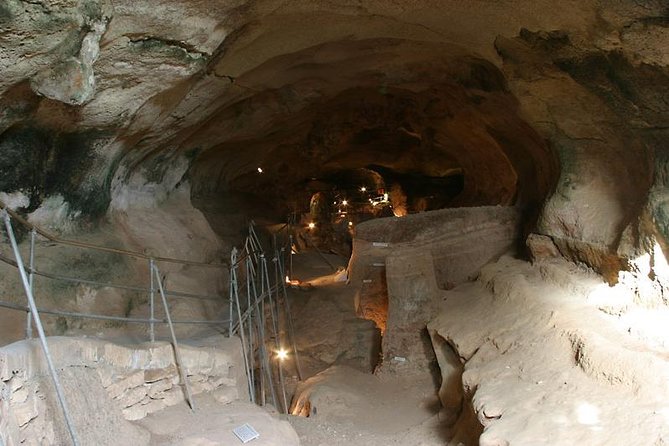
The tour also begins at Ghar Dalam Cave, where the story reaches farther back. Archaeologists found animal bones in the cave and traces of human activity dating back about 7,400 years. The layered deposits offer a physical record of changing climate, animals, sea levels, and settlement.
I like the way the three stops complement each other. Ghar Dalam is an archaeological record stored underground. Hagar Qim shows the scale and mystery of temple construction. Mnajdra adds a link between architecture and the movement of the sun.
More temple visits:
- Gozo Full Day visiting Ggantija Temples, Salt Pans, Dwejra
★ 3.0 · 53 reviews - Discovering Gozo Full Day incl. Guide, Train & Ggantija Temples
★ 3.0 · 45 reviews - Southern Malta: Blue Grotto, Hagar Qim, and Marsaxlokk Tour
★ 4.7 · 35 reviews
Ghar Dalam Cave: Malta’s earliest chapter
The morning begins at Ghar Dalam, known as the Cave of Darkness. You spend about an hour visiting the cave and museum, with admission included.
The cave is important because archaeologists studied its layers one by one. Each layer can tell a different part of Malta’s early story. Animal remains provide evidence of creatures that lived on the island, while later deposits show the arrival and activity of early human settlers.
You can expect a mix of cave viewing, museum displays, and explanation from the guide. The exhibits include animal bones in cases, and some remains can still be seen in the cave’s exposed deposits. That makes the site more than a simple walk through a dark opening. It shows how archaeologists build a picture of the past from small pieces.
Ghar Dalam may be the less dramatic stop visually. The temples have huge limestone blocks and open views, while the cave depends on displays and explanation. Still, I would not skip it. Without the cave, the temple visits can feel like isolated monuments rather than part of a longer human story.
The nearby garden adds a modest outdoor element. It contains indigenous species and trees, helping you see some of the plant life connected with Malta’s natural setting.
One useful expectation check: the cave is fascinating for people who enjoy archaeology, but it may feel average if you mainly want monumental ruins. The strongest part is the information about the cave layers and early settlement, so stay close enough to hear the commentary.
Hagar Qim: giant stones and uncertain purpose
After Ghar Dalam, the coach continues to the Hagar Qim and Mnajdra Archaeological Park on Malta’s southern edge. Hagar Qim receives about an hour of the scheduled time.
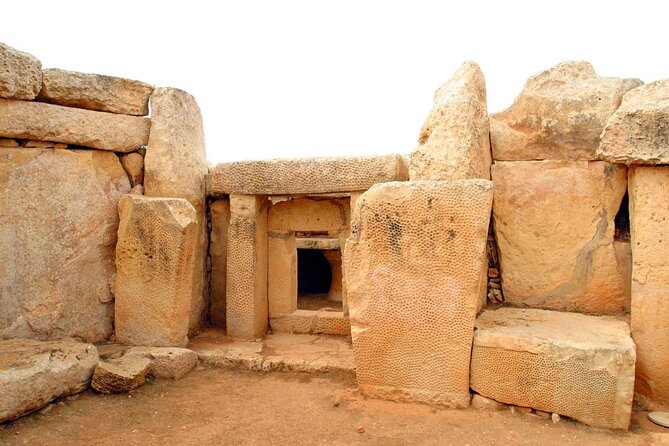
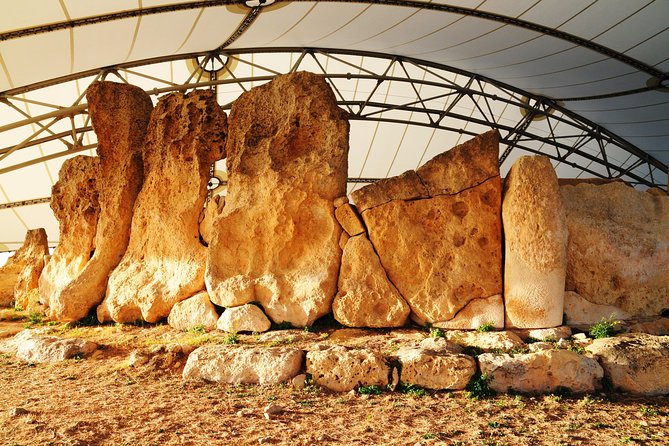
Hagar Qim is a megalithic temple complex built from enormous limestone blocks. The scale is the first thing you notice. Even with restoration and protection, the stones make it clear that this was a serious building project requiring planning, labor, and a shared belief system.
The exact purpose of every space remains uncertain. The site is commonly connected with ritual activity, but the people who built it left no written explanation. That is where a good guide helps. Mario has been praised for bringing Malta’s early history together, while Mark has been especially effective at explaining why the temples matter and then giving you room to look around.
You will likely receive background from the guide before exploring on your own. That arrangement works well here. A short explanation gives you a framework, and then you can focus on the curves, doorways, slabs, and surviving details without having someone talk over every photograph.
The open setting is another part of Hagar Qim’s appeal. You are not looking at a monument hidden in a city street. The site sits high on a hill near the southern edge of Malta, and the setting helps you understand why ancient builders may have chosen the location.
There is also a practical downside. One morning visit can feel rushed, especially if you want time for the museum, gift shop, toilets, and photographs. Some people have found that the temple presentation feels more reconstructed than expected. If you want untouched ruins with no modern protection or restoration, adjust your expectations.
Mnajdra: where stone meets the sun
Mnajdra is a short distance from Hagar Qim, and the tour gives it about an hour as well. It is a separate temple complex, not simply another room within Hagar Qim.
Mnajdra is especially interesting for anyone drawn to astronomy. Parts of the temple align with the equinoxes and solstices, linking the building to the seasonal movement of the sun. The alignment does not solve every mystery, but it shows that the builders paid close attention to the sky and the calendar.
That connection gives the site a different character from Ghar Dalam. At the cave, you think about layers beneath your feet. At Mnajdra, you look outward and upward, considering how people thousands of years ago tracked the year.
The limestone architecture is the star here. Look at the arrangement of the stones, the curved forms, and the way the temple spaces are organized. You do not need specialist training to enjoy it, but the guide’s explanation can help you notice details that might otherwise pass quickly.
The tour allows independent exploration after the commentary. That is useful because Mnajdra rewards a slower look, yet the schedule may not provide much spare time. If you want to sketch, photograph every angle, or study the museum displays, you may have to choose between those activities.
The walk between areas is manageable for anyone with a moderate level of fitness, but it is still worth wearing sensible shoes. The outing includes outdoor archaeological sites, and the time on foot is not limited to stepping off the coach and entering a building.
More trips around Northern Malta:
- Mellieha: Popeye Village Entry Ticket
★ 4.6 · 2,070 reviews - Mellieha: Popeye Village Malta Filmset Entry Ticket
★ 4.6 · 1,802 reviews - Comino & Gozo: Blue & Crystal Lagoons Cruise with Sea Caves
★ 4.8 · 1,536 reviews - Malta National Aquarium Entrance Ticket
★ 4.0 · 643 reviews
Guides can turn stones into a story
The quality of this tour depends heavily on the guide. The best commentary does more than identify an old wall. It connects the cave, temples, climate changes, early settlers, ritual activity, and solar alignments into one clear story.
Mario has received repeated praise for his friendly delivery and background as a former history teacher. Mark has also been singled out for pacing the day well, explaining the importance of each site, and allowing time for independent viewing. Miriam has been appreciated for clear information, including on a multilingual departure.
The strongest guides appear to balance explanation with quiet time. That matters because prehistoric sites can become tiring if every minute is filled with talking. You want enough context to understand what you are seeing, then a chance to look, think, and take photographs.
The experience is not always consistent. One guide was difficult for an English speaker to follow, and another relied on repeated phrases that became distracting. Headphone commentary was also unavailable on at least one departure, so your position in the group may affect how clearly you hear.
A multilingual bus can create another complication. Separate commentary may be provided for English and another language, but the arrangement is not always as easy to follow as a single-language tour. If English is your only tour language, listen carefully at the start and remain near the guide during site explanations.
Transport, pickups, and the real length of the morning
Pickup is offered from hotels or the nearest point in several parts of Malta. Listed times begin at 8:30 a.m. in Cirkewwa and Attard, with later collections in Mellieha, Xemxija, Golden Bay, St. Paul’s Bay, Bugibba, Qawra, St. Julian’s, Sliema, and Valletta.
The precise pickup schedule matters because the tour operates across much of the island. A morning departure from the north can include a long ride before the first stop, while a pickup near Valletta or Sliema may involve waiting for other passengers.
Several departures have included a transfer from one bus to another. This can work smoothly, and some people appreciated switching to a smaller vehicle for the return journey. The problem is communication. A coach may wait outside a hotel without clear signage, or passengers may be asked to move to another location and wait without much explanation.
For that reason, arrive early at the stated pickup point and confirm the vehicle with the driver. Keep your phone available in case the operator sends a delay message. A few departures have involved delays of 30 to 45 minutes, while one reported missed pickup led to a refund dispute.
Once underway, the vehicle is generally described as comfortable. Water may be available for purchase, but food and drinks are not included. There is no toilet on the bus, so use facilities when you can at the archaeological parks.
The return normally goes to your original departure point. The whole outing is advertised at four to five hours, but actual time at the three sites may feel closer to two hours on some departures. That is the central tradeoff: the tour is convenient, but transportation and waiting can take a large share of the morning.
Is $59.91 a fair price?
At $59.91 per person, this tour offers reasonable value if you want transport, admission, and a guide in one package. Entry to Ghar Dalam, Hagar Qim, and Mnajdra is included, along with local taxes and live commentary on board.
You are paying for convenience as much as for sightseeing. Malta’s prehistoric sites are spread apart, and a shared vehicle removes the need to arrange separate transport. Hotel pickup is particularly useful if you are staying outside Valletta or do not want to work out local connections.
The value drops if your main goal is long, quiet time at each temple. You can spend a substantial part of the morning on collection routes or changing buses. An independent visit might suit you better if you already have a rental car, prefer a slow pace, or want to spend extra time at the museums and gift shops.
For a first visit, I think the price is fair when the transport runs on time and the guide is strong. The included admission fees prevent small costs from piling up, and the half-day format leaves space for another activity later.
Who will enjoy this tour most?
You should consider booking if you like ancient architecture, archaeology, or astronomy. It is also a smart choice if you have only a few days in Malta and want to cover three major prehistoric locations in one morning.
Families with older children may find the temples memorable, especially if the guide explains the solar alignments in simple terms. Young children may have less patience for the cave displays and long transport sections, though the short format helps.
The tour suits people who want structure. You meet the driver, follow a prepared route, hear background from a guide, and return to the original pickup area. You do not need to plan tickets or coordinate transport between sites.
It is less suitable for anyone who dislikes group tours or needs a guaranteed slow pace. A maximum group size of 40 is fairly large, and crowded viewing can make it hard to hear or get a clear photograph. Anyone with limited mobility should also ask about current access arrangements before booking, since the tour calls for moderate physical fitness and includes walking between temple areas.
The tour runs every Saturday, so your Malta schedule needs to fit that day. Free cancellation is available up to 24 hours before the start time. Changes or cancellations made inside that period are not accepted for a refund, and a minimum number of participants is required for the departure.
Should you book the Malta Prehistoric Temples Tour?
Book it if you want a practical introduction to Malta’s oldest sites and value included transport and admission more than complete freedom. Ghar Dalam gives the morning depth, while Hagar Qim and Mnajdra supply the memorable stonework and solar connections.
I would book with two expectations in mind: pickup may take longer than planned, and your time at each site may feel tight. Confirm your meeting point, arrive early, wear comfortable shoes, and stay near the guide during commentary.
If you can join a departure led by Mario or Mark, the historical storytelling may make a real difference. For a first look at Malta’s prehistoric world, this is a worthwhile half-day, provided you accept the occasional group-tour rough edges.
FAQ
How long does the Malta Prehistoric Temples Tour last?
The tour lasts approximately four to five hours, including hotel pickups, transportation, visits, and the return journey.
What sites does the tour visit?
The tour visits Ghar Dalam Cave and Museum, Hagar Qim Temples, and Mnajdra Temples.
Are entrance fees included?
Yes. Admission to Ghar Dalam, Hagar Qim, and Mnajdra is included in the tour price.
Is hotel pickup available?
Yes. Pickup and drop-off are available at hotels or the nearest meeting point in listed areas across Malta.
What time does the tour start?
The first listed pickup is at 8:30 a.m. Pickup times vary by area, with later collections in places such as Mellieha, Bugibba, Qawra, and St. Julian’s.
Is the tour offered every day?
No. The tour is available every Saturday.
Is food included?
No. Food and drinks are not included in the tour price. Water may be available for purchase on the bus.
What language is the tour offered in?
The tour is offered in English. Live commentary is provided on board, though some departures may include commentary in more than one language.
What happens if I need to cancel?
You can cancel at least 24 hours before the local start time for a full refund. Cancellations or changes made less than 24 hours before the start time are not accepted for a refund.
Just added in Mellieha
- Small Group Tour of Gozo with Victoria and Ggantija Temples★ 5.0 · 8 reviews
- Private Tour in Valletta and Mdina★ 5.0 · 1 review
- Malta Private Full-Day Sightseeing Tour with Pickup★ 5.0 · 10 reviews
- Rabat Mdina and San Anton Gardens Group Tour with St. Paul’s Catacombs★ 3.5 · 16 reviews
- North Malta Quad Bike Tour with Land or Sea Views and Swimming★ 5.0 · 7 reviews
- Full-Day Private Malta Highlights Tour with Pick Up★ 5.0 · 1 review
- Malta: Private Tour with Video Guides & Driver (6 Hours)★ 4.5 · 35 reviews
- Valletta, Mosta and Mdina Night Tour★ 3.5 · 15 reviews
Megalithic Temple Tours, compared.

Gozo Full-Day Tour with Guide, Temples, & Train
Read our review →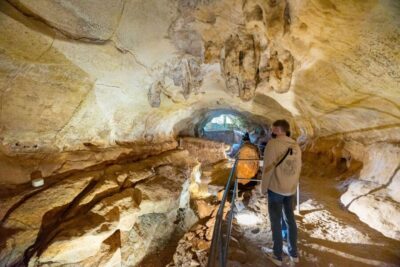

Prehistoric Temples, Limestone Heritage & Blue Grotto
Read our review →
Gozo Guided Day Trip Incl. Ggantija Temples and Lunch
Read our review →
Gozo Full Day visiting Ggantija Temples, Salt Pans & Dwejra
Read our review →Gozo Full Day visiting Ggantija Temples, Salt Pans, Dwejra
Read our review →
Discovering Gozo Full Day incl. Guide, Train & Ggantija Temples
Read our review →Browse the lists this tour appears in