
Review · THREE CITIES TOURS
From Cospicua: Senglea, Bormla, and Birgu Walking Tour
Malta’s best stories are often found on foot. This $24 walking tour introduces you to Senglea, Bormla, and Birgu, three old harbor cities shaped by the Knights of Malta, British naval power, war, and everyday Maltese life. I especially like the waterfront route lined with yachts and the visit to Birgu’s Collacchio district, where narrow streets and knight-built palaces give the tour its strongest sense of place.
I also like the guides’ easy, personal style. Karl, Chris, Christian, Lorraine, and others are praised for mixing solid history with humor, local anecdotes, and photographs. The main consideration is that Birgu receives the most attention, while Senglea and Bormla are covered more briefly. You also need to pay separately if you want to return to Valletta by dghajsa boat.
In This Review
- Key points to know before booking
- Why these three harbor cities matter
- Starting beside the ferry in Cospicua
- Crossing toward Birgu’s massive walls
- Inside Birgu’s Collacchio district
- The war story behind Birgu’s beauty
- From the Knights to the British Navy
- The guides are the tour’s strongest feature
- Is $24 a fair price?
- Who will enjoy this walking tour?
- Practical tips for a better morning
- Should you book the Three Cities walk?
- FAQ
- Where does the tour begin?
- How long does the walking tour last?
- Which languages are available?
- Does the tour visit all three cities?
- What is Birgu also called?
- What is the Collacchio area?
- Is the dghajsa ride included?
- Is hotel pickup included?
- What should I bring?
Key points to know before booking
- Birgu gets the longest visit: Expect about 75 minutes in Vittoriosa, with special attention to the Collacchio area, palaces, churches, and fortifications.
- The meeting point is simple: Meet at the exact unloading place of the Valletta to Three Cities ferry in Cospicua, immediately after stepping off the boat.
- The guides make the difference: Karl, Chris, Christian, and Lorraine are repeatedly praised for clear English, humor, local stories, and strong command of Maltese history.
- The route connects several eras: You hear about the Knights of Malta, the British Royal Navy, drydocks, and the heavy bombing of Birgu during the Second World War.
- Wear proper walking shoes: You will spend 2.5 hours on foot, including waterfront paths, old streets, and fortification areas.
- The dghajsa is optional: The tour finishes by St. Laurence Church in Birgu, where you can arrange a traditional boat ride toward Valletta, but that ride is not included.
Why these three harbor cities matter
The Three Cities sit across the Grand Harbour from Valletta, but they feel different from Malta’s capital. Valletta was planned as a new fortified city after the Great Siege. Senglea, Bormla, and Birgu grew from older harbor settlements and became central to Malta’s military and maritime life.
That distinction matters. In Valletta, the grand streets and major buildings can make Maltese history feel official and polished. Here, the story is closer to the ground. You walk beside harbor walls, through residential lanes, past old palaces, and into areas shaped by shipyards and wartime damage.
The names can also confuse first-time visitors. Bormla is commonly called Cospicua, while Birgu is also called Vittoriosa. Senglea is sometimes known by its older name, Isla. A good guide helps you keep those names straight instead of leaving you to sort them out later.
I like this tour because it does not treat the Three Cities as three separate checklist stops. It explains how the communities connect. The Knights used the harbor for defense and administration. The British later developed naval facilities and drydocks. Local residents lived through the pressure of both military importance and repeated attacks.
More Three Cities tours:
- From Sliema: Valletta and the Three Cities Scenic Cruise
★ 4.3 · 763 reviews - Valletta & Three Cities Harbour Cruise
★ 4.0 · 239 reviews - Malta: 3-City Self-Drive Exploration with GPS Audio Guide
★ 4.4 · 126 reviews
Starting beside the ferry in Cospicua
The tour begins at the Valletta Ferry Service landing in Cospicua. The meeting instruction is precise: meet at the unloading point as you get off the Valletta to Three Cities ferry. That is useful because ferry landings can be busy, and Cospicua has several waterfront areas that could otherwise cause confusion.
The opening portion lasts about 30 minutes. Your guide introduces the setting around Cospicua and the neighboring waterfronts of Senglea and Bormla. This is a gentle start, giving you time to get oriented before the longer walk through Birgu.
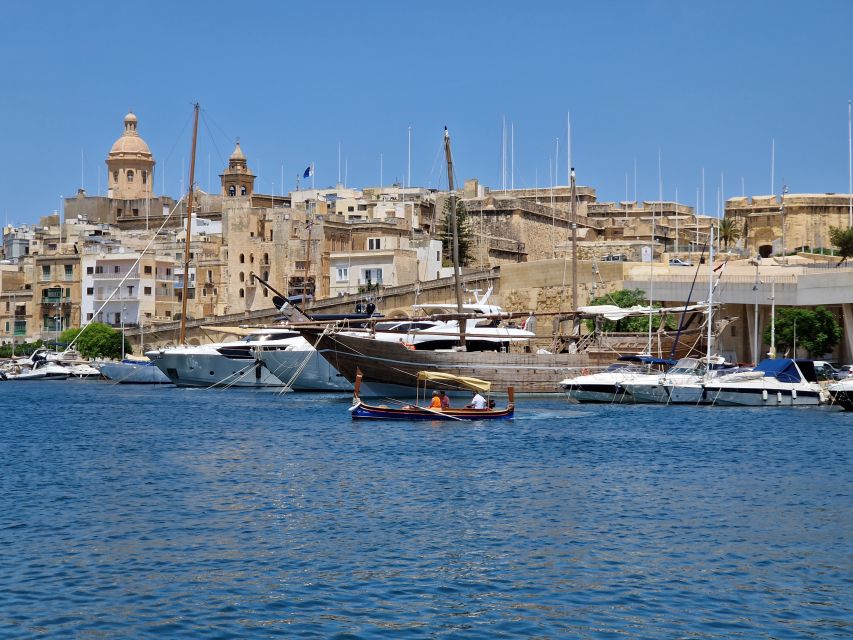
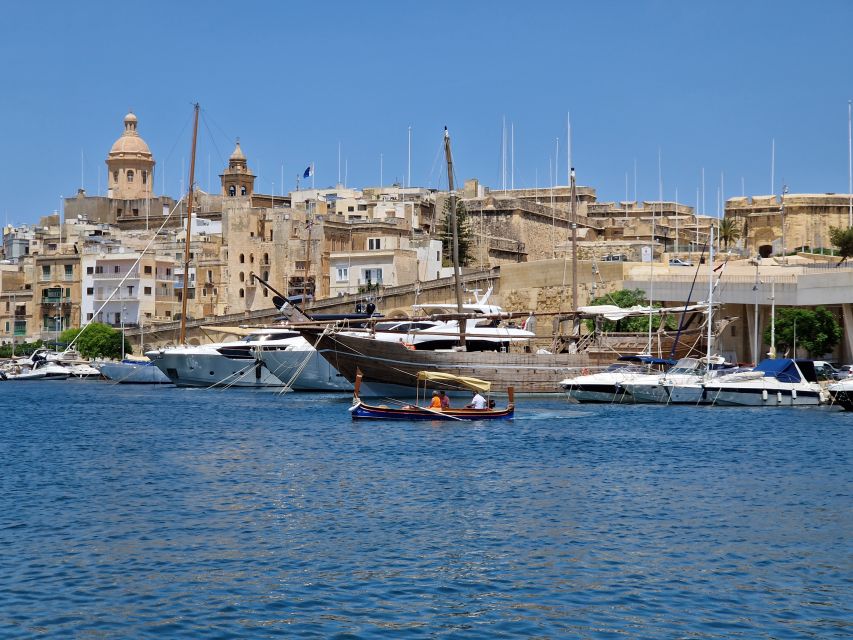
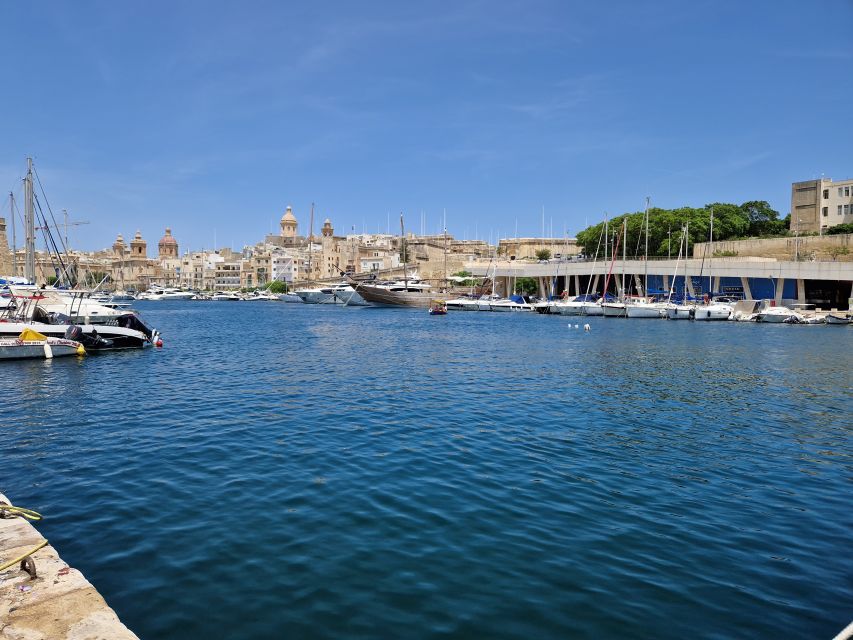
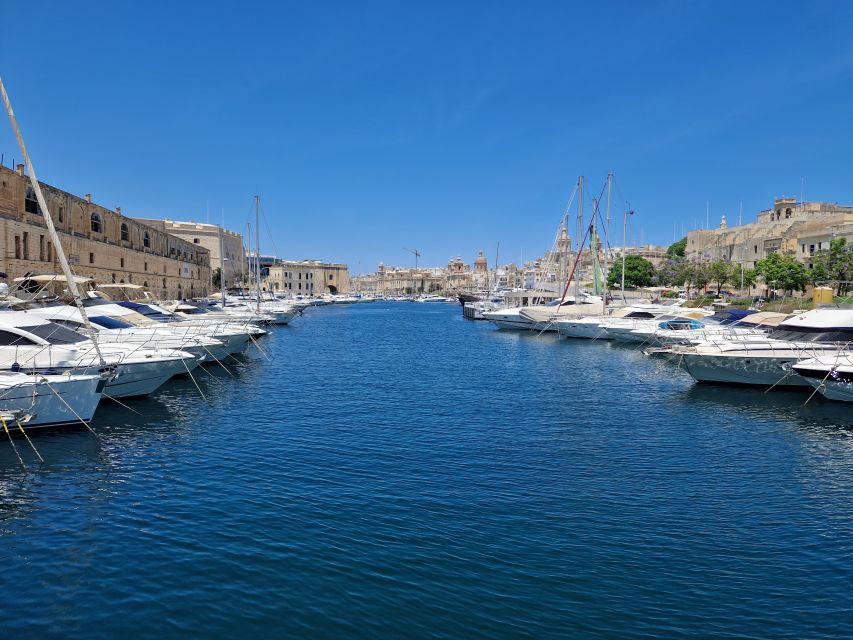
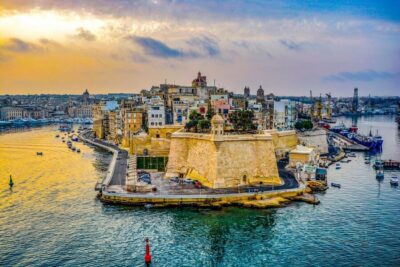
The waterfront is one of the tour’s early pleasures. Yachts line the harbor, while the old walls and fortifications rise behind them. The contrast tells you a lot about present-day Malta: historic defensive cities now share the harbor with leisure boats and modern waterfront life.
This part is less about entering major monuments and more about understanding position. Your guide can point across the water and explain how the cities protected the harbor, where the British Navy operated, and why this area became so important to Malta’s development.
The drawback is simple: if you want a long, detailed visit in each of the three cities, this tour may feel uneven. Cospicua and Senglea provide the setting and views, but Birgu is where the route slows down and the storytelling becomes most detailed.
Crossing toward Birgu’s massive walls
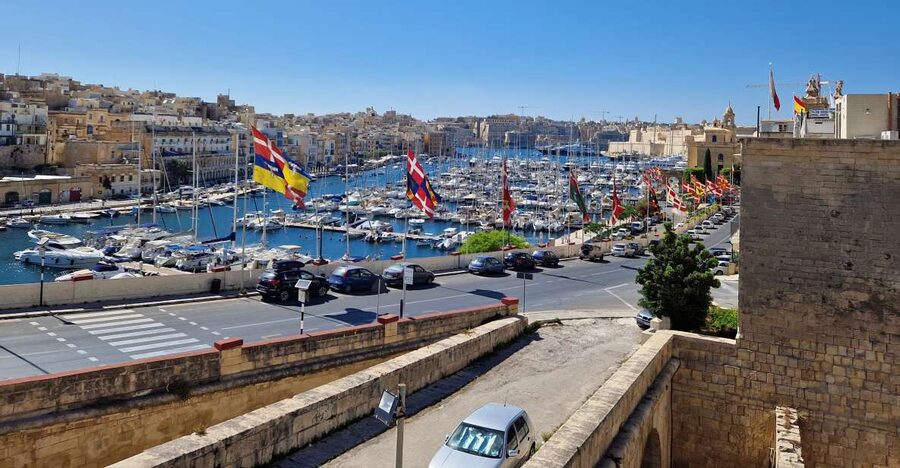
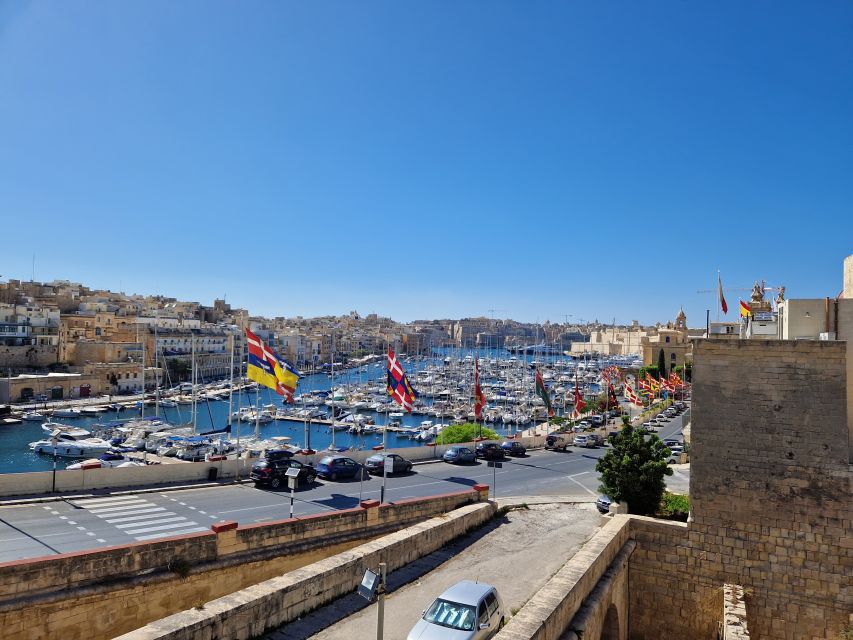
As you approach Birgu, the fortifications become the visual centerpiece. Malta is famous for limestone walls, but the scale here is especially striking when you see the harbor defenses from the water-facing side.
The route includes views of the fortresses that shape Malta’s skyline. This is a good place to pause for photographs, but the walls also give the history some physical weight. A date or battle can seem abstract in a museum. Standing beside defensive stonework makes the military logic much easier to grasp.
The tour includes a viewpoint and photo stop lasting roughly 15 minutes. That pause helps break up the walking and gives you time to look across the harbor. Keep your camera ready, but listen closely too. The guide uses the views to explain how the cities relate to Valletta and to one another.
I would not expect a museum-style presentation or a long interior visit at every landmark. The strength here is the outdoor route and the explanation of what you are seeing. You move through the setting rather than stopping for extended exhibits.
Inside Birgu’s Collacchio district
Birgu, also called Vittoriosa, is the heart of the experience. The tour allows about 75 minutes for a guided walk through the city, with particular attention to the Collacchio area.
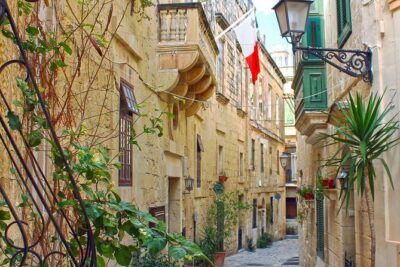
Collacchio is where the route feels most rewarding. Narrow, winding streets lead past historic buildings and palaces linked to the Knights of Malta, who arrived on the islands in 1530. The streets are compact and atmospheric, and the old stone architecture is easier to appreciate when someone explains who lived there and why the area mattered.
I like the way this section connects grand history with small details. The Knights were not only military figures in a textbook. They established homes, institutions, and administrative spaces. Their presence altered the shape of Birgu, and the city still carries that imprint.
Your guide may also point out quirks of local tradition and modern Maltese culture. Several guides are praised for using personal anecdotes and old photographs to connect past events with the streets in front of you. That approach suits Birgu, where a small lane can raise questions about daily life, religion, defense, or trade.
The route is not meant to replace a full day of sightseeing in Birgu. You will see and discuss many important areas, but you may not enter every church or palace. If you want extensive interior visits, check the day’s plans with the guide at the start.
More Walking Tours in Three Cities:
- Three cities walking tour incl. entrance to Inquisitor’s palace
★ 5.0 · 65 reviews - Birgu: 3 Cities Walking Tour With Inquisitors Palace Entry
★ 4.5 · 42 reviews - Private Walking Tour of Vittoriosa /3 Cities
★ 5.0 · 9 reviews - Vittoriosa Three Cities Private Walking Tour
★ 5.0 · 4 reviews
The war story behind Birgu’s beauty
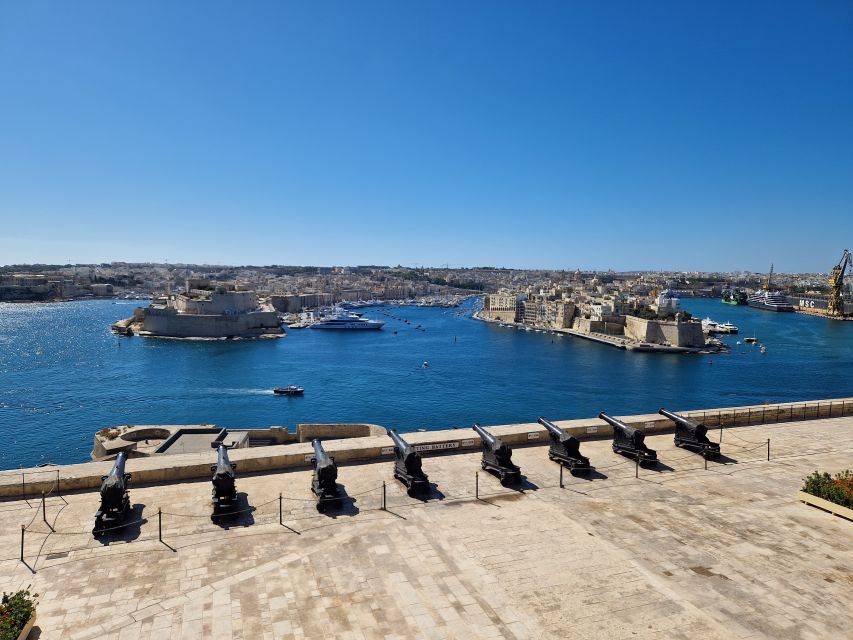
One of the most important parts of the tour is Birgu’s experience during the Second World War. The city was the most heavily bombed area in the Maltese Islands, and your guide explains how residents endured that pressure.
This changes the way you see the old streets. Birgu can look calm and beautifully preserved, with honey-colored stone and quiet lanes. Yet the city’s modern story includes fear, destruction, rebuilding, and survival.
I value this historical layer because it prevents the walk from becoming a simple parade of pretty buildings. Malta’s location made it strategically important, but that importance came at a cost to local communities. The people who lived here were close to naval facilities and military targets, so global events reached their homes directly.
Guides such as Chris, Karl, and Lorraine are repeatedly praised for explaining major events in a clear, human way. The best moments are not just lists of dates. They show how local neighborhoods connected to larger conflicts and how Maltese communities responded.
From the Knights to the British Navy
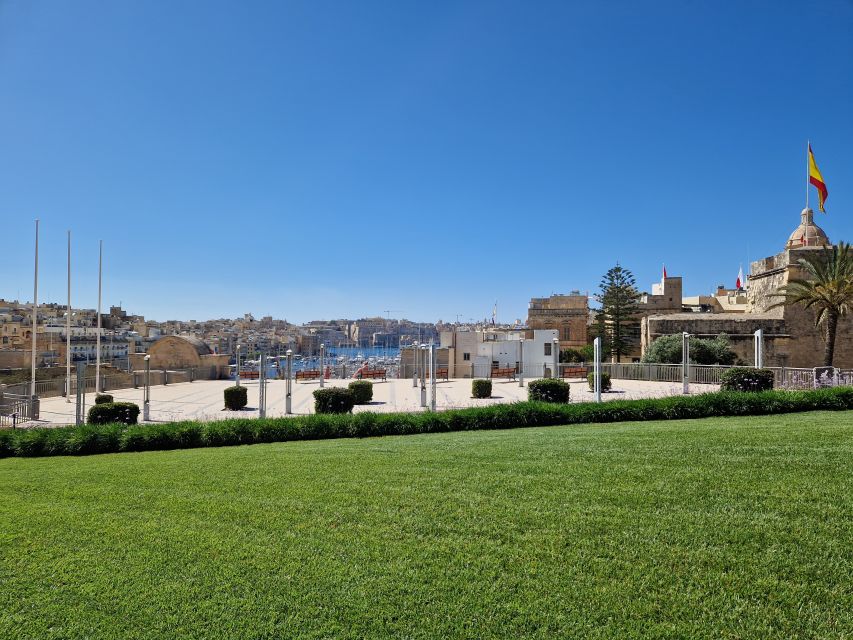
The tour also traces the later role of the British Navy. The Three Cities became important naval centers, with drydocks and the headquarters of the British Royal Navy in the Mediterranean located in the area.
This gives the walk a useful second chapter. The Knights shaped Birgu and the harbor defenses in the sixteenth century. Centuries later, British naval operations brought a different military and industrial purpose to the same waterfront.
You will hear how ship repair, naval administration, and dockyard work affected the cities. The harbor was not only a defensive boundary. It was also a workplace and a source of employment. That helps explain why the Three Cities are more than scenic old towns beside the water.
I recommend paying attention to the transition between these periods. The tour’s real value is the connection between them. You see how one harbor can serve different powers over hundreds of years, while local neighborhoods continue adapting around it.
The guides are the tour’s strongest feature
The rating is 4.9 from 138 reviews, and the praise is unusually consistent. The strongest theme is not simply that the guides know their facts. It is that they explain Malta’s past with energy, humor, and a clear sense of connection to the place.
Karl is frequently described as an excellent storyteller with strong local knowledge and a lively delivery. Chris is praised for answering questions, using personal stories, and making large historical events easy to follow. Lorraine is noted for her passion, clear English, and ability to create a more personal experience in a small group. Christian is also praised for his enthusiasm, humor, and use of actual photographs.
Guide assignments can vary, so you may not meet one particular person. Still, the repeated praise for several guides suggests a strong guiding team rather than one isolated star.
The group size may vary as well. Some departures have been as small as five people, while another group included 10. A small group makes a real difference here. You can ask questions, hear the guide clearly, and stop for a detail without holding up a large crowd.
The pace also earns praise. People describe a good balance between walking and talking, with regular stops and enough time for questions. That makes the tour manageable for many visitors, though you should still bring comfortable shoes as requested.
Is $24 a fair price?
At $24 per person, this is a strong-value introduction to the Three Cities. You are paying for a 2.5-hour guided walk through one of Malta’s most historically important harbor areas, with a live English-speaking guide and several viewpoints that would be easy to pass without context.
The value comes mainly from interpretation. You can walk through Birgu on your own for free, but the fortifications, palaces, naval sites, and wartime damage will not explain themselves. A good guide turns separate sights into one connected story.
The price does not include hotel pickup or drop-off. It also does not include the dghajsa ride back toward Valletta. That is worth noting when you plan your day, but the optional boat ride gives you flexibility. You can decide at the end if you want the traditional harbor crossing or prefer another way onward.
Free cancellation up to 24 hours before the start and reserve-now, pay-later booking also make it easier to fit the tour into a changeable Malta schedule.
Who will enjoy this walking tour?
I would recommend it most strongly if you are staying in Valletta or nearby and want to understand what lies across the harbor. It works especially well early in your Malta visit, since the guide gives you useful context for the Knights, British rule, naval history, and local traditions.
History fans will find plenty to enjoy, but you do not need a specialist’s background. The guides are praised for making the subject clear, funny, and approachable.
It also suits you if you prefer small-group walking tours to large coach excursions. The route offers real neighborhoods, harbor views, and historic streets rather than a quick series of bus stops.
You might choose a different plan if you have limited mobility or strongly dislike uneven urban walking. The provided information does not give a detailed accessibility assessment, so ask before booking if that is important to you.
You should also look elsewhere if your priority is a long visit inside churches, palaces, or museums. This is primarily an outdoor walking tour, not an interiors-focused sightseeing program.
Practical tips for a better morning
Meet at the ferry unloading point in Cospicua, not generally somewhere in Valletta. Arrive with enough time to identify your guide after you step off the boat.
Wear comfortable shoes. The route lasts 2.5 hours and includes waterfront walking, old streets, viewpoints, and fortification areas.
Keep water with you, particularly in warm weather. The supplied instructions only specifically require comfortable shoes, but a long walk in Malta is easier when you are prepared for sun and heat.
Ask questions as you go. The guides are repeatedly praised for welcoming questions, and the tour becomes more personal when you ask about local traditions, naval history, or the old names of the cities.
If you want to take the dghajsa to Valletta, treat it as a possible add-on rather than part of the paid tour. The tour finishes in Birgu by St. Laurence Church, where you can arrange that traditional boat experience separately.
Should you book the Three Cities walk?
I would book this tour if you want a clear, entertaining introduction to the harbor cities without spending much money. The combination of Birgu’s Collacchio streets, fortress views, waterfront scenery, Knight-era buildings, British naval history, and wartime stories gives you far more than a simple stroll.
The main tradeoff is focus. Birgu receives the most attention, while Senglea and Bormla serve more as the opening setting and wider historical frame. For most first-time visitors, that is a sensible choice because Birgu offers the strongest concentration of streets and landmarks.
Book it if you value a good guide as much as the sights. Guides such as Karl, Chris, Lorraine, and Christian are praised for humor, clear explanations, local stories, and a friendly pace. At $24, that human context makes the tour an easy recommendation.
FAQ
Where does the tour begin?
It begins at the Valletta Ferry Service landing in Cospicua. Meet at the exact unloading place of the Valletta to Three Cities ferry as you get off the boat.
How long does the walking tour last?
The stated duration is 2.5 hours. The itinerary includes about 30 minutes in Cospicua, about 75 minutes in Birgu, and a 15-minute viewpoint and photo stop.
Which languages are available?
The tour is conducted in English with a live English-speaking guide.
Does the tour visit all three cities?
The experience covers Senglea, Bormla, and Birgu. Birgu receives the most detailed guided time, while the opening section focuses on the waterfronts of Senglea and Bormla.
What is Birgu also called?
Birgu is also known as Vittoriosa.
What is the Collacchio area?
Collacchio is a historic part of Birgu known for narrow winding streets and palaces built by the Knights of Malta after their arrival in 1530.
Is the dghajsa ride included?
No. The tour ends near St. Laurence Church in Birgu, where you can board a dghajsa toward Valletta, but the boat ride is not included in the tour price.
Is hotel pickup included?
No. Hotel pickup and drop-off are not included. You must make your own way to the ferry meeting point in Cospicua.
What should I bring?
Bring comfortable shoes for the 2.5-hour walk. You may also want water and sun protection, especially in warm weather.
Just added in Three Cities
- Birgu (Vittoriosa) Ghost and Crime Tour★ 5.0 · 12 reviews
- Private Walking Tour of Vittoriosa /3 Cities★ 5.0 · 9 reviews
- Vittoriosa, Cospicua and Senglea Vintage Bus Tour★ 3.5 · 24 reviews
- Vittoriosa Three Cities Private Walking Tour★ 5.0 · 4 reviews
- Private Couples Photoshoot in Malta★ 5.0 · 36 reviews
- On the Footsteps of the Knights – Valletta and Vittoriosa★ 4.6 · 4 reviews
- Malta Historical Tour: Valletta & The Three Cities★ 4.3 · 9 reviews
- Malta By Night – Valletta, Birgu, Mdina & Mosta★ 4.5 · 31 reviews
Three Cities Tours, compared.
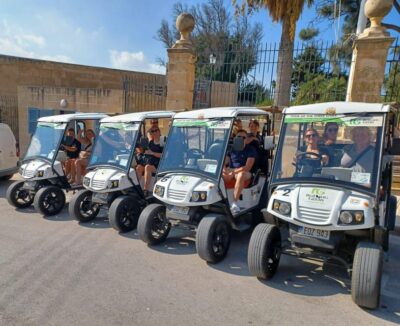
3-City Self-Drive Exploration with GPS Audio Guide
Read our review →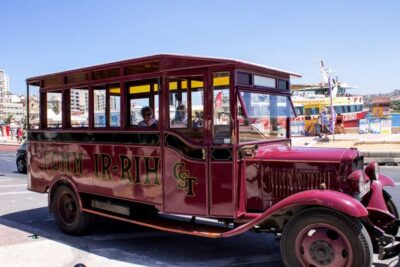
Three Cities guided tour including harbour boat tour
Read our review →
Three cities walking tour incl. entrance to Inquisitor’s palace
Read our review →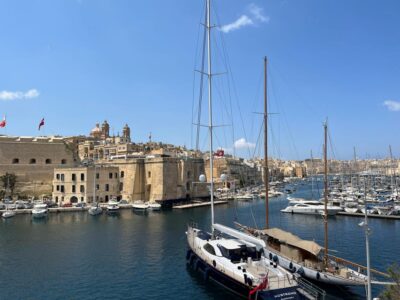
Birgu: 3 Cities Walking Tour With Inquisitors Palace Entry
Read our review →Browse the lists this tour appears in