
Review · CITY TOURS
Mosta: City Highlights Tour with Buffet Lunch
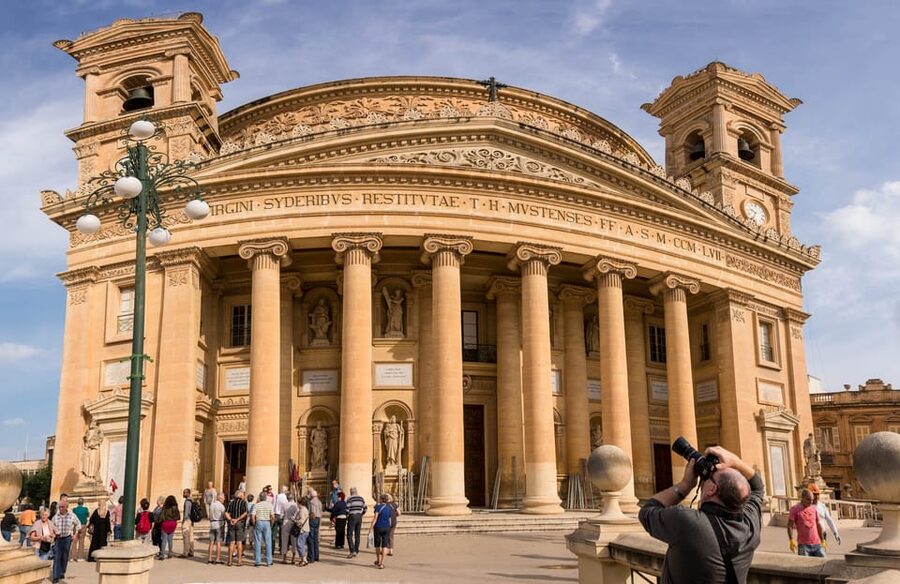
Mosta tells big stories in a small village. This three-hour outing combines the Rotunda’s vast unsupported dome with a World War II shelter, old streets, a farmhouse cultural centre, and the pretty Speranza Chapel. I like the flexible start time, from 10:30 to 15:30, and I like that lunch includes Maltese specialities, a drink, and coffee or tea. The main catch is that the first part is self-guided, and the walking portion is not suitable for wheelchair users.
At $35 per person, this is a strong-value introduction to Mosta if you want several admissions, a short guided walk, and a meal in one package. You will need a charged smartphone, internet access, and your own headphones for the audio guide. Modest clothing is required inside the religious sites.
In This Review
- Key points at a glance
- Why Mosta makes a good three-hour stop
- Starting inside the Rotunda of Mosta
- Walking through Malta’s wartime shelter
- Mosta’s old streets with an English-speaking assistant
- Markiz Mallia Tabone Farmhouse and cultural centre
- Speranza Chapel in Mosta Valley
- What lunch adds to the experience
- Price, timing, and what you really receive
- Who should book this Mosta tour?
- Should you book the Mosta City Highlights Tour?
- FAQ
- How long does the Mosta City Highlights Tour last?
- Where does the tour begin?
- Is the whole tour guided?
- Which languages are available for the app and printed material?
- Is lunch included?
- Is the tour suitable for wheelchair users?
Key points at a glance
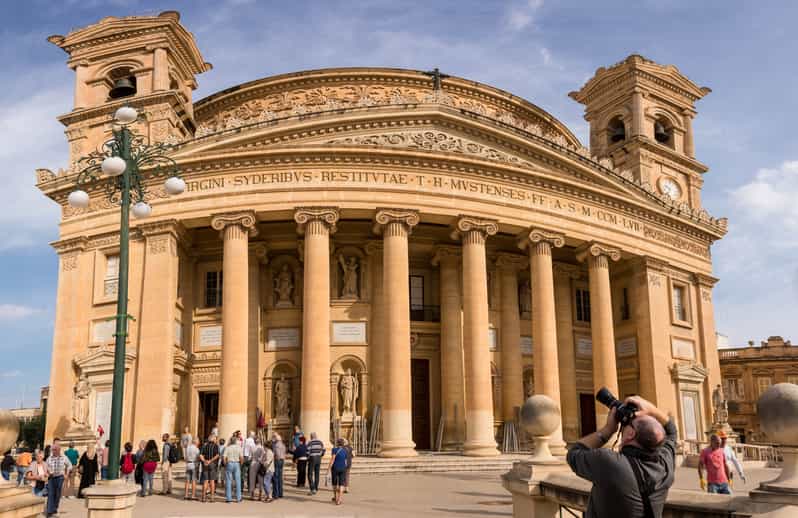
- The Rotunda of Mosta: See Malta’s largest church and its famous third-largest unsupported dome in the world.
- A real underground shelter: Walk through a World War II air-raid shelter with displays about wartime Malta and old trades.
- A flexible half-day plan: Begin any time between 10:30 and 15:30, with the visit order adjusted for late arrivals.
- The Speranza Chapel legend: Visit a small 1761 chapel in Mosta Valley, known locally as Wied il-Għasel.
- A guided village walk: An English-speaking assistant leads the second part through old streets and selected points of interest.
- Lunch included: Finish with a traditional Maltese buffet, water, wine, or a soft drink, followed by coffee or tea.
Why Mosta makes a good three-hour stop
Mosta is often treated as a quick stop between Malta’s larger sights. That is a shame. The village gives you a useful mix of religious architecture, wartime memory, local folklore, and everyday streets without asking you to commit an entire day.
I like the way this experience brings those pieces together. You are not only entering the famous dome, then rushing back to a coach. You also walk through the older parts of town, visit a farmhouse turned cultural centre, and reach a chapel connected to a local legend. The meal gives the outing a clear finish and makes the $35 price easier to justify.
This is not a private, expert-led tour from the first minute. You begin at your own pace with an app and printed information, then meet an English-speaking team member for the walk and lunch portion. That split works well if you like freedom, but it may disappoint you if you want one guide beside you throughout.
More city tours in Malta:
- Valletta: Guided City Walking Tour
★ 4.8 · 1,256 reviews - Gozo: City Sightseeing Hop-On Hop-Off Bus Tour
★ 4.2 · 1,117 reviews - Malta: City Sightseeing HOHO Bus Tour & Optional Boat Tour
★ 3.4 · 1,021 reviews
Starting inside the Rotunda of Mosta
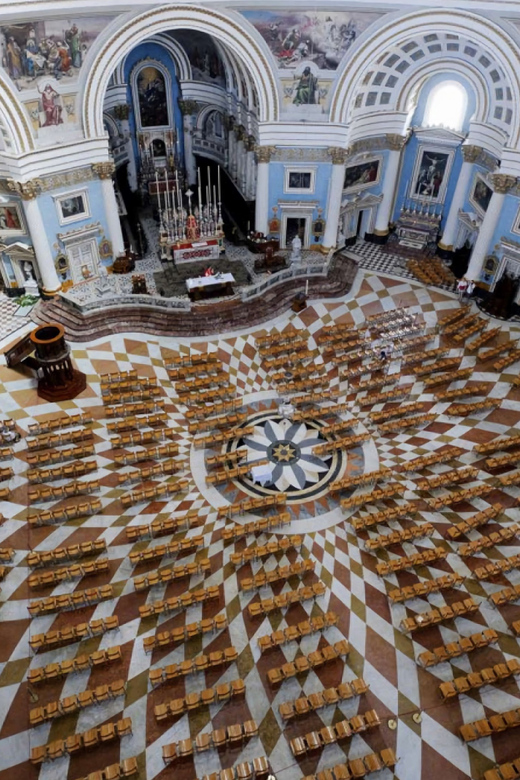
Your visit begins at the reception desk inside the Sanctuary Basilica of the Assumption of Our Lady, usually called the Mosta Dome or Rotunda of Mosta. The receptionist provides directions, suggestions, printed material, and help downloading the mobile phone app.
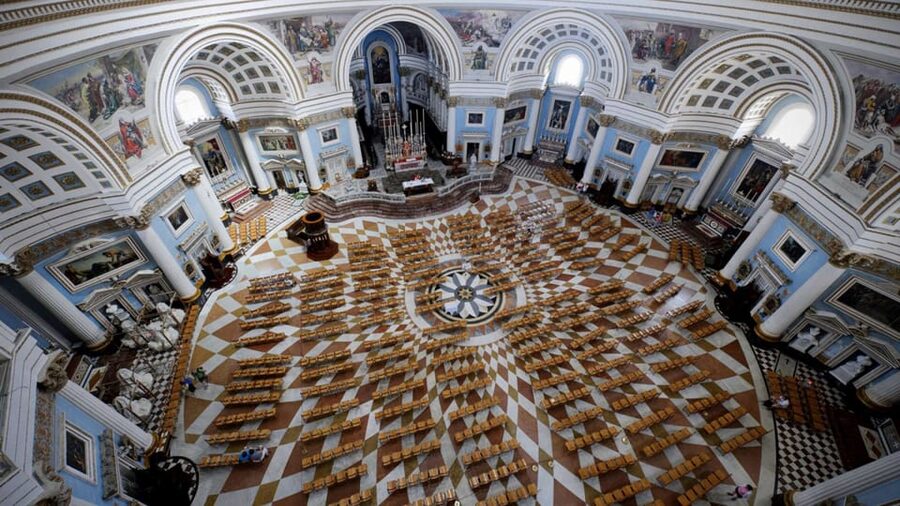
The Rotunda is the visual anchor of the whole outing. Built between 1833 and 1860, it follows neoclassical designs inspired by the Pantheon in Rome. Its enormous unsupported dome is the church’s defining feature and one of Malta’s most memorable architectural sights.
Take your time here. The scale is easy to underestimate from the outside, where the surrounding streets can make the church feel less imposing than it really is. Inside, look upward first, then give yourself time to notice the structure and the quiet sense of space.
The visit is at leisure, not led by a live guide. You can read the printed notes or listen through the app in English, French, German, Italian, or Spanish. Since headphones are not included, bring your own. This is a small point, but it matters if you want to hear the commentary without disturbing people inside the basilica.
Dress with care. Short skirts, sleeveless shirts, swimwear, and see-through clothing are not allowed. Comfortable shoes are also important, since the outing later moves into the village streets and chapel area.
Walking through Malta’s wartime shelter
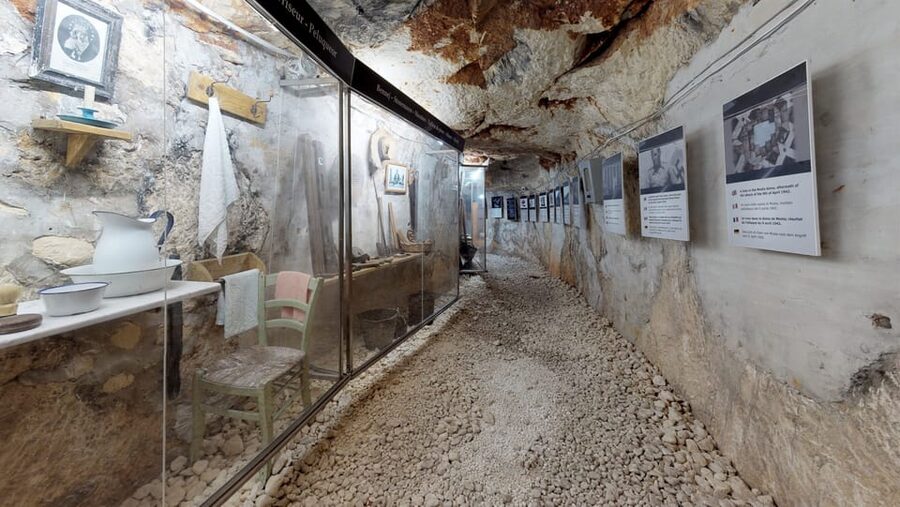
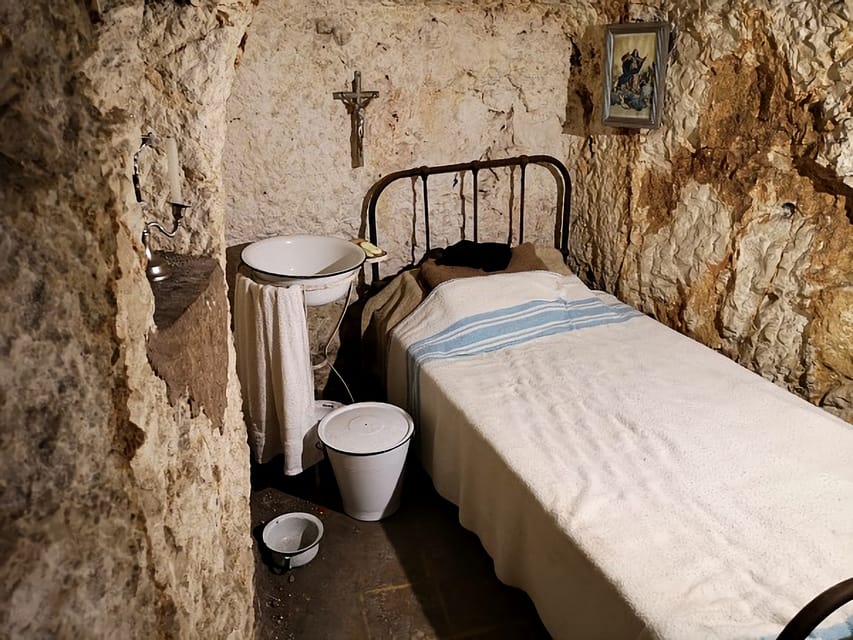
After the basilica, you enter an underground World War II air-raid shelter. This changes the mood sharply. The Rotunda is grand and open; the shelter is close, plain, and tied to the daily fear faced by the Maltese population during relentless bombing.
I find this kind of stop useful because it gives the island’s wartime story a human scale. Instead of only seeing dates or military displays, you walk through the type of underground space used for protection. The experience is not presented as a long guided lecture, so the app and printed notes carry much of the explanation.
The shelter complex also includes a photo exhibition about Malta during World War II. You will find displays of tools and implements connected with old trades as well. That combination links wartime life with the older work and household traditions of the island.
Again, this part is self-guided. You are free to set your own pace, which is useful if you want to spend longer with the photographs or move quickly through the displays. It also means that the quality of your visit depends partly on how much attention you give the app and written material.
Mosta’s old streets with an English-speaking assistant
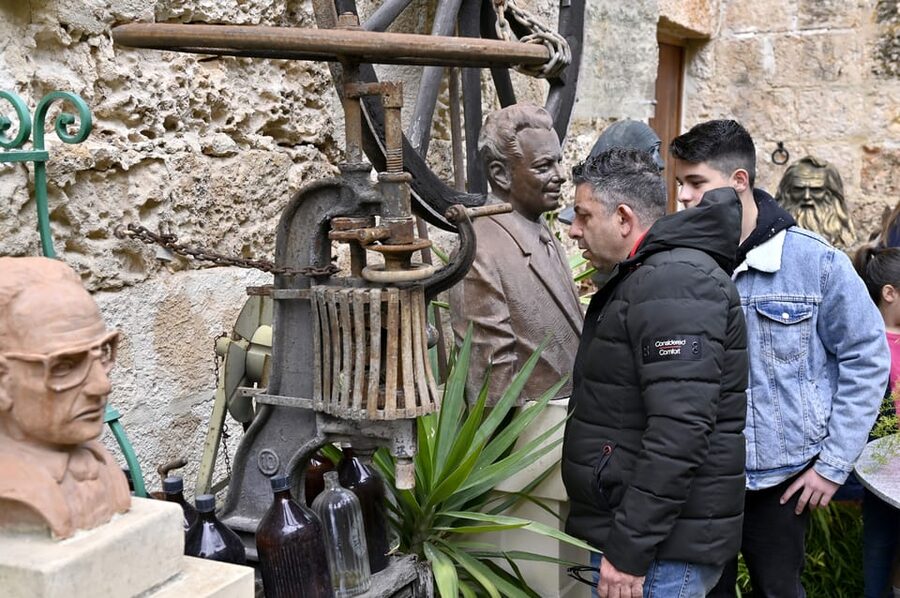
The second half begins with a walk through Mosta’s historic streets. Here you are joined by an English-speaking team member who helps connect the separate sights and points out places of interest that you might miss on your own.
This is where the experience becomes more personal. A good walk through a village is not only about named monuments. It is also about the shape of the streets, the architecture, and the way a major church sits within an ordinary community. The information booklet explains each point of interest, while the app remains available for audio in five languages.
A German review specifically praises the guide Michael, who led the walk with energy and helped bring the local people and place closer to the group. That detail is worth noting if you care about the human side of a tour. The walk is not described as a long lecture. It is a supported stroll, with access to several places connected to the tour.
You should expect some walking on uneven or less convenient surfaces. The activity is not suitable for wheelchair users, and comfortable shoes are listed as essential. The supplied information does not give a precise distance or group size, so I would not book it expecting a fully measured, mobility-friendly route.
A completely different kind of day:
- Malta: Gozo & Comino Islands, Blue Lagoon & Seacaves Tour
★ 4.5 · 15,672 reviews - Comino: Blue Lagoon, Crystal Lagoon, and Seacaves Tour
★ 4.6 · 5,673 reviews - Malta: Blue Lagoon, Beaches & Bays Trip by Catamaran
★ 4.7 · 5,496 reviews - Malta: Gozo, Comino, Blue & Crystal Lagoon, & Caves Cruise
★ 4.6 · 5,092 reviews
Markiz Mallia Tabone Farmhouse and cultural centre
One of the more unusual stops is the Markiz Mallia Tabone Farmhouse. This former Mosta farm has been converted into a cultural centre with permanent displays about Maltese heritage, folklore, and contemporary arts.
I like this stop because it widens the focus beyond churches and military sites. A farmhouse setting gives you a more grounded look at local life, while the exhibits connect older customs with present-day creative work. Seasonal and temporary exhibitions may also be on display, so the exact material can change during the year.
Do not expect a huge museum visit. The value here is in the setting and the range of subjects. It adds a cultural layer to the day without turning the tour into a formal museum circuit.
The centre is visited as part of the assisted walk, and admission is included. Your printed booklet and mobile app help explain what you are seeing. If you prefer to explore museums independently, you will still have some freedom, but the guide organizes this part of the route.
Speranza Chapel in Mosta Valley
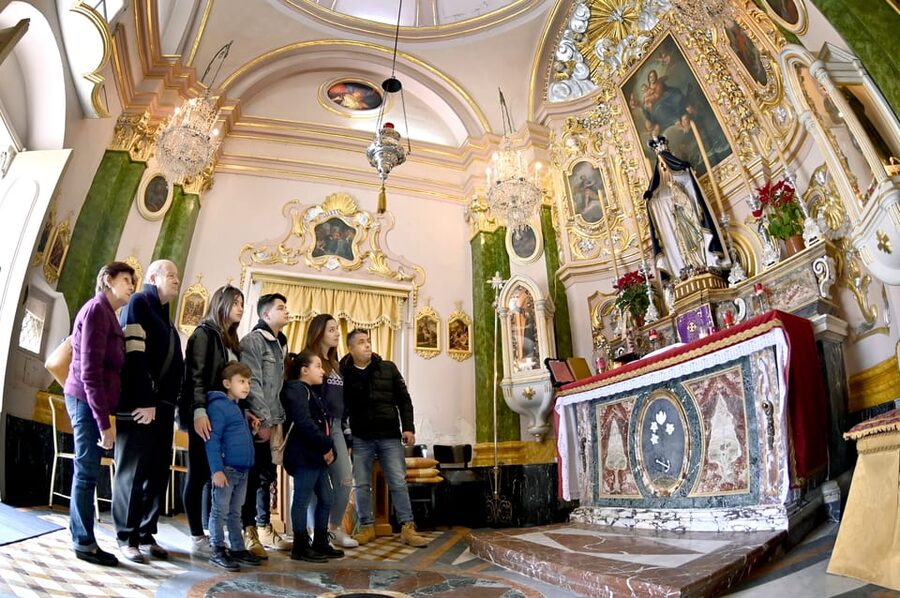
The visit to Our Lady of Hope Chapel, or Speranza Chapel, provides a very different experience from the Rotunda. Built in 1761, the chapel sits in Wied il-Għasel, also called Mosta Valley, and is associated with an interesting local legend.
The appeal is its setting and scale. After the huge church and underground shelter, this is a smaller religious site with a more intimate feel. The chapel gives you a chance to hear a piece of local folklore while seeing another side of Maltese religious architecture.
The supplied details do not spell out the legend, so I would avoid arriving with a fixed version of the story in mind. Listen to the explanation provided during the walk and use the booklet or app to follow the background.
This stop also shows why the guided portion adds value. You might find the chapel on a map, but understanding why it matters to Mosta is harder without context. The combination of a team member, written information, and audio support gives you several ways to follow the story.
What lunch adds to the experience
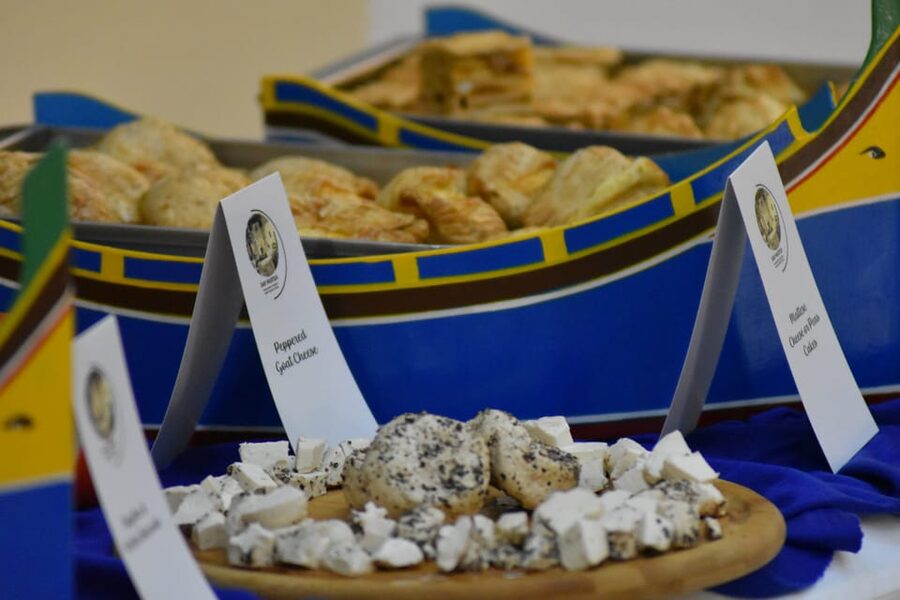
The final meal is served at the Dome Visitors Centre. It is a traditional Maltese buffet, allowing you to sample several local specialities rather than choosing one dish from a fixed menu.
That format suits a short cultural tour. You can try a range of food, and the relaxed setting gives you a proper pause after the walk. Water, wine, or a soft drink is included, as are coffee or tea. For $35, the meal and drinks make a meaningful difference to the overall value.
Food is traditional, so dietary restrictions, allergies, and intolerances need attention before booking. You should ask in advance if the meal can be adapted to your needs. Do not assume that a buffet will automatically offer suitable alternatives.
The order of the stops may change based on your arrival time. If you begin late in the afternoon, you may start with lunch. That is practical, but it means you should keep your schedule open rather than expecting the sights in a fixed sequence.
Price, timing, and what you really receive
At $35 per person, the cost covers more than a simple entrance ticket. You receive admission to the Rotunda, the World War II shelter, the Markiz Mallia Tabone Farmhouse, and Speranza Chapel. You also receive the village walk, app and printed material in five languages, lunch, a drink, and coffee or tea.
The strongest value comes from the combination. If you visited every site separately and paid for a meal and drinks, the total could quickly rise. The tour also removes some planning work, since the reception desk explains the route and the team member handles the guided section.
The flexible arrival window is useful for fitting Mosta around another Malta plan. You can start between 10:30 and 15:30, and the activity lasts about three hours. Hotel pickup and drop-off are not included, so you need to arrange your own way to Mosta and reach the Rotunda reception desk.
You can cancel up to 24 hours ahead for a full refund, and reserve now while paying later. Those terms are helpful if your Malta schedule is still moving around, though they do not change the need to check the exact starting availability for your date.
Who should book this Mosta tour?
I would recommend it to first-time Malta visitors who want a compact introduction to Mosta without spending a full day on organized sightseeing. It also suits anyone who likes a mix of major architecture, local stories, wartime history, and food.
It is a good fit if you are comfortable using a phone app and sometimes exploring without a live guide. The first part rewards people who like to pause, read, and listen at their own pace. The second part is better for anyone who wants an English-speaking person to connect the sights.
Families with older children may appreciate the change from church to shelter to village walk, though the supplied information does not specify a minimum age. Food-focused visitors will also like the chance to sample several Maltese specialities rather than receiving one standard plate.
I would hesitate if you require wheelchair access, dislike walking, or need tightly controlled dietary arrangements. I would also choose a different format if your main priority is an expert guide leading every minute of the visit.
The perfect practical plan is simple: wear respectful clothing, use comfortable shoes, charge your phone, download the app at reception, and bring headphones. Give yourself enough time to enjoy the Rotunda and shelter before meeting the assistant for the walk.
Should you book the Mosta City Highlights Tour?
Book it if you want good coverage for a modest price. The Rotunda and wartime shelter provide the major draws, while the farmhouse, Speranza Chapel, village walk, and buffet give the visit more local character.
Skip it if you want a private tour, full-time guiding, or wheelchair-friendly access. For most independent-minded visitors, though, the mix of freedom and assistance works well. The five-star rating from four verified bookings, including strong praise for the value and for guide Michael’s lively walk, fits the experience’s main strength: it gives you a lot of Mosta in three manageable hours.
FAQ
How long does the Mosta City Highlights Tour last?
The tour lasts three hours. You can begin at any time between 10:30 and 15:30, subject to availability.
Where does the tour begin?
You begin at the reception desk inside the Sanctuary Basilica of the Assumption of Our Lady, also known as the Rotunda of Mosta.
Is the whole tour guided?
No. The Rotunda visit and World War II shelter are self-guided with a mobile app and printed material. The later village walk and lunch portion are assisted by an English-speaking team member.
Which languages are available for the app and printed material?
The app and printed material are available in English, French, German, Italian, and Spanish. The live assistant speaks English.
Is lunch included?
Yes. A traditional Maltese buffet meal is included at the Dome Visitors Centre, along with water, wine, or a soft drink, plus coffee or tea.
Is the tour suitable for wheelchair users?
No. The experience is listed as unsuitable for wheelchair users. You should also wear comfortable shoes and bring a charged smartphone, internet access, and headphones.
Just added in Malta
- Wakeboarding Adventure in Malta: Learn to Ride★ 5.0 · 4 reviews
- Gozo: Wine Tasting and Paired Dinner Experience★ 4.9 · 43 reviews
- Malta: 5 hr Vintage Bus Tour – Mdina & Blue Grotto inc. food★ 5.0 · 22 reviews
- Victoria, Gozo: Sunset Walking Food and Drink Tour★ 5.0 · 6 reviews
- World War II Malta Full-Day Walking Tour★ 4.3 · 18 reviews
- Valletta: Private Massage from a world renowned masseuse★ 4.6 · 9 reviews
- Valletta Street Food & History Tour With Private Transfers★ 4.5 · 15 reviews
- Valletta: Private Walking Tour With A Guide ( Private Tour )★ 5.0 · 1 review
City Tours, compared.
City Sightseeing HOHO Bus Tour & Optional Boat Tour
Read our review →
Browse the lists this tour appears in