
Review · MALTA
Small Group: Valletta and Central Highlights
Malta packs centuries into a small island. This eight-hour tour gives you a useful first look at Valletta’s Knights-era streets, then moves inland to Mosta, Rabat, and Mdina. I like the small maximum of 12 people, which should make questions and guide commentary easier, and I like the mix of grand buildings, local food, village streets, and fortress views.
The strongest features are St. John’s Co-Cathedral and Mdina, two very different places that explain Malta’s past from opposite angles. The main consideration is the pace: you cover four towns and several major sights in one day, so your time at each stop is limited. Lunch is also on your own during the free period in Valletta.
This is a good choice if you want a guided introduction rather than a day spent arranging buses, entrances, and routes yourself. The guide’s historical storytelling is central to the experience, especially for the Knights of St. John, World War II, and Malta’s changing role from Roman island to British fortress colony and modern republic.
In This Review
- Key points to know before booking
- Why this route works for a first Malta day
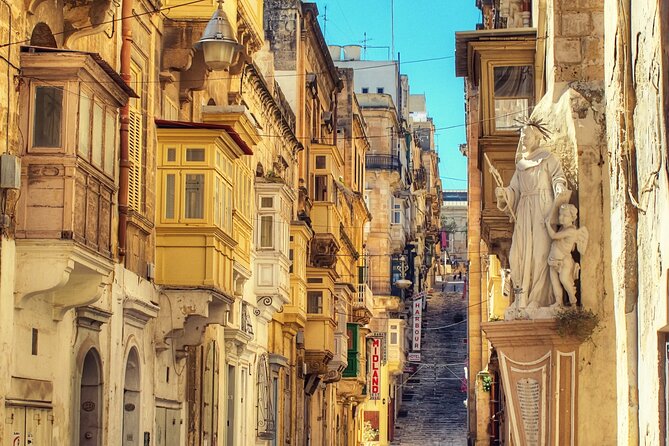
- Valletta: Knights, government buildings, and a compact capital
- St. John’s Co-Cathedral: the tour’s artistic high point
- Republic Square: a useful lunch pause
- Republic Street: the handoff from capital to countryside
- Mosta Rotunda and the bomb that failed to explode
- Rabat: ordinary Malta and a famous pastry
- Mdina: the quiet final act
- What $151 buys you
- Pace, walking, and practical details
- Who should book this Malta tour?
- Should you book it?
- FAQ
- How long does the tour last?
- Where does the tour start and end?
- How many people can join the tour?
- Is the tour conducted in English?
- Are entrance fees included?
- Is lunch included?
- Is food included in the experience?
- Can I cancel for a full refund?
Key points to know before booking
- A full island sampler in eight hours: Valletta, Mosta, Rabat, and Mdina are all included, with transport between the inland stops.
- St. John’s Co-Cathedral entry is included: Allow time for Caravaggio, Mattia Preti, the chapels, and the ornate Oratory.
- Mosta has a remarkable wartime story: A bomb pierced the dome during a service and did not explode. A replica is displayed inside.
- Rabat includes a pastizzi tasting: At Is-Serkin, you can try Malta’s flaky pastry filled with peas or ricotta.
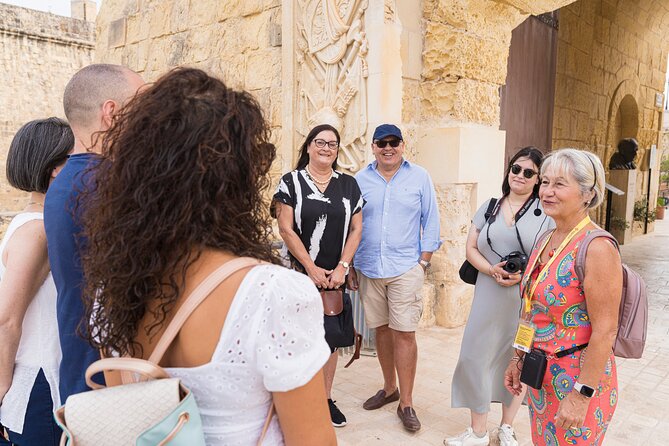
- The group is capped at 12 people: That is a meaningful advantage on narrow streets and inside busy historic sites.
- Lunch is not included: You get 45 minutes in Republic Square to choose and pay for your own meal.
Why this route works for a first Malta day
Malta can be tricky to understand on a short visit. Valletta is the obvious starting point, but the island’s story becomes clearer when you see the old capital of Mdina, the village center of Rabat, and the central position of Mosta.
This route also avoids making the day only about churches and military buildings. You get a little of everything: Baroque architecture, a working town center, local street food, a famous wartime church, narrow medieval lanes, and broad views from old fortifications.
The air-conditioned vehicle matters because the tour covers several separate places. The route includes about 30 minutes from Valletta to Mosta, 20 minutes from Mosta to Rabat, and about 30 minutes from Mdina back to Valletta. Those transfers give your feet a break, though the day still involves plenty of walking.
With a maximum of 12 people and an English-speaking licensed guide, this should feel more personal than a large coach outing. The best value comes if you want context as you go. If you prefer to linger for hours in one museum or eat a long lunch, the schedule may feel tight.
Other trips worth a look in Malta:
- Malta: Gozo & Comino Islands, Blue Lagoon & Seacaves Tour
★ 4.5 · 15,672 reviews - Comino: Blue Lagoon, Crystal Lagoon, and Seacaves Tour
★ 4.6 · 5,673 reviews - Malta: Blue Lagoon, Beaches & Bays Trip by Catamaran
★ 4.7 · 5,496 reviews
Valletta: Knights, government buildings, and a compact capital
The tour begins at Christ the King in Valletta. The first two hours are spent walking through the capital, where the city’s scale makes it easy to see a lot on foot.
Valletta grew from the work of the Order of St. John in the 16th century. Your guide connects that period with later chapters, including Malta’s time as a fortress colony of the British Empire and its life as an independent republic. That wider timeline helps the city feel like more than a collection of handsome stone buildings.
You pass the Auberge de Castille and the Grand Master’s Palace, both tied to the Knights. These buildings show the political power of the order, while the newer Parliament building and Triton Fountain point to Malta’s modern identity.
I like this contrast. You are not looking only at old stone. The route shows how Valletta remains a national capital, with historic architecture beside newer public buildings.
The drawback is that a walking introduction cannot cover every lane, museum, or viewpoint. You should think of these two hours as orientation. They help you decide what deserves a return visit later, rather than replacing a full independent day in Valletta.
St. John’s Co-Cathedral: the tour’s artistic high point
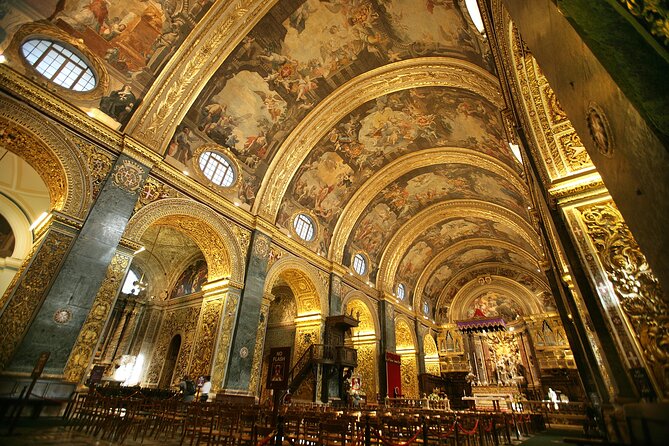
St. John’s Co-Cathedral gets about 50 minutes, and admission is included. This is likely to be the most visually intense stop of the morning.
The church was built for the Knights of St. John and is known for its Baroque decoration. Inside, the chapels reflect the different groups within the order, while the nave and Oratory carry the grandest visual impact.
Caravaggio’s work is a major reason to pay close attention. Mattia Preti is also represented, and the guide can place the paintings within the church’s larger story of faith, ceremony, and knightly power.
You will want to use this stop for looking up as well as forward. The decoration is not limited to one famous painting. The church’s entire interior is part of the experience, from the solemn nave to the richly finished Oratory.
Fifty minutes is enough for a guided visit, but not for a slow artistic study. If you already know you want extensive time with Caravaggio or church art, make a note to return independently. For most first-time visitors, included entry plus a guide makes this a strong part of the $151 price.
Republic Square: a useful lunch pause
After the cathedral, you get 45 minutes of free time in Republic Square. Lunch is not included, so this is the point to buy food, take a short rest, or simply enjoy the center of Valletta at your own pace.
The break is practical. A full day of walking needs a pause, and a fixed food stop can be more useful than another hurried sight. Still, 45 minutes is not much time for a leisurely meal, especially if the square or nearby streets are busy.
Bring your own sense of timing. You need to return to the group for the walk along Republic Street and the transfer to the next part of the tour. The tour does not specify a set lunch venue, so you have some freedom, but you also carry the responsibility for getting back promptly.
A completely different kind of day:
- Malta: Gozo, Comino, Blue & Crystal Lagoon, & Caves Cruise
★ 4.6 · 5,092 reviews - From Malta: Full-Day Gozo UTV Tour with Lunch and Boat Ride
★ 4.6 · 4,408 reviews - From Sliema: Comino, Crystal Lagoon, and Blue Lagoon Cruise
★ 4.5 · 3,792 reviews - From Sliema: Gozo, Comino and Blue Lagoon Cruise
★ 4.5 · 3,461 reviews
Republic Street: the handoff from capital to countryside
The final Valletta segment follows Republic Street for about 30 minutes before you meet the vehicle. This is less about entering another major attraction and more about finishing the city walk in a logical direction.
Republic Street is Valletta’s main thoroughfare, so it gives you one last look at the capital’s public life and architecture. The walk also helps bridge the two halves of the day. You begin among the Knights’ buildings, then leave the fortified capital for the island’s central towns.
This portion may feel less substantial than St. John’s Co-Cathedral or Mdina. That is fair. Its value is practical and geographic, helping the day move without adding another admission or a long detour.
Mosta Rotunda and the bomb that failed to explode
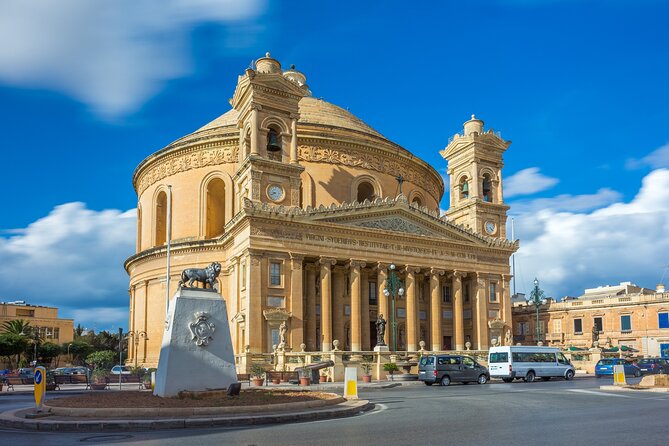
The vehicle takes about 30 minutes to reach Mosta. You then have about 30 minutes at the Mosta Basilica, also called the Mosta Rotunda, with admission included.
The church is famous for its enormous dome, described as one of the largest unsupported domes in the world. Even if you are not focused on architecture, the scale gives this stop a clear identity after Valletta’s ornate interiors.
Mosta is also known locally as the miracle church because of an event during World War II. A bomb pierced the dome and fell into the church during a service, but it failed to explode. A replica of the bomb can be seen during the visit.
That story gives the building a human connection. You are not just admiring a dome. You are hearing about a moment of fear during Malta’s wartime life and the relief that followed.
Thirty minutes is a brisk visit. You can see the main interior and the bomb replica, but you will not have unlimited time to inspect every detail. The stop works best as a focused visit, not as a long architectural study.
Rabat: ordinary Malta and a famous pastry
From Mosta, it is about 20 minutes to Rabat. The tour gives you about 55 minutes here, including a short walk along the main street and a tasting at Is-Serkin.
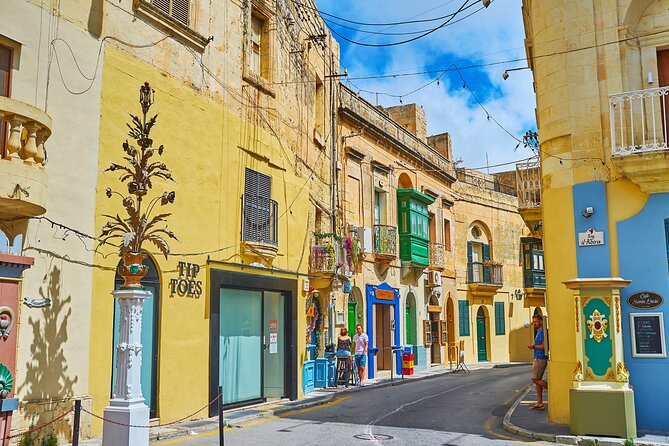
Rabat provides a change of scale. Instead of monumental churches and state buildings, you see village architecture, traditional balconies, old doors, small shops, band club premises, and the details of everyday town life.
The town’s story reaches back to the Roman period and includes the tradition that Saint Paul stayed here after being shipwrecked on the way to Rome. Your guide can connect those older layers with the streets you are walking through.
The food tasting is one of the tour’s most appealing personal touches. At Is-Serkin, you try pastizzi, Malta’s familiar street snack. These diamond-shaped filo pastry parcels are filled with either mashed peas or ricotta cheese.
Pastizzi are simple, local, and well suited to a short stop. You get a taste of Malta without giving up another half hour to a formal meal. If you have a choice, trying both fillings gives you a better sense of the difference between them.
The tasting is a snack, not lunch. That matters because the tour includes food but does not include the midday meal in Valletta. Plan your appetite accordingly.
Mdina: the quiet final act
The last major stop is Mdina, with about 70 minutes to explore. Travel back to Valletta takes about 30 minutes, making this a substantial final visit rather than a quick photo stop.
Mdina was Malta’s capital before Valletta was built in 1566. Over time, it has been known as Melite during Roman rule, Medina under Arab rule, and Citta Notabile and Citta Vecchia after Valletta became the capital.
The city sits on a central plateau, and its old Baroque buildings, cathedral, and fortifications rise above the surrounding countryside. The setting is part of the appeal. From the bastion walls, you get far-reaching views, while inside the walls the lanes narrow and twist between old buildings.
Mdina is best explored on foot. The short lanes and quiet character make it feel quite different from Valletta’s main streets. You should resist the urge to rush from one end to the other. Look at the doorways, stonework, and changes in street width as you walk.
Seventy minutes is enough to get a clear sense of the city and reach the walls for views. It is not enough for every church, museum, or side lane. If Mdina becomes your favorite stop, you may want to return with more time.
Ending here is smart. Valletta introduces Malta’s grand political and military story, while Mdina closes the day with an older, quieter sense of place. The route finishes with atmosphere rather than another formal lecture.
What $151 buys you
At $151, this is not the cheapest way to see Malta. The value depends on how much structure and explanation you want.
The price includes an air-conditioned vehicle, a licensed English-speaking guide, entrance to St. John’s Co-Cathedral, entry to the Mosta Rotunda, and the pastizzi tasting. You also get transportation between the four main areas, which reduces the work of planning separate connections.
For me, the strongest value is the combination of guide and admissions. St. John’s Co-Cathedral can be appreciated without help, but the Knights’ story, the artwork, and the relationship between Valletta and Mdina are easier to follow with a clear narrative.
The small group also helps justify the cost. A limit of 12 people is far more manageable than a large coach group when walking through narrow streets or gathering outside historic buildings.
You should compare the price with your own priorities. If you mainly want transport and quick introductions, $151 may feel high. If you want one organized day covering the island’s central highlights, with two important entrances and a local snack included, the package is more convincing.
Pace, walking, and practical details
This is an active sightseeing day. The schedule includes walking in Valletta, a church visit, a town walk in Rabat, and foot exploration of Mdina. The tour description says most people can participate, but it does not promise a low-walking route.
Wear comfortable shoes and keep your schedule flexible after the tour. The day is planned to return to Christ the King in Valletta, but the listed timings include approximate travel periods and can shift with local conditions.
The meeting point is Christ the King in Valletta, and the activity ends back there. A mobile ticket is provided, and confirmation is received at booking. The tour is near public transportation.
The listed operating information shows Monday from 9:00 a.m. to 5:00 p.m. for the stated booking period, from April 15, 2024 through June 22, 2026. Check the date and start details carefully when booking, especially if your Malta visit falls outside the displayed Monday schedule.
Free cancellation is available up to 24 hours before the start time for a full refund. Inside 24 hours, the payment is not refunded, and changes are not accepted.
Who should book this Malta tour?
I would choose this for a first visit, especially if you have only one full day for Malta’s historic center and inland towns. It is also a good fit if you want a guide to explain the Knights of St. John, World War II, Roman and Arab-era Malta, and the shift from Mdina to Valletta.
You will get the most from it if you enjoy variety. The day moves from public squares to a cathedral, from a giant dome to local pastry, then to medieval lanes and fortress walls.
I would hesitate if you dislike fixed schedules or prefer long meals and unhurried museum time. Mdina and St. John’s Co-Cathedral both deserve longer than the allotted visits for some people.
Should you book it?
Book this tour if you want an efficient, well-organized introduction to Malta with a small group, included transport, two important admissions, and a genuine local snack. The praise for the guide and the well-shaped route is deserved: the day links Malta’s major historical chapters without making you do the logistical work.
Skip it if you already know Valletta, Mosta, Rabat, and Mdina well, or if you want to explore each place at your own pace. For a first-time visitor with limited time, though, the mix of Valletta’s Baroque grandeur, Mosta’s wartime story, Rabat’s street life, and Mdina’s old walls makes the $151 price reasonable.
FAQ
How long does the tour last?
The experience lasts approximately eight hours, including the visits and travel between Valletta, Mosta, Rabat, Mdina, and back to Valletta.
Where does the tour start and end?
The meeting point is Christ the King in Valletta, Malta. The activity ends back at the same meeting point.
How many people can join the tour?
The tour has a maximum of 12 travelers.
Is the tour conducted in English?
Yes. The group is accompanied by a professional, English-speaking licensed tourist guide.
Are entrance fees included?
Yes. Admission to St. John’s Co-Cathedral and the Mosta Rotunda is included in the tour price.
Is lunch included?
No. You receive 45 minutes of free time in Republic Square in Valletta to arrange and pay for lunch yourself.
Is food included in the experience?
Yes. The tour includes a tasting of locally made pastizzi at Is-Serkin in Rabat. The pastries are filled with mashed peas or ricotta cheese.
Can I cancel for a full refund?
Yes, if you cancel at least 24 hours before the experience start time. Cancellations made less than 24 hours before the start time are not refunded, and changes within that period are not accepted.
Just added in Malta
- Wakeboarding Adventure in Malta: Learn to Ride★ 5.0 · 4 reviews
- Gozo: Wine Tasting and Paired Dinner Experience★ 4.9 · 43 reviews
- Victoria, Gozo: Sunset Walking Food and Drink Tour★ 5.0 · 6 reviews
- World War II Malta Full-Day Walking Tour★ 4.3 · 18 reviews
- Malta: 5 hr Vintage Bus Tour – Mdina & Blue Grotto inc. food★ 5.0 · 22 reviews
- Valletta: Private Massage from a world renowned masseuse★ 4.6 · 9 reviews
- Valletta Street Food & History Tour With Private Transfers★ 4.5 · 15 reviews
- Valletta: Private Walking Tour With A Guide ( Private Tour )★ 5.0 · 1 review