

Review · MDINA AND RABAT TOURS
Malta: Mdina and Rabat Tour with Local Guide
Mdina rewards curious walkers. This $24 walking tour links Malta’s silent old capital with nearby Rabat, using a local guide to explain the palaces, churches, bastions, streets, and daily life that can be easy to miss on your own. I especially like the sweeping views from Mdina’s walls and the move into Rabat, where the tour feels more local and personal.
I also like the guide’s strong connection to the area. Chris lives in Rabat and brings in family memories, local residents, food suggestions, and plenty of humor. The main consideration is time: two and a half hours gives you a useful introduction, but there is no time to visit museums or catacombs inside, and the walk may run longer than the advertised duration.
In This Review
- Key points to know before you book
- Why Mdina and Rabat work so well together
- Meeting at Mdina Gate
- Inside the quiet streets of Malta’s old capital
- Mdina Cathedral and the main religious sights
- The Belvedere and Mdina’s wide views
- Leaving through Greek’s Gate for Rabat
- St. Paul’s Basilica and the Malta story
- Chris’s guiding style and why it matters
- Pace, group feel, and practical comfort
- Is $24 good value?
- Who will enjoy this Mdina and Rabat walk?
- Should you book it?
- FAQ
- Where does the tour meet?
- Where does the tour finish?
- How long is the Mdina and Rabat tour?
- What language is the tour conducted in?
- How much does the tour cost?
- Does the tour visit both Mdina and Rabat?
- Will I see Mdina Cathedral?
- Does the tour include views over Malta?
- Does the tour include museum or catacomb admission?
- What should I bring?
- Can I cancel the booking?
- Can I pay later?
Key points to know before you book
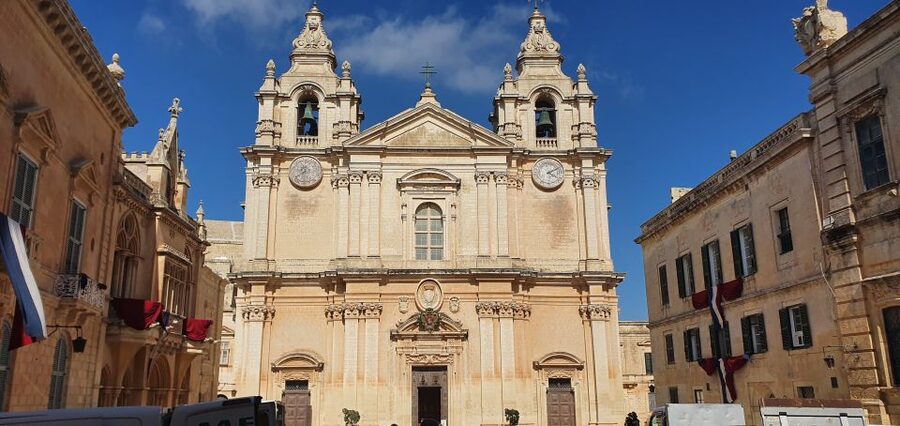
- Mdina’s battlements provide the big view: You can look across much of Malta from the town’s high defensive walls.
- Chris adds a local point of view: His connection to Rabat gives the walk more warmth than a standard monument-by-monument tour.
- The tour covers two towns: You begin in Mdina and leave through Greek’s Gate for Rabat.
- St. Paul’s story anchors Rabat: The tour ends near St. Paul’s Basilica, linked with the saint’s three-month stay on Malta.
- The pace is manageable: One detailed account describes the streets as flat, though you should still wear proper walking shoes.
- Food advice is part of the experience: Chris has offered restaurant and bar suggestions, and some groups have stopped for Maltese pastries in Rabat.
Why Mdina and Rabat work so well together
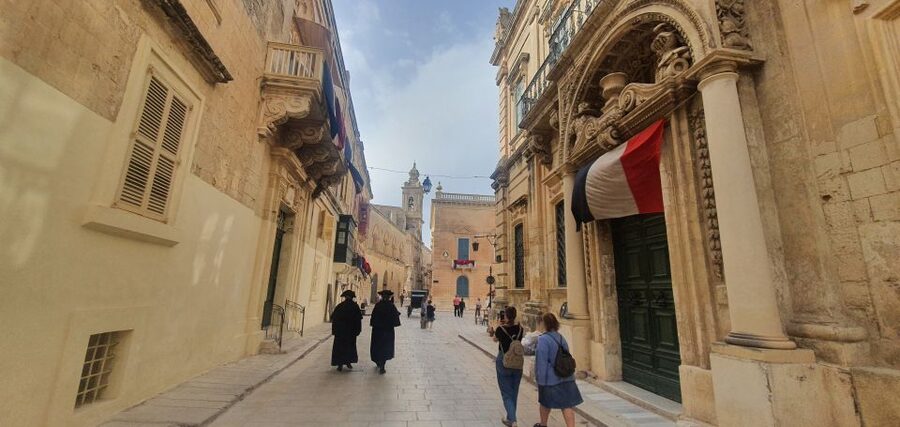
Mdina and Rabat sit side by side, but they offer different moods. Mdina is the walled former capital, with quiet lanes, noble residences, church facades, and defensive walls. Rabat feels more like a lived-in town, where the focus shifts from grand architecture to local streets, people, food, and community.
That contrast is the main reason I like this tour. A short visit to Mdina alone can leave you with pretty photos but little sense of how the town fits into Malta’s story. Adding Rabat gives you a fuller picture. You see the formal center of old power, then walk into the neighboring town where local life continues beyond the tourist postcard.
The guide-led format matters here. Mdina’s lanes are beautiful, but they can also look similar after a while. A good explanation helps you understand why a palace matters, how the city was defended, and why Rabat developed beside it. Chris has received especially strong praise for making complicated Maltese history easy to follow, using jokes and present-day observations rather than turning the walk into a dry lecture.
More Mdina and Rabat tours:
- Malta: Highlights of Malta & Mdina Full Day Tour with Lunch
★ 4.4 · 2,688 reviews - Malta: Mdina and Rabat Walking Tour with Catacombs
★ 4.8 · 1,126 reviews - Malta: Mdina, Dingli Cliffs and San Anton Botanical Gardens
★ 4.3 · 991 reviews
Meeting at Mdina Gate
You meet just outside Mdina’s main gate, on the side of the playground. This detail is worth noting because the gate area can be busy with people arriving, photographing the entrance, and finding their way into the old city. Look for the guide outside the gate rather than wandering deep into Mdina.
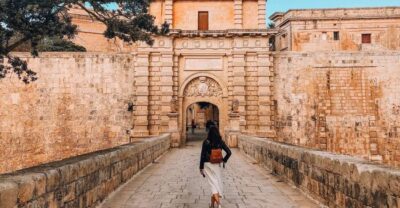
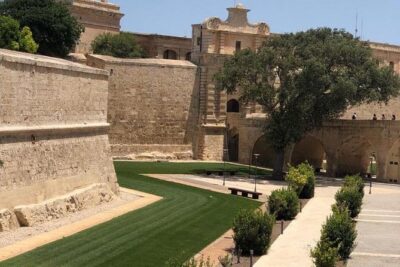
The gate gives you an immediate sense of the town’s character. Mdina’s entrance is formal and imposing, and it sets up the story of a city that was built to control movement and protect its residents. The opening portion lasts about 20 minutes, so expect an introduction to the city and its architecture before the group moves into the lanes.
This is also a useful time to settle into the group. Chris has been praised for making strangers feel comfortable, sometimes beginning with introductions and interesting facts to break the ice. That small touch can make a difference on a walking tour, especially if you arrive alone or with a mixed-age group.
Inside the quiet streets of Malta’s old capital

Mdina is often called the Silent City, and the name makes sense as you move away from the entrance. The winding streets are narrow and calm, with pale limestone walls, carefully finished doorways, and grand buildings appearing around unexpected corners.
The tour spends the most time in Mdina, about 75 minutes in the general old city area. That gives Chris room to explain the setting instead of rushing you from one photo stop to the next. You can expect stories about Malta’s past, the city’s role as the old capital, its noble families, and the way the town looks and functions today.
The palaces are a major part of the walk. You pass impressive residences associated with Maltese nobility, and the guide helps you read the architecture as more than decoration. Grand facades, heavy doors, balconies, and the layout of the streets all point to a city shaped by status and defense.
I like that the tour does not treat Mdina as a frozen museum. Chris has been singled out for connecting the old buildings with current residents and local customs. That approach helps you see Mdina as a place with a past, not simply an attractive set for photographs.
The tradeoff is that the tour is primarily outdoors. You will see important buildings from the street, but you should not expect extended indoor visits. One participant specifically noted that there was no time for museums or catacombs. If those are your priority, plan a separate visit before or after the walk.
Mdina Cathedral and the main religious sights
A guided stop at Mdina Cathedral lasts around 15 minutes. Even if you do not go inside, the cathedral helps explain the religious and civic importance of the old capital.
Here, the value of the guide is context. Churches in Malta can appear one after another, and it is easy to admire the stonework without understanding their place in the town. Chris’s explanations are designed to connect the cathedral with Mdina’s wider story and Malta’s strong Catholic tradition.
The stop is short, so treat it as an introduction rather than a full cathedral visit. If you want time to study the interior, art, or museum collections, you will need to return independently. The tour’s purpose is to give you a coherent walk through Mdina and Rabat, not to provide long visits to every major building.
A few more options to weigh up in Mdina and Rabat
- Mdina and Rabat: Guided City Walking Tour
★ 4.8 · 549 reviews - Mdina and Highlights of Malta Full Day Guided Tour Incl. Lunch and Transfers
★ 4.0 · 299 reviews - Mdina, Rabat, Dingli cliffs, San Anton gardens, Ta’ Qali & Mosta guided tour
★ 4.0 · 248 reviews - Mdina and Rabat Tour with a local licensed guide
★ 5.0 · 28 reviews
The Belvedere and Mdina’s wide views
The Belvedere stop takes about 15 minutes and leads to one of the tour’s best visual moments. From Mdina’s high position, you get broad views across Malta and the Maltese Islands.
This is where the town’s location becomes clear. The narrow streets and defensive walls are not accidental. From the bastions, you can understand why the site mattered, both as a stronghold and as a seat of power.
Bring water and protect yourself from the weather. The exposed viewpoint may feel hot in summer or chilly in wind and rain. One group continued despite heavy rain and cold, but that is a reminder to bring a jacket rather than a sign that the conditions will always be comfortable.
Allow time for photographs, but listen closely before reaching for your camera. Guides often explain the view in a way that turns a general panorama into a map of Malta’s history and settlement. That added meaning is one reason the stop earns its place in a short tour.
Leaving through Greek’s Gate for Rabat
The transition through Greek’s Gate is one of the most useful parts of the route. You leave the walled city and enter Rabat, shifting from the former capital’s formal silence to a more everyday town.
Rabat receives about 45 minutes of guided attention. That is enough for a walking introduction, but not enough to explore every church, street, museum, or catacomb. The aim is to show you the town’s character and lead you toward the main square.
Chris’s local ties are especially useful here. He lives in Rabat and has been praised for knowing the neighborhood, its residents, and its present-day customs. You may encounter local people during the walk, and the guide’s personal connection can make Rabat feel less like an extension of the sightseeing circuit.
This part also brings practical value. Chris has shared recommendations for places to eat and drink in the area, and some groups have had the chance to buy Maltese pastries at a local shop near the end. Those suggestions can help you turn the tour into a longer afternoon in Rabat rather than heading straight back to your hotel.
St. Paul’s Basilica and the Malta story
The walk reaches Rabat’s main square, where you see St. Paul’s Basilica. The site is connected with St. Paul’s three-month stay on Malta, giving the final stop a strong religious and historical focus.
That story helps tie the two towns together. Mdina shows Malta’s old political and aristocratic center, while Rabat adds an important layer of Christian tradition and local identity. The basilica is not simply a final photograph. It gives the guide a natural place to explain why this part of Malta matters to so many people.
Keep your expectations clear: the stated experience describes seeing the basilica and learning about its connection with St. Paul. It does not promise a lengthy interior visit or a separate catacomb tour. If you want to go inside, ask the guide about timing, or return after the walk.
Chris’s guiding style and why it matters
The strongest feature of this experience is the guide. Chris is repeatedly praised for being friendly, funny, clear, and deeply connected to Mdina and Rabat. His best quality seems to be his ability to mix serious history with personal stories and current local detail.
That balance matters because Malta’s past can become complicated quickly. Different rulers, religious traditions, noble families, and changing towns can blur together if the explanation is too academic. Chris’s style, as described by many participants, keeps the story moving with jokes, facts, and simple connections.
He also appears attentive to different ages and interests. A parent worried that a 21-year-old might be bored found the tour engaging for both of them. Another group praised his attention to children and adults. That suggests a good fit for families and mixed groups, although the tour remains an outdoor history walk rather than a children’s activity.
The guide’s personality is not a minor extra here. At $24, you are paying for access to a route you could walk alone, but the main value is knowing what you are looking at and why it matters. Chris’s local background adds something you cannot get from a map or a quick online summary.
Pace, group feel, and practical comfort
The tour lasts about 2.5 hours, though some participants said it continued longer. The listed timing adds up to a substantial walk, with about 20 minutes at Mdina Gate, 15 minutes at the cathedral, 15 minutes at the Belvedere, 75 minutes in Mdina, and 45 minutes in Rabat.
That schedule is reasonably balanced. Most of the time goes to Mdina, where there is more architecture and historical ground to cover, while Rabat gets a shorter but more personal introduction. If you want a slow photography session or time inside attractions, this pace will feel tight.
The streets have been described as flat and manageable, with no major hills on the route. Still, you should wear comfortable shoes because the tour involves steady walking over old streets and stopping on stone surfaces. Bring water, especially in warm weather, and dress for the forecast. The Belvedere and bastions are exposed, while rain can make any outdoor tour less pleasant.
The group size appears to be small in at least some departures, which helps with questions and conversation. Exact group limits are not provided, so I would not book this expecting a private tour. The guide’s habit of learning names and speaking with people individually should help the group feel more relaxed.
Is $24 good value?
Yes, if you want orientation and interpretation rather than independent wandering. Mdina is free to explore from the outside, so the price is not buying admission to a major attraction. It is buying a local route, historical explanation, Rabat connection, and practical recommendations.
For $24, the combination of two towns is appealing. You get the old capital, the cathedral area, the bastions, Greek’s Gate, Rabat’s streets, and St. Paul’s Basilica in one outing. The cost is especially fair if you are visiting Malta for the first time and want help deciding where to return later.
The value drops if you mainly want indoor sightseeing. The guide does not include museum, cathedral, or catacomb admission, and the schedule does not leave time for extended visits. Independent explorers who prefer reading plaques and setting their own pace may be happier without a tour.
Free cancellation up to 24 hours before the start and the option to reserve now and pay later make the booking less restrictive. Starting times vary, so check the available departure when planning your day.
Who will enjoy this Mdina and Rabat walk?
I would choose this tour if you want:
- A first look at Mdina with clear historical background
- A local guide rather than a self-guided audio route
- A balance of major sights and everyday Rabat
- Views from the bastions and time for photographs
- Restaurant, bar, and pastry suggestions for afterward
- A friendly small-group atmosphere
- A walking experience that suits adults, families, and older teenagers
I would choose something else if you need a museum-heavy tour, a dedicated catacomb visit, or a private itinerary. The tour is also less suitable if you dislike outdoor walking in hot, windy, or wet weather.
Should you book it?
Book it if you want Mdina to make sense, not just look beautiful. The combination of Mdina’s noble palaces and walls with Rabat’s local streets gives you more than a quick old-town visit, and Chris’s local knowledge appears to be the reason the experience feels personal rather than scripted.
At $24, it is a sensible introduction to two of Malta’s most important historic towns. Just wear good shoes, bring water, allow a little extra time, and plan a separate visit if you want to enter museums, catacombs, or the cathedral at leisure.
FAQ
Where does the tour meet?
Meet just outside the main gate of Mdina, on the side of the playground.
Where does the tour finish?
The experience returns to the City Walking Tours Malta starting location.
How long is the Mdina and Rabat tour?
The advertised duration is 2.5 hours. Some participants found that the walk lasted longer, so avoid scheduling another activity immediately afterward.
What language is the tour conducted in?
The live tour guide speaks English.
How much does the tour cost?
The price is $24 per person.
Does the tour visit both Mdina and Rabat?
Yes. It begins in Mdina, exits through Greek’s Gate, and continues through Rabat to the main square and St. Paul’s Basilica.
Will I see Mdina Cathedral?
Yes. The route includes a guided stop at Mdina Cathedral for about 15 minutes.
Does the tour include views over Malta?
Yes. The route includes the Belvedere and Mdina’s bastions, where you can enjoy wide views across Malta and the Maltese Islands.
Does the tour include museum or catacomb admission?
No museum or catacomb visit is included in the stated experience. The tour focuses on outdoor sightseeing and guided interpretation.
What should I bring?
Bring comfortable shoes, water, and clothing suited to the weather.
Can I cancel the booking?
You can cancel up to 24 hours in advance for a full refund.
Can I pay later?
Yes. The reserve-now, pay-later option lets you hold a place without paying at the time of booking.
Just added in Mdina and Rabat
- Malta: 5 hr Vintage Bus Tour – Mdina & Blue Grotto inc. food★ 5.0 · 22 reviews
- Valletta & Mdina: Private Tour★ 4.5 · 16 reviews
- Shore Excursion: Private Full-Day Tour of Valletta & Mdina★ 5.0 · 4 reviews
- Private Tour in Malta Prehistoric Temples & Mdina★ 5.0 · 4 reviews
- Private Tour in Valletta and Mdina★ 5.0 · 1 review
- Rabat Mdina and San Anton Gardens Group Tour with St. Paul’s Catacombs★ 3.5 · 16 reviews
- Valletta, Mosta and Mdina Night Tour★ 3.5 · 15 reviews
- Malta Shore Excursion: Private tour of Valletta and Mdina★ 4.5 · 8 reviews
Mdina and Rabat Tours, compared.
Highlights of Malta & Mdina Full Day Tour with Lunch
Read our review →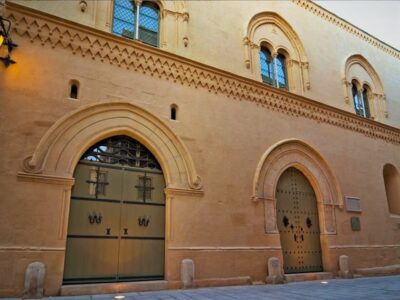
Mdina, Dingli Cliffs and San Anton Botanical Gardens
Read our review →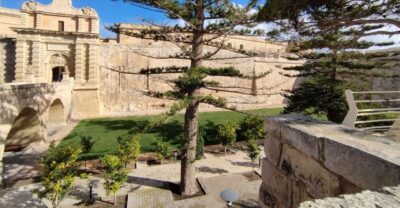

Mdina and Rabat Walking Tour inc. Catacombs and St. Paul’s Grotto
Read our review →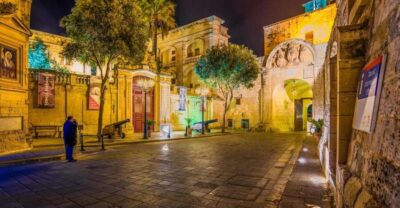
Valletta Waterfront Area, Mdina, and Rabat Night Tour
Read our review →Browse the lists this tour appears in