
Review · WALKING TOURS IN MDINA AND RABAT
Mdina and Rabat Walking Tour inc. Catacombs and St. Paul’s Grotto
Malta’s past is packed into two small cities. This 2.5-hour walking tour links Rabat’s underground sites with Mdina’s quiet medieval lanes, giving you both the island’s early Christian story and its former capital in one outing. I especially like the included visit to the Wignacourt Museum, where the catacombs, WWII shelters, and St. Paul’s Grotto add much more than a standard city walk. I also like the small group cap of 25, which makes it easier to hear the guide and ask questions.
The main thing to consider is the pace. Much of the time goes to explanations, and one section of the route gives you limited time to wander freely inside Mdina. I would treat this as an introduction, then leave extra time before or after the tour to explore the old city at your own speed.
In This Review
- Key points to know before booking
- Why Mdina and Rabat work well together
- Meeting at Mdina Gate
- Walking through Rabat’s churches and convents
- Going underground at the Wignacourt Museum
- Mdina’s palaces and churches
- Fortifications, Greeks Gate, and the views
- The guides make the difference
- Group size, walking pace, and comfort
- Is the $30.85 price good value?
- Who should book this walking tour?
- FAQ
- How long does the Mdina and Rabat walking tour last?
- Where does the tour start?
- Where does the tour end?
- Is admission to the catacombs included?
- Is the tour offered in English?
- Are there stairs or difficult areas?
- Should you book it?
Key points to know before booking
- Three underground sites in one stop: The Wignacourt Museum visit includes catacombs, WWII shelters, and St. Paul’s Grotto, with admission included.
- Mdina’s major sights in a compact route: You pass Palazzo Falzon, Palazzo Santa Sofia, the Cathedral of Saint Paul, Vilhena Palace, the Carmelite Priory, and Greeks Gate.
- Guides bring the history to life: Guides including Mario, Matthew, Carmel, Dylan, Ian, and others have been praised for clear explanations, local stories, and strong English.
- A 25-person maximum: This is not a private tour, but the group limit should feel more manageable than a large coach outing.
- Expect stairs underground: The catacombs, shelters, and grotto involve stairs, small spaces, and uneven floors.
- The finish is near Greeks Gate: The tour ends in Mdina, not at your hotel, so you will need to arrange your own return transport.
Why Mdina and Rabat work well together
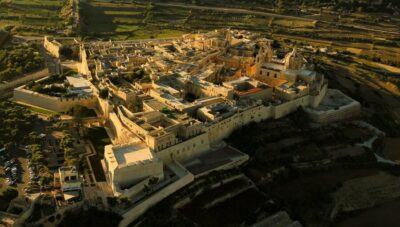
Mdina and Rabat sit side by side, but they offer two different views of Malta. Mdina was the island’s capital until the 16th century and still feels enclosed, formal, and defensive. Rabat is more closely tied to everyday life, religious buildings, underground burial sites, and the Christian traditions connected with St. Paul.
That contrast gives the tour a useful shape. You begin at Mdina Gate, move through Rabat, go below ground at the Wignacourt Museum, and then return to Mdina for a long walk through the old city. The route is not just a parade of pretty buildings. It explains why the two places developed differently and how Malta’s rulers, faiths, languages, and military needs left their mark.
At $30.85 per person, the price is fair for a guided walk of this length with an admission ticket included. You are paying for the guide’s storytelling as much as for the sites themselves. The catacombs and shelters would be interesting on your own, but the meaning of the spaces is easier to grasp when someone explains how they fit into Malta’s past.
More Walking Tours in Mdina and Rabat
- Malta: Mdina and Rabat Walking Tour with Catacombs
★ 4.8 · 1,126 reviews - Mdina and Rabat: Guided City Walking Tour
★ 4.8 · 549 reviews - Mdina and Rabat – City Walking Tour
★ 5.0 · 215 reviews
Meeting at Mdina Gate
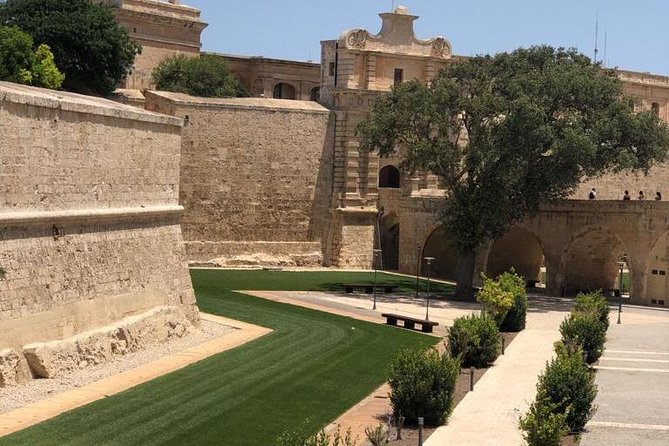
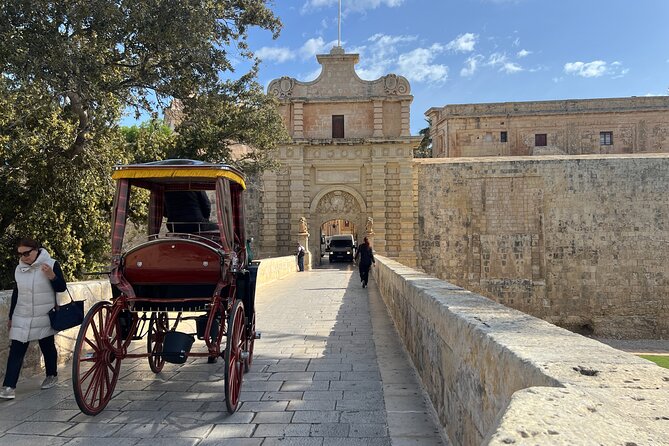
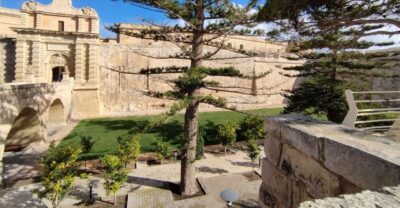
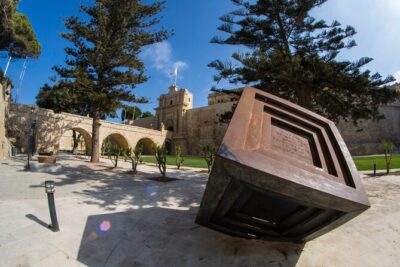
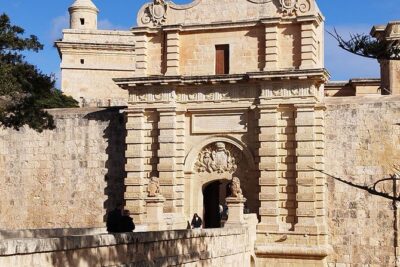
The meeting point is at Mdina Main Gate, the grand Baroque entrance to the old city. The formal start is brief, about five minutes, but this is an important place to begin. The gate immediately shows you that Mdina was built to control access, impress visitors, and protect the city behind its walls.
You should arrive with enough time to find the guide. One person had difficulty identifying the group and suggested clearer clothing or a visible tour sign. That is practical advice, especially when several groups gather near a popular entrance. The tour is offered in English, and the guide may be one of several members of the company, including Mario, Matthew, Carmel, Dylan, or Ian.
The operator does not provide hotel pickup or drop-off. Mdina Gate is near public transportation, and the meeting and ending points are both in central Mdina. You should plan your route in advance, particularly if you are visiting on a day when weather or traffic could slow you down.
Walking through Rabat’s churches and convents
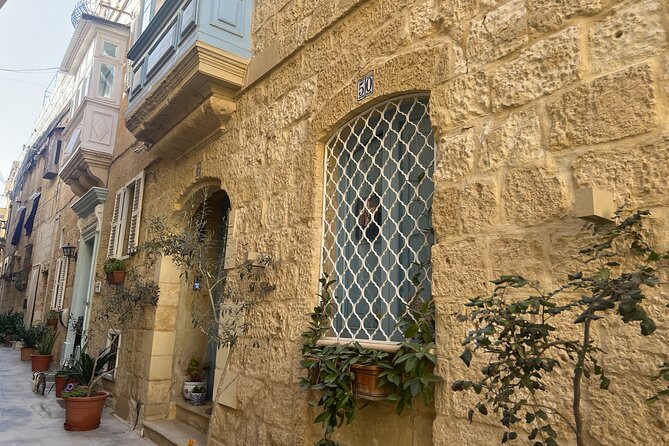
The Rabat section takes about 25 minutes and is mainly an orientation walk through the streets. You pass churches and convents, with the guide pointing out the character of the city and its religious connections before taking you underground.
This part can feel less dramatic than Mdina’s walls or the catacombs, but it gives the tour context. Rabat is not simply an overflow suburb beside the old capital. Its streets and religious buildings help explain why the area has long mattered to Malta’s story.
A strong guide can make this short walk worthwhile by explaining names, local customs, and the influence of the island’s different rulers. Mario has been praised for linking Malta’s languages and history, while Dylan was especially good at explaining the roots of names and words. Those details can help you notice more than façades as you walk.
The main limitation is time. Twenty-five minutes is enough for an introduction, not a full tour of Rabat’s churches and convents. If Rabat itself interests you, plan to return for a separate visit.
Going underground at the Wignacourt Museum
The Wignacourt Museum is the tour’s most unusual stop. About 30 minutes are set aside for three connected themes: catacombs, WWII shelters, and St. Paul’s Grotto. The entrance ticket is included, which improves the value of the tour and saves you from arranging a separate visit.
The catacombs offer a look at burial customs and the way people used underground spaces outside the old city. They are not grand halls. You may find the passages narrow, the floors uneven, and the spaces small. The physical setting is part of the experience, but it also means you should be comfortable with stairs and confined areas.
The WWII shelters provide a different kind of connection. Instead of looking back to ancient or medieval Malta, you are confronted with the island’s more recent wartime experience. Placing the shelters in the same stop as the catacombs makes the long span of Maltese history easy to grasp. People used the ground beneath Rabat for very different reasons across the centuries.
St. Paul’s Grotto carries religious importance, and the guide’s explanation matters here. Without context, it can be a quick underground stop. With a good guide, it becomes part of the larger story of Malta’s early Christian identity.
Thirty minutes is enough to see the main areas, but not to linger at every point. If you like museums, archaeology, or military history, you may wish the visit were longer. Still, having all three sites included in a single walking route is one of the strongest reasons to choose this tour over a basic Mdina-only walk.
More Mdina and Rabat tours:
- Malta: Highlights of Malta & Mdina Full Day Tour with Lunch
★ 4.4 · 2,688 reviews - Malta: Mdina, Dingli Cliffs and San Anton Botanical Gardens
★ 4.3 · 991 reviews - Mdina and Rabat Insider’s Tour
★ 5.0 · 528 reviews - Valletta: Vintage Bus to Valletta, Sliema, Rabat & Mdina
★ 4.1 · 433 reviews
Mdina’s palaces and churches
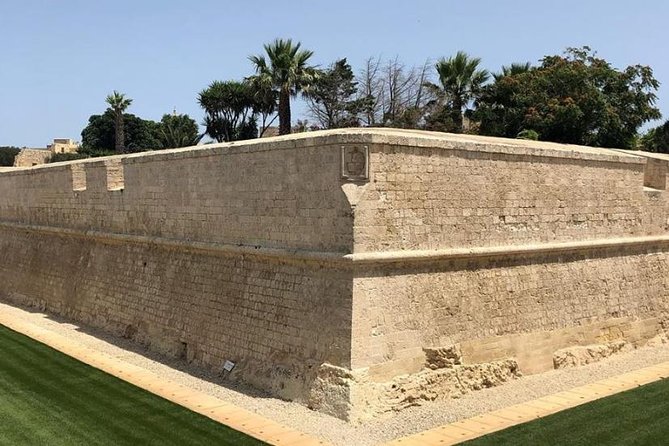
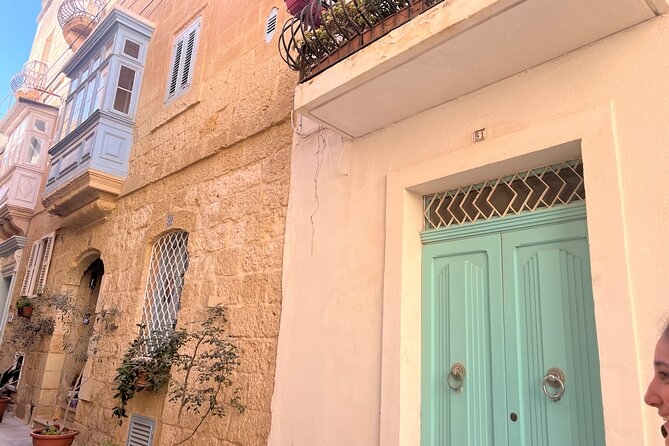
After Rabat and the museum, the tour turns to Mdina for about 1 hour and 25 minutes. This is the longest section, and it covers the city’s main palaces, churches, convents, lanes, and defensive walls.
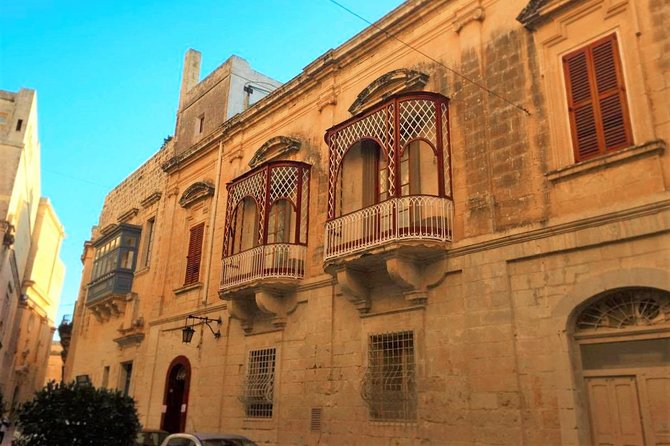
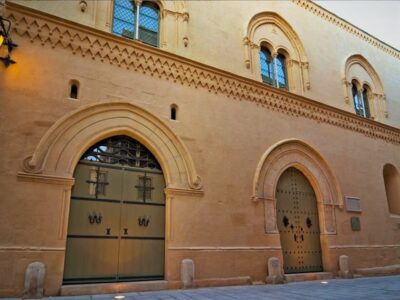
Palazzo Falzon, a grand 13th-century building, gives you a sense of Mdina’s age and the importance of its noble residences. Palazzo Santa Sofia is another highlight. Its elaborate façade belongs to one of the oldest buildings in the city, so it is worth looking closely rather than simply photographing it and moving on.
You also pass Vilhena Palace, now home to the Natural History Museum. The building helps show how Mdina’s political role changed over time. A palace that once belonged to Malta’s ruling class now serves a public cultural purpose.
The Cathedral of Saint Paul is among the major architectural sights on the route. The tour focuses on the exterior and wider setting as you move through Mdina, so you should check separately if you want an extended cathedral visit. The Carmelite Priory adds an elegant Baroque note to the walk, while the Chapel of Saint Agatha offers another small religious landmark.
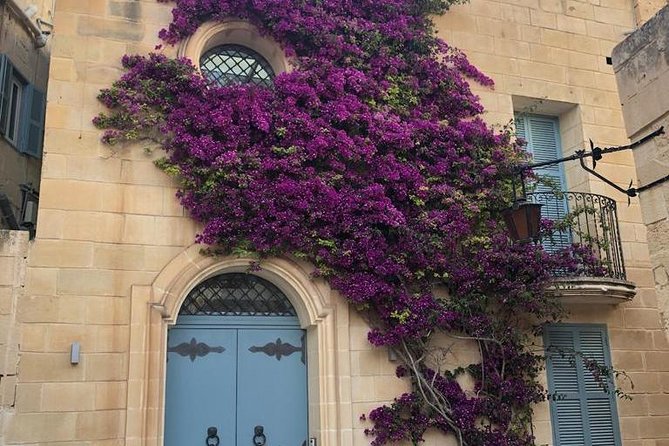
One detail I would watch for is Mdina’s door knockers. They come in distinctive forms and are easy to miss if you rush from one major building to the next. This is the kind of local detail that rewards attention and keeps the tour from becoming a simple list of palaces.
Fortifications, Greeks Gate, and the views
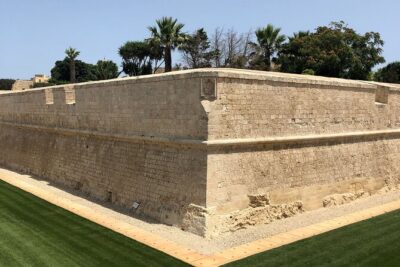
Mdina’s walls are where the city’s defensive purpose becomes clear. The guide explains the medieval fortifications and takes you toward Greeks Gate, an imposing entrance at the end of the route.
The ramparts also offer one of the best views in the experience. On a clear day, you can look across a large part of Malta from the elevated edge of the old city. Rain and haze can reduce the view, and hot weather can make the exposed sections tiring, but the setting is still one of the tour’s essential moments.
The tour ends near Greeks Gate rather than returning you to Mdina Main Gate. That is useful because you finish inside the old city and can continue exploring. It also means you should not assume the tour ends exactly where it began.
I would save time after the tour for Mdina’s lanes, views, and buildings. One schedule placed the group in Mdina around 5:20 in poor weather, leaving little time for free exploration before evening. The lesson is simple: if you want quiet photographs or a slower look at the city, build that time into your day.
The guides make the difference
The strongest part of this experience is the guiding. The best guides do more than recite dates. They connect Malta’s rulers with architecture, explain how languages developed, and point out small details such as door knockers and local legends.
Mario has been praised for his energy, clear communication, and explanations of Malta’s changing rulers. Matthew is described as patient, easy to understand, and skilled at making history relevant to the present. Carmel has earned praise for his humor, passion, and ability to make Malta’s past feel lively.
Dylan is also a strong name to look for if the assigned guide is known in advance. He has been praised for taking care of the whole group, keeping people within earshot, and explaining the origins of local words. Ian has been described as friendly and patient, including when the group moved at different speeds.
The company does not guarantee a particular guide, so you should book this for the route and format rather than for one individual. The guide’s style may also affect your enjoyment. Most of the praise focuses on detailed explanations, but one person found there was too much talking and not enough walking. If you prefer a fast route with short commentary, this may feel slow.
Group size, walking pace, and comfort
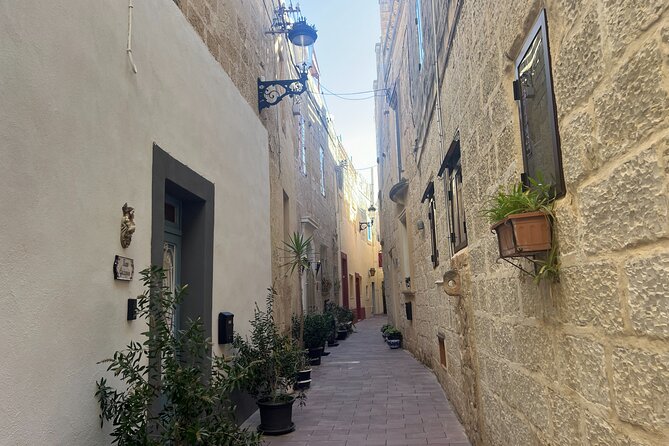
The maximum group size is 25. That is small enough for a personal feel in many parts of Mdina, though the narrow streets and underground rooms can still make the group feel busy.
You should expect a steady amount of walking over 2.5 hours, with stairs underground and uneven floors in the catacombs. Most people can take part, and service animals are allowed, but the underground portion is not completely flat or effortless.
Weather matters. The tour includes open ramparts and outdoor streets, so heat and rain can change the experience. One guide handled hot conditions by choosing shaded places for explanations, which is helpful for older members of a group. Still, bring sensible footwear and prepare for sun or rain.
Audio equipment is not listed as part of the tour. One person wished for headsets so everyone could hear without standing close to the guide. In a group of 25, staying near the guide is the best way to catch every explanation, especially in noisy streets or around busy sights.
Is the $30.85 price good value?
I consider the price reasonable because it combines three elements that are easy to book separately: a guided Mdina walk, a Rabat orientation, and admission to the Wignacourt Museum sites.
The tour is especially good value if you want historical context. You get a guide for the full route, and the underground admission is included. The price is less compelling if you mainly want time for independent photographs or long visits inside individual buildings, since the fixed route leaves limited room for wandering.
The group limit helps protect the value. A large group would make the narrow streets and underground rooms less comfortable, while 25 people gives the guide a realistic chance to answer questions and keep the group together.
Free cancellation is available if you cancel at least 24 hours before the start time. Changes or cancellations made later are not accepted for a refund. Weather has caused rescheduling in rare local conditions, and the company has contacted affected customers about new dates or refunds.
Who should book this walking tour?
I would recommend it to first-time visitors who want a clear introduction to Mdina and Rabat without arranging several separate admissions. It also suits anyone interested in religious history, archaeology, military history, architecture, or Malta’s changing rulers.
It is a good fit for you if you enjoy a guide who talks in detail and adds local stories. The route works well for couples, families with older children, and people who prefer a structured morning or afternoon.
I would think twice if you dislike underground spaces, stairs, or uneven floors. You may also want another option if your priority is slow photography, quiet wandering, or extended time inside Mdina’s individual attractions.
FAQ
How long does the Mdina and Rabat walking tour last?
The tour lasts approximately 2 hours and 30 minutes.
Where does the tour start?
It starts at Mdina Main Gate, the Baroque gateway in Mdina, Malta.
Where does the tour end?
It ends near Greeks Gate in Mdina’s old city.
Is admission to the catacombs included?
Yes. The entrance ticket to the Wignacourt Museum is included, covering the catacombs, WWII shelters, and St. Paul’s Grotto.
Is the tour offered in English?
Yes. The tour is offered in English.
Are there stairs or difficult areas?
Yes. The underground catacombs, WWII shelters, and St. Paul’s Grotto include stairs. The catacombs may also have small spaces and uneven floors.
Should you book it?
Book this tour if you want the story behind Mdina and Rabat, not just a walk through attractive streets. The combination of underground sites, medieval palaces, churches, fortifications, and a capped group gives you a solid introduction for $30.85.
Plan extra time in Mdina before or after the tour, stay close to the guide, and wear shoes suited to stairs and uneven ground. If you do that, this is a practical and well-rounded way to meet Malta’s old capital and the fascinating city beside it.
Just added in Mdina and Rabat
- Malta: 5 hr Vintage Bus Tour – Mdina & Blue Grotto inc. food★ 5.0 · 22 reviews
- Valletta & Mdina: Private Tour★ 4.5 · 16 reviews
- Shore Excursion: Private Full-Day Tour of Valletta & Mdina★ 5.0 · 4 reviews
- Private Tour in Malta Prehistoric Temples & Mdina★ 5.0 · 4 reviews
- Private Tour in Valletta and Mdina★ 5.0 · 1 review
- Rabat Mdina and San Anton Gardens Group Tour with St. Paul’s Catacombs★ 3.5 · 16 reviews
- Valletta, Mosta and Mdina Night Tour★ 3.5 · 15 reviews
- Malta Shore Excursion: Private tour of Valletta and Mdina★ 4.5 · 8 reviews
Walking Tours in Mdina and Rabat, compared.
Private Historical City Walking Tour with Rabat Town
Read our review →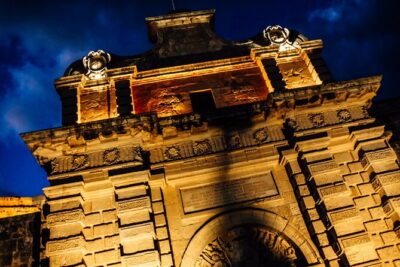

Browse the lists this tour appears in