
Review · MALTA
Malta Multi Pass
Malta rewards curious visitors. This pass combines Malta’s major museums, heritage sites, sightseeing buses, and boat trips into one ticket, making it a useful way to build a busy island itinerary. I especially like the Grand Harbour cruise and the chance to visit so many prehistoric temples without paying at every entrance. I also like the choice of pass lengths, from three to seven days. The main caution is transportation: the hop-on-hop-off buses can be slow, infrequent, and affected by Malta’s heavy traffic.
The Malta Multi Pass is best for people who plan ahead and intend to see several paid sights. It is less useful if you mainly want ordinary local buses, a relaxed beach holiday, or only one or two museums. You also need to understand exactly which pass you are buying, since the shorter and longer versions include different attractions.
In This Review
- Five things to know before buying
- What the Malta Multi Pass includes
- The Grand Harbour cruise is the easiest win
- The sightseeing buses cover a lot, slowly
- Valletta packs the best indoor value
- The prehistoric sites are the pass’s strongest reason
- Mdina and Roman Malta tell a different story
- Forts and museums in the Three Cities
- Comino and Gozo require a full day
- Cost, activation, and planning advice
- Who should buy the Malta Multi Pass?
- FAQ
- How many days is the Malta Multi Pass valid?
- Does every pass include the Grand Harbour cruise?
- Does the pass include the Malta sightseeing buses?
- Does the pass include Malta’s regular public buses?
- Is Gozo included?
- Can I visit Comino’s Blue Lagoon with the pass?
- Is Ħal Saflieni Hypogeum included?
- Are the Palace State Rooms open?
- What happens if an attraction is closed?
- Can I cancel the pass for a refund?
- Should you book it?
Five things to know before buying
- The Grand Harbour cruise works on every pass: Spend 90 minutes seeing Valletta, the Three Cities, forts, and waterfront defenses from the water.
- The six and seven-day options cover the deepest collection: These include up to 20 Heritage Malta sites, including major temples, forts, museums, and catacombs.
- The four and seven-day passes include a Comino and Gozo ferry day: You can visit both islands, or spend longer on just one.
- The bus is useful but not dependable transport: Traffic, long gaps between buses, and early final departures can affect your plans.
- Activation matters: Keep the QR code on your phone, and have it ready before your first visit so staff can scan the correct pass.
- Some headline sites are not included: Ħal Saflieni Hypogeum requires a separate ticket, while the Palace State Rooms and Fortifications Interpretation Centre are currently closed.
What the Malta Multi Pass includes
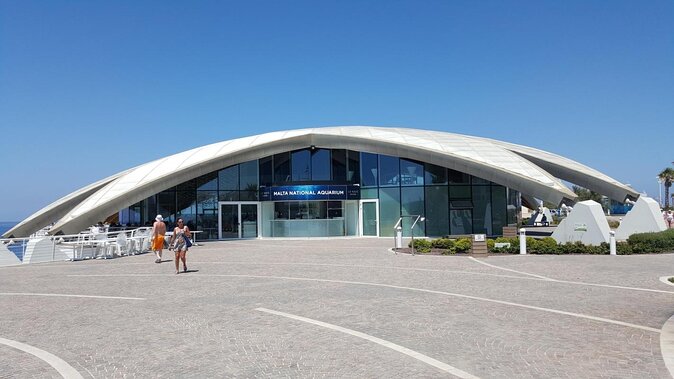
At $88.72 per person, this is not a cheap sightseeing ticket. Its value comes from using several inclusions in a short period, rather than from any single attraction.
All pass lengths include the City Sightseeing Malta buses on the North and South routes, plus Captain Morgan’s 90-minute Grand Harbour cruise. The three and four-day passes also include the Malta Experience, the Sacra Infermeria tour, the Malta National Aquarium, and Esplora Interactive Science Centre. The four-day option adds one round trip by ferry to Comino and Gozo, with a one-day Gozo Heritage Pass available as an optional part of the package described.
The six and seven-day versions are aimed at serious sightseers. They include the largest group of Heritage Malta sites, the Ħaġar Qim and Mnajdra temples, the Grand Master’s Palace Armoury, major Valletta museums, Fort St. Angelo, the Inquisitor’s Palace, the Malta Maritime Museum, several prehistoric sites, St. Paul’s Catacombs, Domus Romana, and Għar Dalam.
The seven-day pass adds Mdina Cathedral and Museum. It also includes the Gozo ferry trip and the optional Gozo Heritage Pass, with Gozo’s sightseeing buses and several museums and historic sites.
The pass is valid for consecutive days after activation. That detail matters. You cannot casually use one day now, wait several days, and restart the clock later.
Other trips worth a look in Malta:
- Malta: Gozo & Comino Islands, Blue Lagoon & Seacaves Tour
★ 4.5 · 15,672 reviews - Comino: Blue Lagoon, Crystal Lagoon, and Seacaves Tour
★ 4.6 · 5,673 reviews - Malta: Blue Lagoon, Beaches & Bays Trip by Catamaran
★ 4.7 · 5,496 reviews
The Grand Harbour cruise is the easiest win
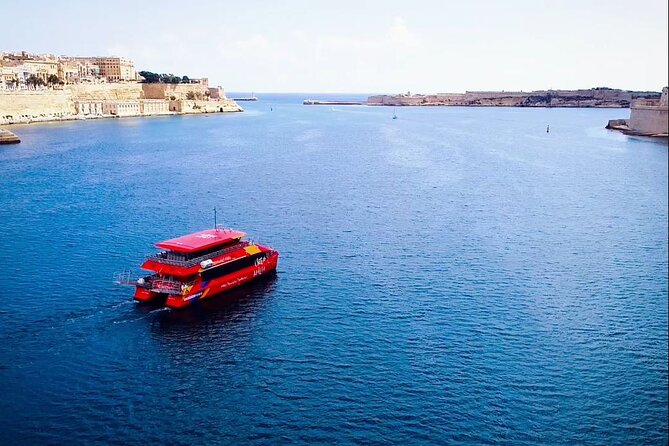
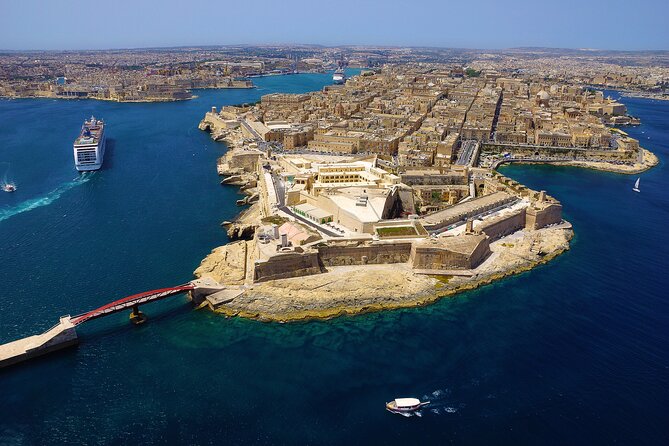
The 90-minute cruise is included with every pass and gives you a view that land-based sightseeing cannot match. The boat travels through Grand Harbour and Marsamxett Harbour, the two natural harbors on either side of Valletta.
From the water, you can see Valletta’s walls, the Three Cities, old forts, creeks, bastions, and waterfront skylines from a useful distance. Malta’s defensive architecture makes more sense when you see how the harbors shaped the island’s military story.
The commentary is live and offered in English and German. You can sit outside for the views and photographs, or inside in air-conditioned comfort. Onboard facilities include WiFi, restrooms, and vending machines for drinks and snacks.
I would schedule this early in your pass. It is simple to fit into a Valletta day, and it gives you a quick visual guide to the harbors before you visit places such as Fort St. Angelo, Fort St. Elmo, or the Inquisitor’s Palace.
Departure times vary, so check the schedule before planning other timed activities. The cruise is a sightseeing boat, not a practical ferry for getting around town.
The sightseeing buses cover a lot, slowly
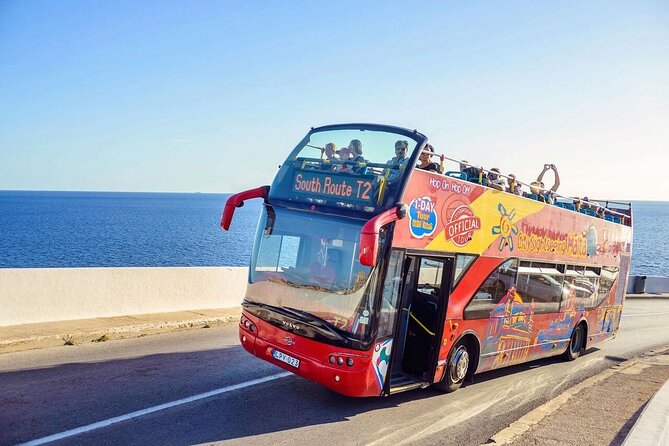
City Sightseeing Malta runs North and South routes from Valletta Harbour. Across the two lines, the buses serve more than 30 stops and around 40 points of interest, with multilingual audio commentary on 12 or more channels.
The North route reaches places such as San Anton Presidential Gardens, Mdina, Ta’ Qali Crafts Village, and Mosta. The South route includes the Three Cities, Marsaxlokk, and the Blue Grotto area at Wied iż-Zurrieq during the April to October season.
This is a broad sightseeing net. It can help you understand the shape of the island and reach attractions that are awkward to connect in one day. I would use it mainly as a sightseeing service and a way to reach selected sites, not as your only transport plan.
The buses may be around an hour apart, and Malta’s traffic can throw off the timetable. Some final services begin shortly after 4 p.m., which is early if you are visiting a distant stop. A slow bus ride is not a problem when you have time and enjoy the commentary. It is a real problem if you use the bus to reach a remote attraction shortly before closing.
A practical approach is to choose one or two stops on a route, allow generous time, and keep local public transport as a backup. The pass does not include Malta’s ordinary city buses, so it is not a replacement for a Tallinja card or other local bus fare.
Valletta packs the best indoor value
The pass is particularly strong in Valletta, where several included sights are close together.
The National Museum of Archaeology is housed in the Auberge de Provence, a Baroque building dating from 1571. Its displays cover Malta’s Neolithic and Phoenician periods, with notable objects including the Sleeping Lady, the Venus of Malta, Bronze Age daggers, and Phoenician-era pieces.
MUŻA, the Malta National Community Art Museum, takes a less traditional approach. Its displays connect Mediterranean, European, imperial, and artistic themes, placing older works beside more recent pieces. The building itself was once the residence of the Italian knights.
The National War Museum at Fort St. Elmo combines military collections with wide harbor views. Look for the Order of St. John and Ottoman armor, the Gloster Sea Gladiator Faith, Roosevelt’s Jeep Husky, and Malta’s George Cross.
The Palace Armoury presents weapons and armor connected to the Knights of St. John. The suits belonging to Grand Masters Alof de Wignacourt and Jean de La Valette are especially useful for understanding armor as both protection and a display of rank.
The Palace State Rooms would normally add tapestries, portraits, ceiling paintings, and Matteo Perez d’Aleccio’s account of the Great Siege of 1565. They are temporarily closed, so do not count them in your value calculation until reopening is confirmed.
The Malta Experience is a 45-minute film presentation covering 7,000 years of Maltese history. It is shown in 17 languages and can be a helpful first stop, especially if the island’s many periods and rulers seem confusing.
The Sacra Infermeria tour lasts about 30 minutes and focuses on the Knights’ hospital tradition. Its Great Ward, a 155-meter-long room, once formed one of Europe’s longest hospital wards. The tour is guided in English.
The Fortifications Interpretation Centre is also temporarily closed. Check current conditions before building your Valletta schedule around it.
A completely different kind of day:
- Malta: Gozo, Comino, Blue & Crystal Lagoon, & Caves Cruise
★ 4.6 · 5,092 reviews - From Malta: Full-Day Gozo UTV Tour with Lunch and Boat Ride
★ 4.6 · 4,408 reviews - From Sliema: Comino, Crystal Lagoon, and Blue Lagoon Cruise
★ 4.5 · 3,792 reviews - From Sliema: Gozo, Comino and Blue Lagoon Cruise
★ 4.5 · 3,461 reviews
The prehistoric sites are the pass’s strongest reason
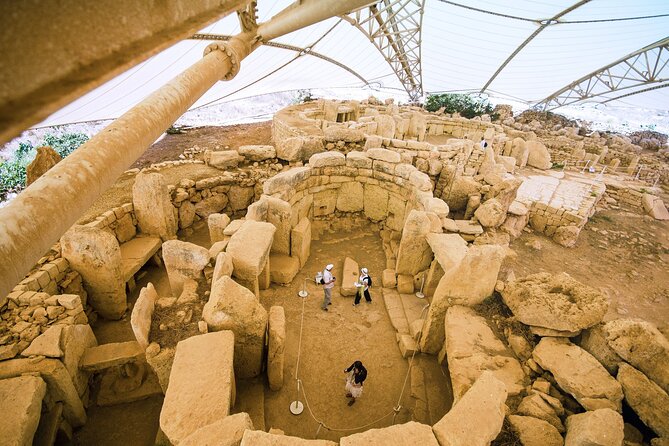
Malta’s megalithic temples are among the most important attractions covered by the longer passes. They are not quick photo stops. You will get more from them if you understand that these enormous stone structures were built thousands of years before the Egyptian pyramids.
Ħaġar Qim sits on a hill above the sea, looking toward the islet of Filfla. The temple complex dates mainly from 3800 to 2200 BC and includes some huge limestone blocks, one estimated at close to 20 tons. An opening in one chamber aligns with the summer solstice sunrise.
Nearby Mnajdra has three temples around an oval forecourt. Its South Temple is linked to the equinoxes and solstices through the alignment of doorways and decorated stones. The visitor center at both sites adds useful displays, which help turn bare stone into something more understandable.
Tarxien Temples offer detailed carvings, a large figure with a skirted lower half, and evidence that the site was reused as a Bronze Age cremation cemetery. An elevated walkway gives you a good view of the layout.
Ta’ Ħaġrat and Skorba are smaller and more exposed. Ta’ Ħaġrat is noted for its monumental entrance and local Upper Coralline Limestone. Skorba is important because it includes remains of domestic huts, not just ceremonial buildings. Those huts offer a glimpse of daily life around the temple period.
Borġ in-Nadur, near St. George’s Bay, links the late Temple Period with the Bronze Age. It is close to Għar Dalam, so the two can be paired if transport and opening hours work in your favor.
These sites are spread across the island. That is where the pass’s value meets its main practical weakness. Admission may be covered, but reaching several remote temples takes time. Do not plan four or five archaeological sites in one day unless you have dependable transport and a strong interest in prehistory.
Mdina and Roman Malta tell a different story
St. Paul’s Catacombs lie outside ancient Melite, near today’s Mdina. The underground complex contains interconnected passages, burial chambers, and more than 30 hypogea. The circular rock tables, known as agape tables, were used for commemorative meals connected with the dead.
The Domvs Romana presents the private life of a Roman aristocratic household. Surviving mosaics and household objects show how people lived, dressed, ate, studied, and spent leisure time. A rare highlight is the group of marble statues of Emperor Claudius and his family found in a private home.
The seven-day pass adds Mdina Cathedral and Museum. The cathedral dates from 1702 and contains an inlaid marble floor, painted ceiling, artwork, woodwork, silver objects, statues, and stained glass. The museum adds rare coins, silverware, prints by Albrecht Dürer, paintings, and a Baroque trompe l’oeil dome.
Għar Dalam takes you much further back. Its cave displays bones from small elephants and hippopotami that lived on Malta during the Ice Age, along with evidence of human presence dating back about 7,400 years. The site also includes a garden of native plants.
Ta’ Bistra Catacombs are the largest group of tombs accessible outside the ancient city area. The site has been studied in stages, so expect an archaeological setting rather than a polished attraction. That is part of its appeal, but it may feel less immediately rewarding than St. Paul’s Catacombs.
Forts and museums in the Three Cities
Across the harbor from Valletta, Fort St. Angelo gives you one of Malta’s best strategic viewpoints. The fort was the headquarters of the Order of St. John after 1530 and played a major role in the Great Siege of 1565. Displays combine military objects with explanations of the fort’s changing use, including its period as a Royal Navy command center.
The Inquisitor’s Palace in Birgu gives you a more domestic and institutional view of Maltese history. You can see reconstructed kitchens, formal rooms, private quarters, a tribunal, prison areas, and a torture chamber. The building also houses displays on religious customs connected with the Inquisition.
The Malta Maritime Museum occupies an old naval bakery and covers 7,000 years of seafaring. Its collection includes a Roman anchor, ship models, cannons, a Napoleonic figurehead, a working 1950s steam engine, and more than 60 boats.
These three sites make a good full day with careful planning. The Grand Harbour cruise provides the water-level view, while Fort St. Angelo provides the high defensive view. The bus may help, but traffic and departure times make a local taxi or ordinary bus useful as a backup.
Comino and Gozo require a full day
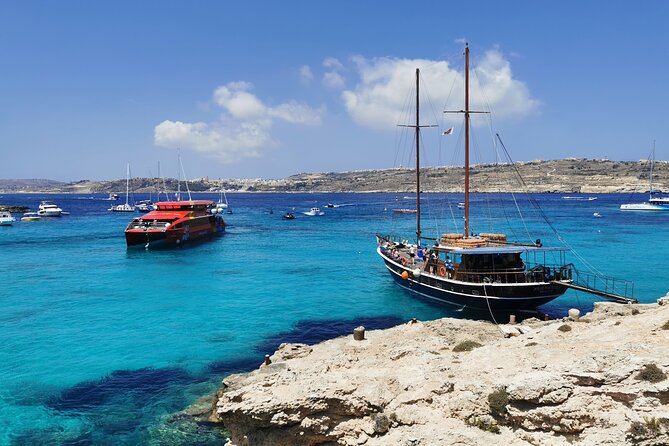
The four and seven-day passes include one round trip on Captain Morgan’s Two Islands ferries to Comino’s Blue Lagoon and Gozo. The ferry leaves from Sliema or Bugibba, with year-round departures stated in the supplied details.
The crossing takes you along Malta’s northeastern coast on a 33-meter catamaran with indoor air-conditioned seating, outdoor seating, restrooms, and a cash bar. At Comino, you have free time to swim, sunbathe, or walk around independently.
The plan generally allows about two hours on Comino and two hours on Gozo, though you can choose to spend around four hours on only one island. The crew gives the afternoon ferry times and any changes to the return schedule. Write them down or photograph the information. Return to the embarkation point at least 15 minutes before departure.
Gozo adds a one-day Heritage Pass option with the four and seven-day packages. The Gozo sightseeing buses run purple and blue routes with 15 stops, including Victoria, Dwejra, Xlendi, Marsalforn, Ramla, and the Ġgantija temples.
Included Gozo sites include the Gozo Museum of Archaeology, Gozo Nature Museum, Gran Castello Historic House, Cittadella Visitors’ Centre, Ġgantija Archaeological Park, Ta’ Kola Windmill, and the Old Prison in Victoria.
The schedule is ambitious. The ferry, bus routes, and site hours all need to line up. If Gozo is a priority, I would devote the whole day to it and avoid adding other Malta attractions. The Blue Lagoon is beautiful, but free time there can feel short when shared with a long ferry itinerary.
Cost, activation, and planning advice
At $88.72, the pass can save money if you use it aggressively. Individual museums and heritage sites often cost around $10, the sightseeing bus may cost about €20 per day, and the two-island ferry day can cost around €50 when purchased separately. Those figures are approximate, but they show why the pass can pay for itself after several museums, one cruise, bus use, and the island ferry.
The pass also encourages you to visit places you might skip if every entrance required another payment. That is useful in Malta, where smaller archaeological sites can be very rewarding.
The value disappears if you spend most of your time at the beach, use only ordinary city buses, or visit just two included attractions. The pass covers single entry at each attraction, so it is not designed for repeated visits.
Activation is an important practical step. Keep the QR code available as a screenshot on your phone, not only inside an email or message thread. Staff at some outlets may not immediately recognize every pass version, especially when packages and prices have changed. If there is confusion, ask for help before moving on, and make sure you are presenting the correct QR code.
Free cancellation is available up to 24 hours before the start time. Changes made inside that window are not accepted, and poor weather may lead to a different date or a full refund. Some attractions can close for refurbishment, so check current openings before you count a site toward your savings.
Who should buy the Malta Multi Pass?
I would recommend it to you if you enjoy museums, forts, prehistoric sites, and structured sightseeing. It is especially useful for a four, six, or seven-day visit with several full sightseeing days.
Families may like the aquarium and Esplora science center, while history-focused visitors will get the most from the longer versions. Staying near a City Sightseeing stop, particularly around Sliema, can make the bus portion easier.
I would be cautious if you want a flexible transport pass. It does not include Malta’s normal public buses, and the hop-on-hop-off service may not run often enough for tight connections. I would also skip it if you plan to spend most days swimming or if the state rooms, Gozo, or specific museums are the main reason for buying.
FAQ
How many days is the Malta Multi Pass valid?
The pass is offered in three, four, six, or seven-day versions. It is valid for consecutive days once activated.
Does every pass include the Grand Harbour cruise?
Yes. Captain Morgan’s 90-minute Grand Harbour cruise is included with all pass lengths.
Does the pass include the Malta sightseeing buses?
Yes. All passes include the City Sightseeing Malta North and South routes, with hop-on-hop-off access according to the operating schedule.
Does the pass include Malta’s regular public buses?
No. The included bus service is City Sightseeing Malta. Ordinary local buses are not included.
Is Gozo included?
The four and seven-day passes include one round trip by Captain Morgan’s ferry to Comino and Gozo. A one-day Gozo Heritage Pass, including Gozo sightseeing buses and selected sites, is included with the four and seven-day options as described.
Can I visit Comino’s Blue Lagoon with the pass?
Yes, the four and seven-day passes include one round trip to Comino’s Blue Lagoon and Gozo from Malta. You can choose to visit both islands or spend more time on only one.
Is Ħal Saflieni Hypogeum included?
No. Ħal Saflieni Hypogeum requires a separate ticket and advance reservation.
Are the Palace State Rooms open?
The Palace State Rooms are temporarily closed until further notice. The Palace Armoury remains listed as an included attraction on the six and seven-day passes.
What happens if an attraction is closed?
Some sites may close for refurbishment. Check current opening information before visiting, since the pass does not guarantee access to a temporarily closed site.
Can I cancel the pass for a refund?
You can cancel for a full refund at least 24 hours before the experience start time. Cancellations or changes made less than 24 hours before that time are not accepted for a refund.
Should you book it?
Book the Malta Multi Pass if you plan to visit several museums and forts, take the harbor cruise, and use the island ferry. The six or seven-day versions offer the strongest access to Malta’s prehistoric sites and Heritage Malta collections.
Choose the four-day option if you want a shorter visit with Comino, Gozo, and the main Valletta attractions. Before paying, check the exact inclusions, confirm that your most wanted sites are open, and plan around the slow sightseeing buses. Used with that discipline, the pass can be a good money saver and a fine excuse to see far more of Malta than Valletta’s postcard center.
Just added in Malta
- Wakeboarding Adventure in Malta: Learn to Ride★ 5.0 · 4 reviews
- Gozo: Wine Tasting and Paired Dinner Experience★ 4.9 · 43 reviews
- Victoria, Gozo: Sunset Walking Food and Drink Tour★ 5.0 · 6 reviews
- World War II Malta Full-Day Walking Tour★ 4.3 · 18 reviews
- Malta: 5 hr Vintage Bus Tour – Mdina & Blue Grotto inc. food★ 5.0 · 22 reviews
- Valletta: Private Massage from a world renowned masseuse★ 4.6 · 9 reviews
- Valletta Street Food & History Tour With Private Transfers★ 4.5 · 15 reviews
- Valletta: Private Maltese Cuisine Walking Tour★ 4.8 · 8 reviews