
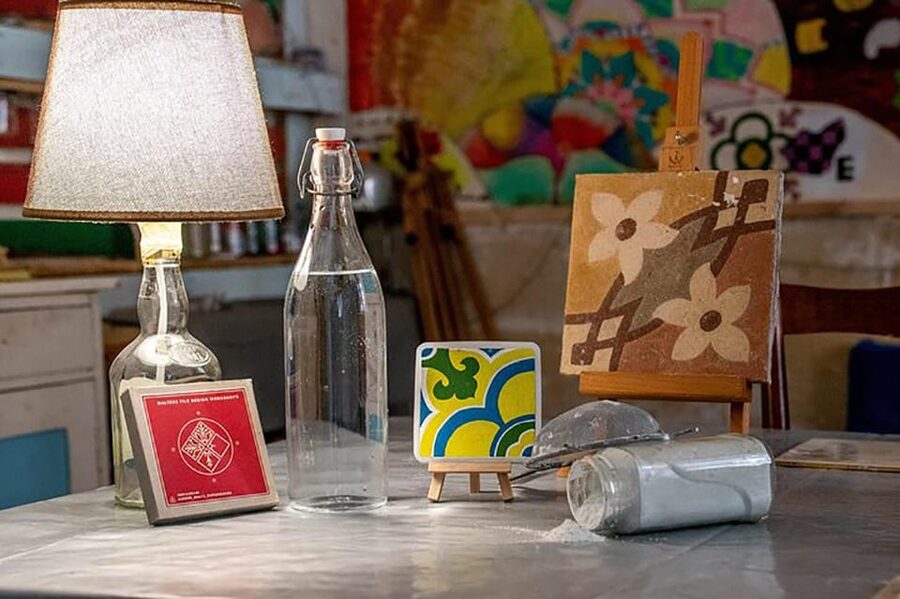
Review · WORKSHOPS
Maltese Tile – Souvenir painting workshop with local
Paint Malta, then pack it home. This friendly two-hour workshop lets you make a 10-by-10-centimeter Maltese tile in a traditional townhouse, guided by local artist and educator Clive. I like the hands-on format, and I like that your finished piece is ready to carry away without baking or waiting.
The small group, limited to six people, keeps the session personal. Clive’s patient teaching and easy conversation are a big part of the appeal. The main consideration is that this is a quiet studio activity, not a major sightseeing tour, and two hours generally produces one coaster-sized tile.
In This Review
- Key points at a glance
- Why Maltese tiles make better souvenirs
- Finding the studio at door number 23
- The first 15 minutes: a short introduction to Maltese tiles
- Creating the cement tile from the start
- Designing your own Maltese pattern
- Painting with Clive’s help
- A traditional house instead of a busy attraction
- How much does the $41 price offer?
- Who will enjoy this most?
- Timing, group size, and planning your visit
- What makes the instructor part of the experience
- The finished tile and taking it home
- Should you book this Maltese tile workshop?
- FAQ
- How long does the Maltese tile workshop last?
- How much does the activity cost?
- Where does the workshop take place?
- How do I find the meeting point?
- How many people can join the workshop?
- What language is the workshop taught in?
- What do I make during the activity?
- Can I take the tile home immediately?
- Are materials included?
- Can I make more than one tile?
- Is the workshop suitable for children?
- What happens if my preferred date is unavailable?
- Can I cancel the booking?
- Can I reserve now and pay later?
- Should I bring anything special?
Key points at a glance
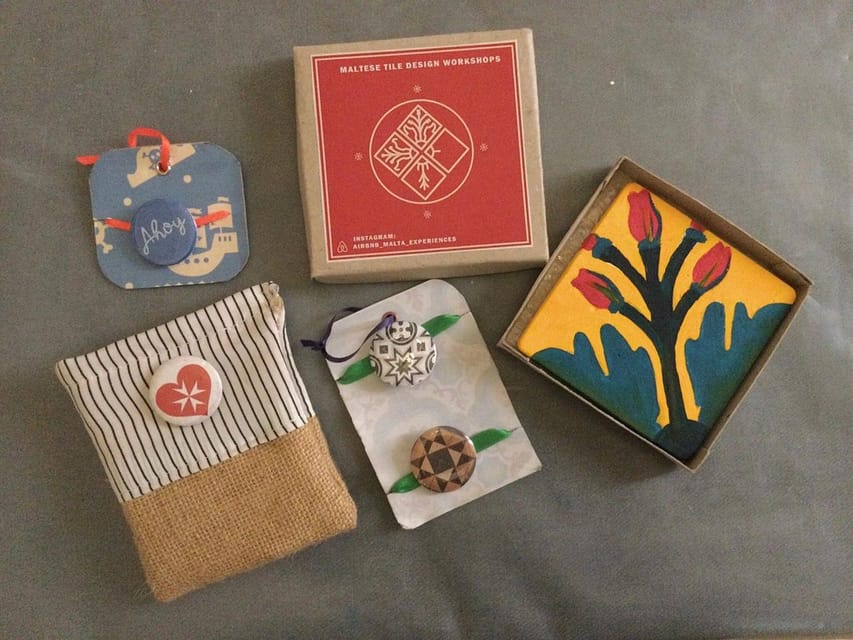
- Make a real Maltese souvenir: You design and paint a coaster-sized tile, then take it home in a handmade box.
- Work inside a traditional townhouse: The studio is in an Urban Conservation area, with a typical closed Maltese balcony and a brown-and-white door.
- Learn from Clive: The local artist is also an educator and runs a non-profit organization, bringing cultural context to the craft.
- Good for non-artists: The process is explained step by step, and you can use an existing pattern if designing from scratch feels daunting.
- A useful hot-weather break: The relaxed indoor setting gives you a creative pause from Malta’s busy sightseeing days.
- Small-group setting: With no more than six participants, you have room to ask questions and receive help.
Why Maltese tiles make better souvenirs
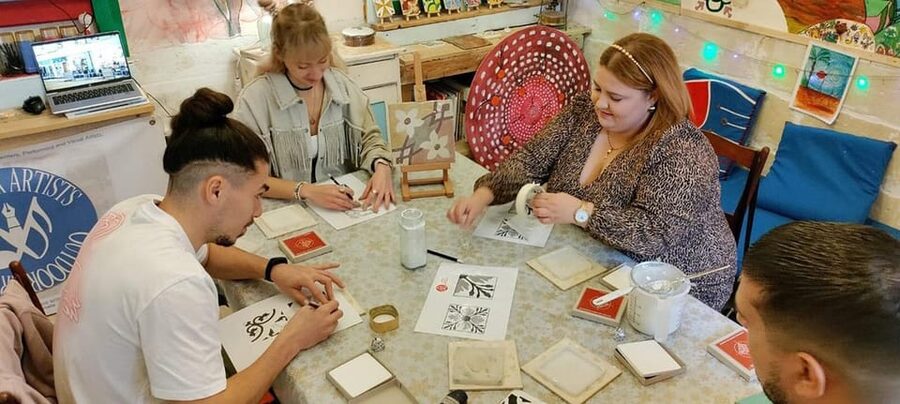
Many holiday souvenirs are easy to buy and easy to forget. This one asks you to spend time making something yourself, which gives it a stronger connection to your visit.
The tile is based on Maltese artistic and cultural traditions. You are not simply painting a blank craft object. Clive first explains the background of Maltese tiles, then shows how the piece moves from an idea to a finished design. That short introduction gives the activity a sense of place.
Your tile is made from white cement and measures about 10 by 10 centimeters. It is coaster-sized, so it is small enough to pack without taking over your luggage. It also has a clear use at home, unlike some decorative souvenirs that end up in a drawer.
I particularly like the fact that the tile does not need to be baked. You paint it during the workshop and take it home straight away. The host places it in one of his handmade boxes, so you do not need to improvise protective wrapping at the end of the day.
Other trips worth a look in Malta:
- Malta: Gozo & Comino Islands, Blue Lagoon & Seacaves Tour
★ 4.5 · 15,672 reviews - Comino: Blue Lagoon, Crystal Lagoon, and Seacaves Tour
★ 4.6 · 5,673 reviews - Malta: Blue Lagoon, Beaches & Bays Trip by Catamaran
★ 4.7 · 5,496 reviews
Finding the studio at door number 23
You go directly to the host’s home and studio. The address is door number 23, marked by a brown-and-white door and a typical closed, white Maltese balcony. The house is on a slightly sloped road.
That description matters in Malta, where traditional streets can have similar-looking façades and door numbers are not always obvious from a distance. Keep an eye out for the balcony and door rather than relying only on a street number.
The studio sits in an Urban Conservation area, inside a traditional Maltese townhouse that Clive is turning into a living arts space. That setting is part of the activity. You are not sitting in a generic classroom with rows of tables. You are working in a lived-in historic building connected to the person teaching you.
The information provided does not specify transportation, parking, or the exact neighborhood name. Plan to arrive at the meeting point itself, and contact the host if you need help confirming the date or location.
The first 15 minutes: a short introduction to Maltese tiles
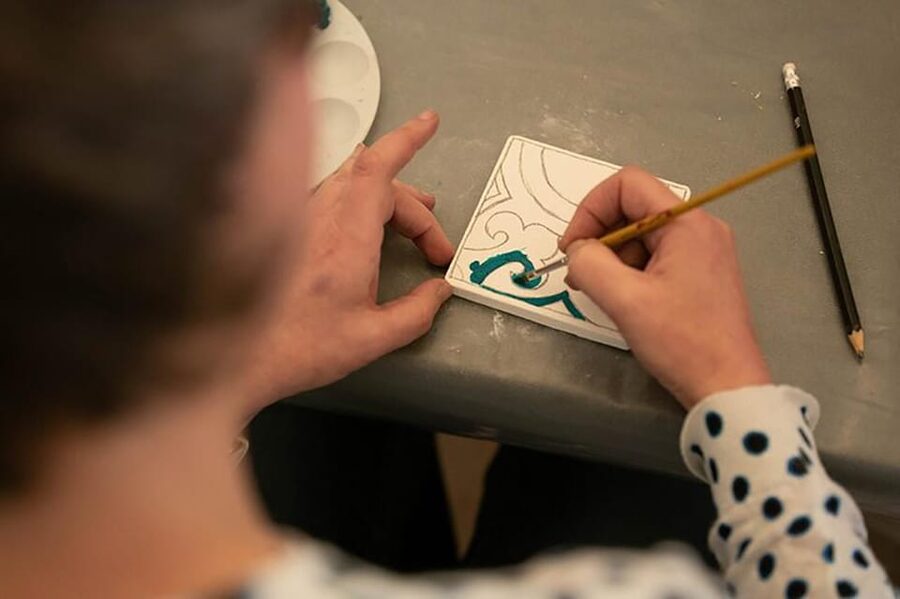
The workshop begins with brief historical information about Maltese tiles. This is not presented as a long academic lecture. It is enough background to explain why the object you are about to make matters in Maltese art and culture.
I like this balance. You get context before picking up a brush, but the session remains active. Clive also knows about Malta more broadly, so the conversation can move beyond the tile itself. Several people have enjoyed his suggestions and general conversation about the island, which adds value if this workshop falls early in your visit.
The tone appears informal and welcoming. Clive is described as patient, funny, friendly, and easy to talk with. Those qualities matter in a creative class, especially if you are worried about making mistakes. You can ask questions without feeling that you are slowing down the group.
Creating the cement tile from the start
After the introduction, you create the base for your tile using white cement. This gives you a look at the process rather than limiting the activity to surface decoration.
Clive explains how the tile is made from concept to realization. You transfer the design to the mold, prepare the coaster-sized piece, and then move on to painting. The sequence helps you understand that the tile is a small crafted object, not simply a picture painted on a ready-made board.
You should expect some practical instruction here. The activity is suitable for beginners and more experienced participants, but it is still a craft workshop rather than a free-form painting class. You follow a process, and the instructor guides you through it.
The supplied information does not describe drying times, protective coatings, or how the finished cement feels once painted. What is clear is that you can take the tile with you at the end. Handle it with care while packing, especially since it is a handmade cement piece.
A completely different kind of day:
- Malta: Gozo, Comino, Blue & Crystal Lagoon, & Caves Cruise
★ 4.6 · 5,092 reviews - From Malta: Full-Day Gozo UTV Tour with Lunch and Boat Ride
★ 4.6 · 4,408 reviews - From Sliema: Comino, Crystal Lagoon, and Blue Lagoon Cruise
★ 4.5 · 3,792 reviews - From Sliema: Gozo, Comino and Blue Lagoon Cruise
★ 4.5 · 3,461 reviews
Designing your own Maltese pattern
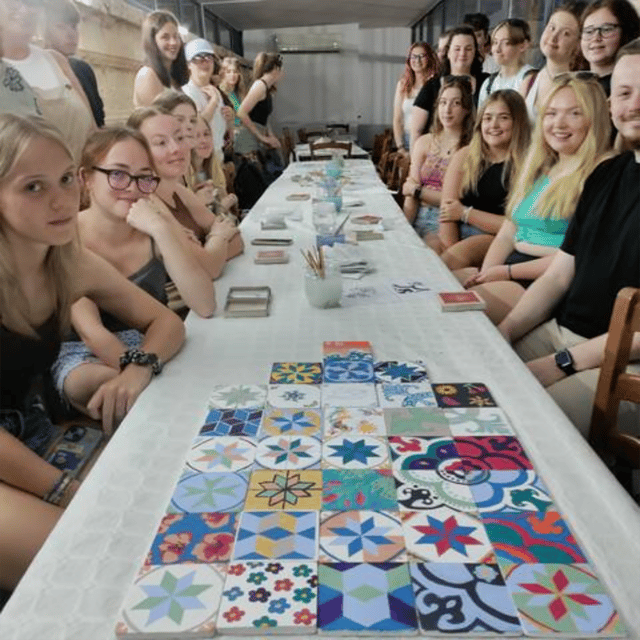
Once the base and method are clear, you choose your design. You can create your own pattern based on Maltese cultural elements or use one of the available designs.
That choice makes the session work for different personalities. If you love drawing, you have space to create something personal. If you would rather follow a guide, you are not forced to invent a pattern from a blank page.
You transfer the design to the mold before painting. This stage gives you a chance to think about shapes and placement instead of rushing straight into color. It also means the final tile can be personal without requiring advanced drawing skills.
The workshop does not promise that every tile will look professionally made. That is part of its value. Small variations show that you made it yourself. If you want a flawless factory-produced souvenir, a shop-bought tile may suit you better. If you want something tied to your own holiday, this approach is much more rewarding.
Painting with Clive’s help
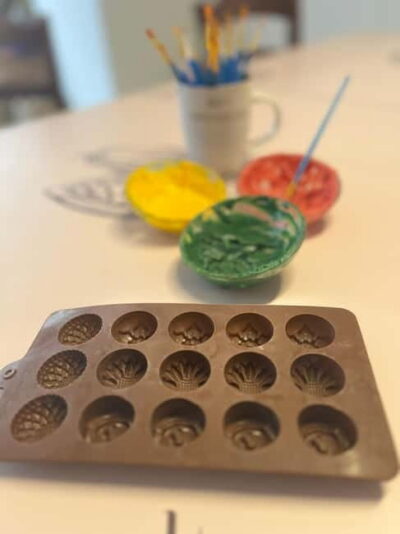
The painting stage is the heart of the experience. Materials are included, and Clive teaches the method as you work. You can ask for help with the pattern, the painting, or the practical steps involved in handling the tile.
This is where the instructor’s manner makes a difference. Clive has been praised for patience, humor, and clear instruction. That combination helps people who do not think of themselves as artistic. One particularly useful feature is that the activity can appeal to a mixed group: one person can be confident with art while another simply enjoys trying something new.
You may also find this a good choice for a parent and child, though children under six are not allowed. A 12-year-old has been specifically described as enjoying the session, and a family with a child found it suitable. The activity is not just for couples or serious art fans.
Tea, coffee, or water is included. One session also included tea and biscuits, although biscuits are not listed as a standard inclusion, so you should treat the drinks as the confirmed offering. This small touch suits the slow pace. You can sit, talk, and paint without feeling pushed along.
A traditional house instead of a busy attraction
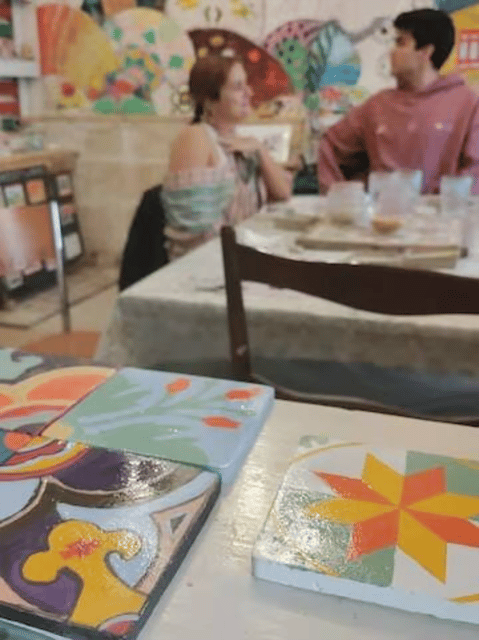
Malta’s main sights can fill a day quickly. You may spend hours moving between churches, museums, streets, and waterfront views. This workshop gives you a different way to spend part of the day.
The house and studio create a calm setting. You sit indoors, work with your hands, and listen to a local person explain a piece of Maltese culture. It is particularly useful during very hot weather, when a quiet creative activity can feel more comfortable than another outdoor stop.
The setting is also a good fit for solo visitors. A group of up to six gives you a chance to meet other people without the scale of a large class. At the same time, you should not expect a private lesson unless you book a suitable arrangement. The small-group format is personal, but it is still shared.
This is also listed as suitable for team-building. The simple, guided process gives a group a common task, and the limited group size should make conversation easier. For a work group or friends, making tiles together can be more memorable than simply sitting down for a meal.
How much does the $41 price offer?
At $41 per person, the workshop is not the cheapest way to buy a souvenir in Malta. You could purchase a ready-made tile for less, depending on the shop. The price makes more sense when you count the instruction, the materials, the cultural introduction, the studio setting, and the handmade box.
You are paying for an activity and an object. The two-hour length gives you enough time to make decisions, receive guidance, and finish the tile without turning the session into a rushed craft stop.
The value is strongest if you enjoy meeting local people and making things. It is weaker if you mainly want a polished souvenir with no effort attached. I would also factor in the size of the finished item. This is a small coaster-sized tile, not a large decorative piece.
Extra tiles cost 4 euros each. A tile kit to take home starts at 5 euros. These additions could be useful if you want to continue the craft after your trip or make several gifts, but the standard session is built around one tile.
Who will enjoy this most?
I would recommend the workshop to:
- People who like art, craft, and local culture
- Solo visitors looking for a social activity
- Couples wanting a shared souvenir
- Families with children aged six and older
- Friends or small groups seeking a relaxed team activity
- Visitors who need an indoor break from the heat
- Anyone who prefers experiences over mass-produced gifts
You do not need prior painting experience. The instructor provides a tutorial, and the option to use an existing pattern removes much of the pressure.
It may not suit you if you dislike sitting still for two hours, want a fast stop between major sights, or expect a large-scale tile-making studio. The work is focused and fairly small in size. The reward comes from the process and the personal result.
Prescription glasses are recommended if you use them. That is a practical point worth noting because painting a small pattern requires close attention.
Timing, group size, and planning your visit
The activity lasts two hours, with starting times subject to availability. The group is limited to six participants, which is a useful middle ground. You get more personal help than in a large class, but the session still has a social feel.
Contact the host if the date you want is not showing as available. That direct communication can also help you confirm the meeting point, especially since you go straight to the townhouse rather than to a separate public attraction.
You can cancel up to 24 hours in advance for a full refund. The reserve-now, pay-later option allows you to keep plans flexible and pay nothing at the time of booking. These policies are useful if your Malta schedule depends on weather, ferry plans, or changing sightseeing priorities.
The host speaks English, and the instruction is given in English. If you want postcards or other handmade items, you can browse them at the studio, though these are separate purchases.
What makes the instructor part of the experience
The tile is the advertised activity, but Clive is a large part of its appeal. He is a local artist, an educator, and the person developing the townhouse into a living arts space. You are learning from someone connected to the work rather than following a purely commercial demonstration.
His teaching style appears to be particularly strong for beginners. He explains the steps, keeps the conversation moving, and gives people room to work at their own pace. The repeated praise for his warmth and patience suggests that the atmosphere is as important as the technique.
I also like that the activity can broaden into a conversation about Malta. You can ask questions while painting, and the workshop may give you useful ideas for the rest of your stay. It is not a formal sightseeing tour, so do not book it expecting a full lecture on Maltese history. Think of it as a personal introduction through one small artistic tradition.
The finished tile and taking it home
At the end, you keep the tile you created. Since it does not require baking, you do not have to return later to collect it. That makes the workshop easy to fit into a short visit.
The handmade box is a thoughtful touch. A tile can chip if placed loose in a suitcase, so use the box and pack it among soft clothing. The exact packing advice is not formally specified, but basic care is sensible for any cement craft piece.
The finished object will carry the marks of your own design and painting. That is what makes it a useful gift for someone at home. You can give the person a small piece of Maltese culture and tell them how you made it, rather than handing over a souvenir with no story.
Should you book this Maltese tile workshop?
Book it if you want a small, personal Malta experience with a souvenir you actually made. The strongest reasons are the traditional townhouse setting, Clive’s friendly instruction, the small group, and the fact that you leave with the finished tile in hand.
I would especially choose it for a hot afternoon, a solo day, a family with children over six, or a couple that wants more than another meal or photo stop. The $41 price is fair when you value the two-hour lesson, materials, drinks, cultural background, and handmade keepsake together.
Skip it if you want a major historical attraction, a large finished artwork, or a quick shopping stop. For everyone else, this is an easygoing way to meet a local, learn a little about Maltese tile work, and bring home something with your own fingerprints on it.
FAQ
How long does the Maltese tile workshop last?
The workshop lasts two hours.
How much does the activity cost?
The listed price is $41 per person.
Where does the workshop take place?
It takes place in the host’s studio inside a traditional Maltese townhouse in an Urban Conservation area.
How do I find the meeting point?
Go directly to door number 23. Look for a brown-and-white door and a typical closed, white Maltese balcony on a slightly sloped road.
How many people can join the workshop?
The group is limited to six participants.
What language is the workshop taught in?
The instructor teaches in English.
What do I make during the activity?
You create and paint a coaster-sized Maltese tile measuring about 10 by 10 centimeters.
Can I take the tile home immediately?
Yes. The tile does not need to be baked, so you can take it home after painting it.
Are materials included?
Yes. Painting materials and a tutorial by a qualified teacher are included, along with coffee, tea, or water.
Can I make more than one tile?
Yes. Additional tiles cost 4 euros each. You can also buy a tile kit to take home, starting from 5 euros.
Is the workshop suitable for children?
Children under six are not permitted. The activity has also been enjoyed by older children, including a 12-year-old.
What happens if my preferred date is unavailable?
You should contact the host if the date you want is not available.
Can I cancel the booking?
You can cancel up to 24 hours in advance for a full refund.
Can I reserve now and pay later?
Yes. The reserve-now, pay-later option lets you hold your plans without paying at the time of booking.
Should I bring anything special?
If you use prescription glasses, you are advised to bring them for the painting activity.
Just added in Malta
- Wakeboarding Adventure in Malta: Learn to Ride★ 5.0 · 4 reviews
- Gozo: Wine Tasting and Paired Dinner Experience★ 4.9 · 43 reviews
- Malta: 5 hr Vintage Bus Tour – Mdina & Blue Grotto inc. food★ 5.0 · 22 reviews
- Victoria, Gozo: Sunset Walking Food and Drink Tour★ 5.0 · 6 reviews
- World War II Malta Full-Day Walking Tour★ 4.3 · 18 reviews
- Valletta: Private Massage from a world renowned masseuse★ 4.6 · 9 reviews
- Valletta Street Food & History Tour With Private Transfers★ 4.5 · 15 reviews
- Valletta: Private Walking Tour With A Guide ( Private Tour )★ 5.0 · 1 review
Workshops, compared.



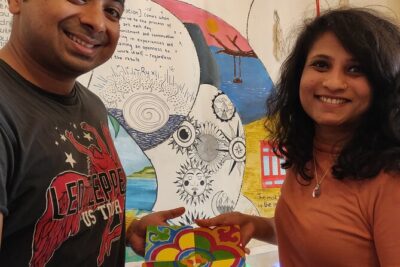
Workshop: Maltese Souvenir Tile Design Experience
Read our review →
Browse the lists this tour appears in