
Review · WORKSHOPS
Workshop: Maltese Souvenir Tile Design Experience
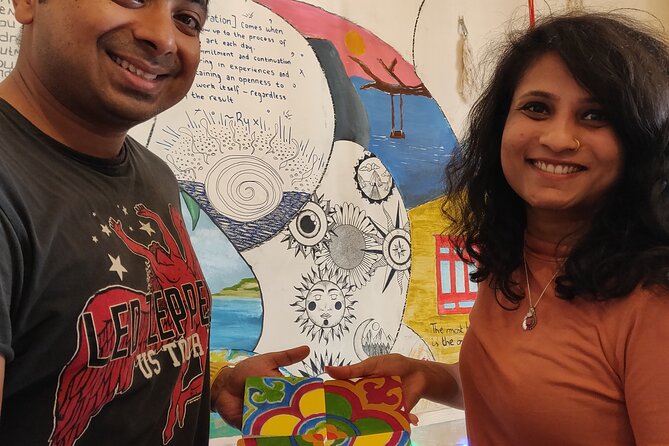
Make a souvenir, not a purchase. In a small traditional house in Marsa, Clive guides you through the story, design, molding, and painting of a Maltese tile. I like the hands-on cultural lesson and the fact that you leave with a useful 10 by 10 centimeter coaster made by you. I also like the quiet indoor setting, especially when Malta’s sun needs a break.
The main drawback is that this is a small, focused workshop rather than a broad sightseeing tour. You spend about two hours at one art studio, and the tile is air-dried rather than fired in a kiln. Booking terms are strict, and the activity can also be affected by weather or minimum group requirements.
In This Review
- Key points to know before you book
- Why this Marsa workshop feels different
- Arriving at 23 Gizwiti in Il-Marsa
- The opening lesson on Maltese tiles
- Designing a pattern you can actually finish
- From plaster mold to handmade tile
- Painting with quick-drying acrylics
- Meeting Clive in his artistic home
- The value of two hours and $35.95
- Who will enjoy this activity most
- Practical details that can affect your plans
- Should you book the Maltese tile workshop?
- FAQ
- Where does the Maltese tile workshop take place?
- How long does the activity last?
- How much does the experience cost?
- Is the workshop suitable for beginners?
- What will I make during the class?
- Are the tiles baked in an oven?
- Can I make an extra tile?
- Is the activity refundable if I cancel?
Key points to know before you book
- A local art studio in Marsa: The workshop takes place in Clive’s ground-floor studio, part of a traditional house that he is slowly restoring and filling with art.
- You make one 10 by 10 centimeter tile: It can serve as a coaster, giving you a practical souvenir rather than another object destined for a drawer.
- The process runs from research to paint: You learn about Maltese tile designs, choose or create a pattern, form the tile, transfer the design, and finish it with acrylic paint.
- Beginners are welcome: Clive offers help at each stage, while more experienced artists can make their own design choices.
- It is a private activity: Only your group takes part, so the pace and level of help can be adjusted to you.
- Bring patience, not painting skills: Acrylic dries quickly, but the tile is air-dried and made with plaster or white cement, not baked in an oven.
Why this Marsa workshop feels different
Malta offers plenty of grand churches, boat trips, and museum visits. Those are worthwhile, but this workshop gives you a slower way to connect with the country. You sit down, use your hands, and make something linked to Maltese design.
I like that the class does not treat art as something reserved for experts. You can use one of the available traditional patterns or create a design of your own. That choice matters. If you want guidance, you have a starting point. If you already draw or paint, you have room to put your own mark on the tile.
The setting adds to the experience. Clive’s studio is in the ground floor of an eclectic, artistic house in Marsa. It is not a polished craft school with a row of identical tables. The house is being refurbished over time, and its character is part of the afternoon. You are meeting an artist in his working environment, not simply attending a packaged demonstration.
Clive also talks about Maltese art and culture beyond the tile itself. That makes the activity more useful than a simple paint-and-take-home class. You get a local conversation along with the craft.
Other trips worth a look in Malta:
- Malta: Gozo & Comino Islands, Blue Lagoon & Seacaves Tour
★ 4.5 · 15,672 reviews - Comino: Blue Lagoon, Crystal Lagoon, and Seacaves Tour
★ 4.6 · 5,673 reviews - Malta: Blue Lagoon, Beaches & Bays Trip by Catamaran
★ 4.7 · 5,496 reviews
Arriving at 23 Gizwiti in Il-Marsa
The meeting point is 23 Gizwiti, Il-Marsa, MRS 1562, Malta. The activity begins and ends at the same address, which keeps the logistics simple.
One practical warning deserves attention: Google Maps has reportedly sent people to the wrong side of the street. There are several number 23 addresses in the area, so check the location carefully before setting out. The studio is near public transportation, and a mobile ticket is provided, but the supplied details do not specify a particular bus route or stop.
You should dress comfortably. Painting and molding are hands-on work, and comfortable clothing lets you concentrate on the design rather than worry about every mark. The studio provides an indoor break from the heat, though the booking conditions still say the activity requires good weather. That is worth keeping in mind when planning around an unsettled forecast.
The opening lesson on Maltese tiles
The workshop starts with brief historical information about Maltese tiles. This opening gives you a reason for the patterns you are about to use, rather than asking you to paint a decoration with no connection to Malta.
The history lesson is intentionally brief. If you want a long lecture on ceramics, architecture, or industrial production, this is not that kind of class. The value comes from learning enough context to understand the visual language before making your own piece.
Clive explains the traditional method and helps you look through designs typical of Malta. You can select a pattern from the available examples, or begin with your own idea. That makes the class suitable for a mixed group. A parent and teenager can work from a familiar pattern, while an experienced artist can make something more personal.
I would treat this stage as a chance to ask questions. Clive is described as a friendly art teacher who also discusses Malta’s art scene, culture, and his own work. The class is not only about following instructions. Conversation is part of what you are paying for.
Designing a pattern you can actually finish
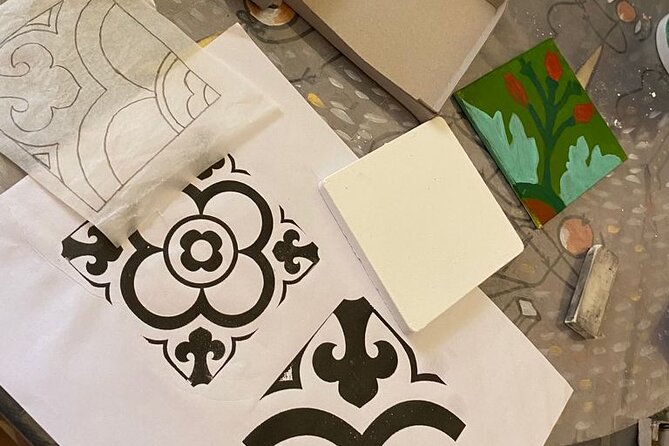
The next step is research and design. You decide what will go on your tile, then work out how the pattern will fit a small square surface.
A 10 by 10 centimeter tile is not large. That is good news for beginners because the project remains manageable, but it also means that a complicated design may need simplifying. You do not have a huge canvas for a sweeping scene. Repeated shapes, borders, and simple motifs are likely to work better within the available space.
You can use a pattern supplied in the studio if you do not feel ready to invent one. I see this as an important part of the workshop’s value. A class can become frustrating when the instructor says be creative and leaves you with no place to start. Here, you have a visual reference and help from Clive when you want it.
The choice also lets you make the souvenir your own. Two people can use the same basic design and end with different results through color and brushwork. That personal touch is the point. You are not buying a factory-made tile that happens to come from Malta.
A completely different kind of day:
- Malta: Gozo, Comino, Blue & Crystal Lagoon, & Caves Cruise
★ 4.6 · 5,092 reviews - From Malta: Full-Day Gozo UTV Tour with Lunch and Boat Ride
★ 4.6 · 4,408 reviews - From Sliema: Comino, Crystal Lagoon, and Blue Lagoon Cruise
★ 4.5 · 3,792 reviews - From Sliema: Gozo, Comino and Blue Lagoon Cruise
★ 4.5 · 3,461 reviews
From plaster mold to handmade tile
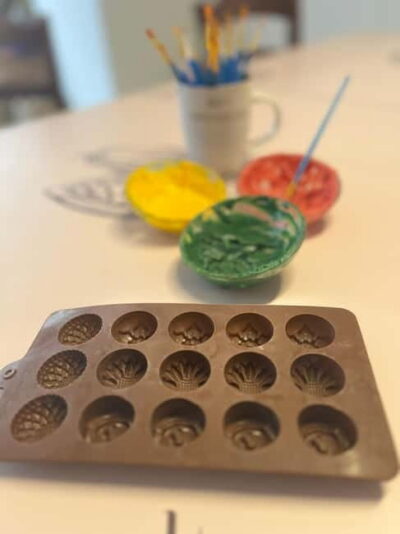
After the design comes the practical construction. You learn how to make the mold using plaster, then transfer the design to the mold. The tile itself is made with plaster or white cement.
This part gives the workshop more substance than a standard tile-painting session. You are not simply handed a finished blank and told to decorate it. You see how the object takes shape from the early stages, from pattern planning to the surface you will paint.
Clive helps you through each step. That is useful for beginners, since molding and transferring a design can feel less familiar than painting. It also means you can ask for an opinion when you are unsure about a pattern or placement.
Keep the material in mind before you book. These tiles are not fired in an oven. They air-dry and are made with cement, as noted in the activity details. The result is a handmade decorative object and coaster, but it is not the same as a kiln-fired ceramic tile. If you want a traditional baked ceramic piece, this workshop may not match your expectation.
That difference does not make the project less worthwhile. It simply tells you what you are taking home. You are learning a process adapted to a two-hour art class, with a finish that can travel home more easily than a fragile, freshly fired object.
Painting with quick-drying acrylics
Once the design has been transferred, you paint it with acrylics. Acrylic is a practical choice for a short workshop because it dries quickly and lets you see your finished colors within the session.
This is where the activity becomes quiet and absorbing. You can work at your own pace, with occasional help rather than constant instruction. One parent and daughter described the class as a pleasant afternoon because the timing allowed them to paint steadily without feeling rushed. That is the right expectation here: focused, relaxed making, not a race to complete a souvenir.
Clive can guide you through the painting and offer an opinion when you ask. You do not need previous experience. The class is also open to advanced participants, though an experienced painter may find the project more enjoyable by developing a personal pattern instead of simply copying one.
The finished tile can be used as a coffee coaster. That practical purpose gives it a place in daily life, and it may help the memory last longer than a small trinket bought at a souvenir shop. You also receive a box for taking it home, according to the experience details shared by a participant.
Photos are included in the price. They give you a record of the process, not only the finished tile, which is useful if you want to remember how the object was made.
Meeting Clive in his artistic home
The host is a large part of the appeal. Clive is described as warm, patient, and easy to talk with. He explains the tile-making method, answers questions about Malta’s art and culture, and discusses different artistic styles.
That personal contact makes the class work well for couples, families, and small groups of friends. A teenager interested in crafts can take part alongside adults, and nobody needs to arrive with formal art training. Since the activity is private, your group does not have to keep pace with strangers or compete for the instructor’s attention.
The house itself is also part of the story. It is traditional, eclectic, and being refurbished by Clive. You should not expect a formal gallery or a slick tourist center. If you enjoy places with signs of an artist’s own life and work, this setting will add character. If you prefer a highly polished studio with a fixed classroom layout, the informal atmosphere may feel less structured.
Clive’s local perspective is a strong reason to choose this over a generic craft class. You can ask about Maltese art, local culture, and the tile tradition while your hands are busy. That combination gives the afternoon a friendly, personal tone.
The value of two hours and $35.95
At $35.95 per person, the price is reasonable if you value instruction and a personal souvenir. You are paying for about two hours, the materials, Clive’s guidance, photos, and the completed tile. You also get access to an activity that connects directly to Malta instead of a generic painting project.
The value is less clear if you only want a finished object. A shop-bought coaster will usually be quicker and may cost less. This experience earns its price through the process: learning about the tile tradition, planning a design, making the form, and painting it yourself.
An extra tile may be possible if time allows. It costs 3 euro. Do not assume you will have time for one, since the main activity already includes several stages. Ask Clive during the workshop if you want to add another piece.
The average booking time is about 20 days ahead. That suggests you should reserve early if the class is an important part of your Malta plans, especially because it is a private activity with limited availability.
Who will enjoy this activity most
I would recommend the workshop to you if you want a break from sightseeing that still has a clear connection to Malta. It is a good fit for:
- Couples looking for a shared, low-pressure activity
- Families with a teenager interested in crafts
- Beginners who want patient instruction
- Experienced artists who enjoy working from traditional patterns
- Visitors seeking a handmade souvenir
- Anyone who needs an indoor activity during the hottest part of the day
It may not suit you if your schedule is packed with major sights and you dislike sitting for two hours. It is also not the right choice if you expect a fired ceramic tile, a large finished artwork, or a full-day art course.
The private format helps, but the project still needs concentration. You will spend much of the session painting a small surface. That is relaxing for some people and too quiet for others.
Practical details that can affect your plans
The activity is offered in English. Service animals are allowed, and most people can participate. The studio is near public transportation, but no specific transport directions are provided, so confirm your route and double-check the street address.
Confirmation is normally received at booking. If you book within two days of travel, confirmation can take up to 48 hours and remains subject to availability.
The cancellation policy is strict. The experience is non-refundable and cannot be changed for any reason. If poor weather causes a cancellation, you will be offered another date or a full refund. If the minimum number of participants is not reached, you will be offered another date or experience, or a full refund.
That weather rule may seem unusual for an indoor studio, so do not leave this booking until the last minute if it is central to your plans. You should also avoid scheduling it immediately before an important flight or ferry connection. The session ends back at the meeting point, but your own onward travel remains your responsibility.
Should you book the Maltese tile workshop?
Book it if you want to make something yourself, hear a local artist talk about Malta, and spend two calm hours away from the heat and usual sightseeing route. The best parts are the private setting, Clive’s patient help, and the chance to take home a useful tile with your own design.
Skip it if you want a major historical tour or a kiln-fired ceramic. The activity is small in scale, and its charm depends on enjoying the process rather than chasing a long list of sights.
For most art-curious visitors, couples, and families, I think the $35.95 price is fair. Check the address carefully, dress comfortably, allow time for painting, and remember that your finished tile is air-dried cement or plaster. If that sounds like the kind of souvenir you would enjoy using at home, this is a thoughtful and distinctly Maltese choice.
FAQ
Where does the Maltese tile workshop take place?
The workshop takes place at 23 Gizwiti, Il-Marsa MRS 1562, Malta. It begins and ends at the same meeting point.
How long does the activity last?
The workshop lasts approximately two hours.
How much does the experience cost?
The listed price is $35.95 per person.
Is the workshop suitable for beginners?
Yes. The activity is suitable for both beginners and advanced participants, and Clive provides guidance throughout the process.
What will I make during the class?
You will make one 10 by 10 centimeter replica tile using plaster or white cement. It can be used as a coaster.
Are the tiles baked in an oven?
No. The tiles are air-dried and are made with cement or plaster rather than being fired in an oven.
Can I make an extra tile?
An extra tile may be possible if time is available. It costs 3 euro.
Is the activity refundable if I cancel?
No. The experience is non-refundable and cannot be changed for any reason. If the operator cancels because of poor weather or because the minimum number of participants is not met, you will be offered another date, another experience, or a full refund.
Just added in Malta
- Gozo: Wine Tasting and Paired Dinner Experience★ 4.9 · 43 reviews
- Wakeboarding Adventure in Malta: Learn to Ride★ 5.0 · 4 reviews
- Victoria, Gozo: Sunset Walking Food and Drink Tour★ 5.0 · 6 reviews
- World War II Malta Full-Day Walking Tour★ 4.3 · 18 reviews
- Malta: 5 hr Vintage Bus Tour – Mdina & Blue Grotto inc. food★ 5.0 · 22 reviews
- Valletta: Private Massage from a world renowned masseuse★ 4.6 · 9 reviews
- Valletta Street Food & History Tour With Private Transfers★ 4.5 · 15 reviews
- Valletta: Private Walking Tour With A Guide ( Private Tour )★ 5.0 · 1 review
Workshops, compared.




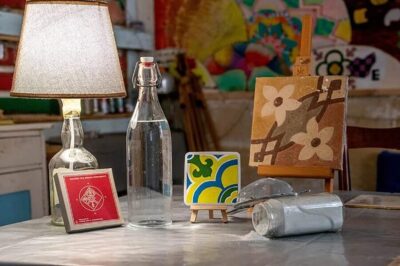
Maltese Tile – Souvenir painting workshop with local
Read our review →
Browse the lists this tour appears in