
Review · HISTORICAL TOURS
Entry Ticket for The Limestone Heritage Park and Gardens
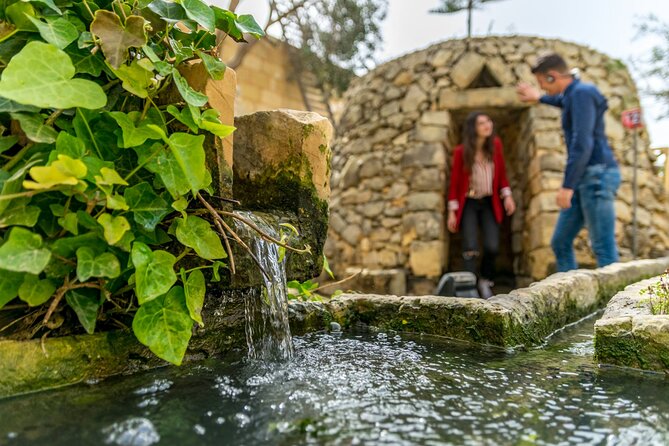
Stone tells Malta’s story. The Limestone Heritage Park and Gardens turns that story into an easy, hands-on visit, with a film, audio-guided walk, museum displays, gardens, animals, and live stonework demonstrations. I like the 17-language audio options and the chance to see how local limestone has shaped Maltese buildings, crafts, and daily life.
I also like the mix of culture and countryside. You can visit a Punic tomb, study local geology, meet farm animals, and end with a coffee or Maltese snack. The main consideration is the limited schedule: the park closes early, is closed on Sundays and public holidays, and food and drinks cost extra.
In This Review
- Key things to know before you go
- What the Limestone Heritage Park sets out to show
- Start with the audio-visual presentation
- Follow the 17-language audio-guided walk
- See Malta through its geology
- Visit the museum hall for the cultural context
- See the Punic tomb dating from about 400 B.C.
- Watch live stonework in progress
- Slow down in the citrus garden and farm animal park
- Finish with Maltese food and a small shop
- Is the $10.43 ticket good value?
- Practical planning for your visit
- Who will enjoy this park most?
- Should you book the Limestone Heritage Park?
- FAQ
- Where is the Limestone Heritage Park and Gardens located?
- How much does admission cost?
- How long should I allow for the visit?
- What languages are available?
- Is a live guide included?
- What is included with admission?
- Are food and drinks included?
- When is the park open?
- Can I cancel for a refund?
Key things to know before you go
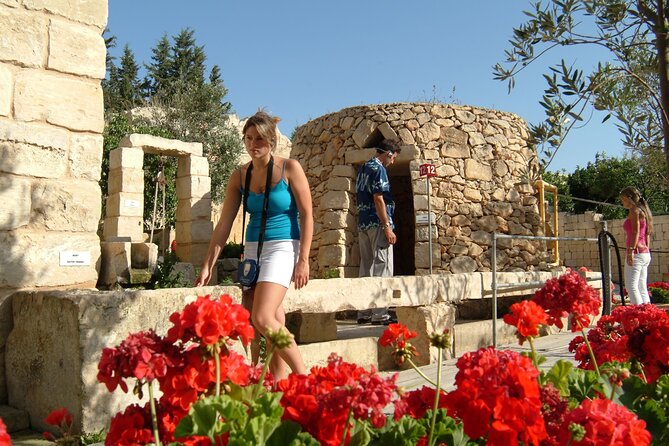
- A 7,000-year story in one compact visit: The park connects Malta’s geology, ancient past, farming traditions, and stoneworking in a single setting.
- Audio in 17 languages: You can follow both the audio-visual presentation and the walking tour in a language that suits you.
- Live stonework demonstrations: These add a practical look at a craft closely tied to Maltese buildings and monuments.
- A Punic tomb from about 400 B.C.: This is one of the park’s most distinctive historical features.
- Animals and gardens for a change of pace: The farm animal park and citrus garden make the visit work well for families.
- Short hours require planning: Opening is Monday through Friday from 9:00 a.m. to 4:00 p.m., and Saturday from 9:00 a.m. to noon.
What the Limestone Heritage Park sets out to show

The Limestone Heritage Park and Gardens is an outdoor attraction in the Maltese village of Siggiewi, described in the tour details as being in the Mgarr area. Its central idea is simple: to explain Malta through limestone.
That makes sense once you consider how much of Malta’s built character depends on this pale local stone. Here, you are not just looking at old walls or church facades. You are shown the material itself, its geological setting, its place in ancient burial customs, and the skills used to cut and shape it.
I like this approach because it gives the visit a clear thread. The park is not a collection of unrelated displays. The geology section explains the raw material. The museum hall adds cultural and historical context. The stonework demonstrations show what people do with it. The gardens and farm add a more relaxed side of rural Malta.
Plan on about one to three hours. Your exact timing depends on how closely you follow the audio, how long you spend in the museum and geology sections, and whether you stop for food or browse the shop.
More History Tours in Mgarr:
- Malta: Prehistoric Temples, Limestone Heritage & Blue Grotto
★ 4.2 · 412 reviews - Maltese Islands History Audio-Visual Show and La Sacra Infermeria Tour
★ 4.0 · 344 reviews - Valletta: Self-Guided Historical Walking Tour (Audio Guide)
★ 3.7 · 251 reviews
Start with the audio-visual presentation
Your visit begins with an audio-visual presentation about Malta’s past. It is available in 17 languages, which is useful if you want more than a quick walk around outdoor displays.
The presentation gives you the broad framework before you see the individual parts of the park. That matters here because the attraction covers a long span of time, from ancient geology to later craft traditions. Without some introduction, the tomb, quarry-related material, museum objects, and demonstrations could feel like separate pieces.
I would give this opening your full attention. It helps you understand why limestone is not simply a building material in Malta. It is tied to the appearance of villages, the work of local craftspeople, and the physical record of the islands.
The audio-visual format also gives families a manageable start. Younger children may not follow every historical detail, but the presentation creates a clear beginning before the more active parts of the visit.
Follow the 17-language audio-guided walk
The audio-guided walkthrough is the main way you explore the park. Like the presentation, it is available in 17 languages, so you can move at your own pace without depending on a live guide.
That point is important because no guide is included. You receive an entry ticket and recorded interpretation, not a personal tour. If you prefer asking questions as you go, this may feel less personal. If you like stopping, replaying information, or keeping your own pace, it is a practical arrangement.
The walk links the park’s different sections. Expect to move between historical displays, the geology area, outdoor spaces, the farm animal park, and the citrus garden. The setting gives the story room to breathe, instead of placing everything inside one crowded exhibition hall.
I would not rush this part. The attraction is best understood as a connected visit rather than a quick photo stop. The audio helps explain why each area matters, while the outdoor setting keeps the experience from feeling like a standard museum visit.
See Malta through its geology
The geology section is one of the most useful parts of the park because it explains the foundation beneath Malta’s towns and countryside. You get a closer look at the material that made local construction possible and helped define the appearance of the islands.
This section should appeal to anyone who wonders why Maltese villages have such a strong visual unity. It also gives children a way to connect the physical earth with the buildings they see elsewhere in Malta.
The geology display may be less immediately exciting than the animals or live demonstration, especially for younger children. Still, I would keep it in your visit. It gives meaning to everything that follows, particularly the stonework and the historic structures.
Because the ticket includes access to this area, you do not need to pay separately or choose between exhibits. It is part of the basic visit, along with the museum hall, gardens, tomb, and farm.
A few more options to weigh up in Mgarr
- St Paul’s Bay: Malta National Aquarium Entry Ticket
★ 4.4 · 2,532 reviews - Mellieha: Popeye Village Entry Ticket
★ 4.6 · 2,070 reviews - Mellieha: Popeye Village Malta Filmset Entry Ticket
★ 4.6 · 1,802 reviews - Malta National Aquarium Entrance Ticket
★ 4.0 · 643 reviews
Visit the museum hall for the cultural context
The museum hall adds objects and information to the outdoor experience. This is where the park can connect stone, local work, and Maltese customs in a more traditional display setting.
The museum is especially helpful after the audio-visual presentation. You will already have the broad timeline in mind, and the displays can help make that timeline more concrete.
I would treat this as a quieter section of the visit. It gives you a break from walking and a chance to focus on details that might be easy to miss outdoors. The attraction is family-run, and the museum contributes to its personal, small-scale feel rather than trying to imitate a huge national museum.
The main limitation is that the supplied information does not give a detailed list of individual objects or galleries. Go expecting general insight into Malta’s past and culture, not a specialist museum visit focused on one narrow subject.
See the Punic tomb dating from about 400 B.C.
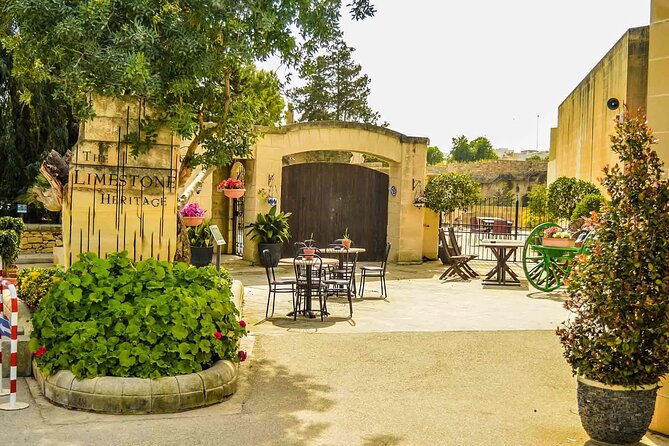
The Punic tomb is among the most unusual features included with admission. Dating from about 400 B.C., it gives you a direct link to Malta’s ancient past.
A tomb is more than an old stone structure. It shows how earlier communities used the local ground and stone for burial, and it places Malta within the wider history of the central Mediterranean. The site also makes the geology section more meaningful: the same stone that shaped later buildings was part of much older human activity.
This stop may be brief, but it carries more weight than its size suggests. I would listen carefully to the audio explanation here, since the value lies in understanding what you are seeing rather than simply looking into an ancient chamber.
The tomb also gives the park an edge over a general garden attraction. You are not only visiting an outdoor venue with displays. You are seeing a preserved piece of Malta’s archaeological past.
Watch live stonework in progress
The live stonework demonstrations are likely to be a highlight for many people. They show the craft in action, which is far more useful than viewing finished stone objects behind glass.
This is where Malta’s architectural character becomes practical. You can see that stonework is not an abstract historical topic. It is a skill involving tools, judgment, and patient handwork.
I particularly like this feature because it adds a human element to the park. The geology section explains the material. The demonstration shows the person working with it. Together, they create a better picture of how local stone becomes part of Maltese buildings and decorative objects.
The available details do not specify demonstration times or how long each one lasts. Ask at arrival if you want to plan around it. Since the park has a short Saturday opening and a last entry 30 minutes before closing, arriving earlier gives you the best chance of fitting everything in without watching the clock.
Slow down in the citrus garden and farm animal park
The citrus garden and farm animal park change the rhythm of the visit. After the historical displays and stonework, you can spend time outdoors in a more relaxed setting.
The farm animals make the attraction a good choice for families. Children who find a museum hall difficult may connect more easily with the animals and open-air spaces. Adults get a pleasant pause without having to leave the site.
The citrus garden adds another small piece of local life. It helps show that the park is not only about archaeology and stone. It also presents a countryside setting, with plants and animals included in the experience.
I would not book this solely as an animal attraction. The farm is one part of a broader visit, and the supplied details do not identify the species or describe close-contact activities. Think of it as a welcome addition to the history and geology program.
Finish with Maltese food and a small shop
Food and drinks are not included in the ticket, but you can stop at the park for tea, coffee, snacks, a Maltese platter, or Maltese tuna ftira. The food is served fresh, according to the description, and you can eat while enjoying the quiet countryside setting.
This is a useful end to the visit, especially if you have spent close to three hours moving through the park. A Maltese platter gives you a chance to try several local tastes, while ftira offers a more substantial snack.
Do not assume the food is part of the $10.43 admission price. It is an optional extra, so budget separately if you want to eat on site.
The shop sells genuine Maltese goods and stone souvenirs. There is no obligation to buy, which is worth noting because the shop works best as a final browse rather than a required stop. A small stone item could make sense if you want a physical reminder of the park’s central theme, but the ticket remains worthwhile without a purchase.
Is the $10.43 ticket good value?
At $10.43 per person, the ticket offers a fair amount for the price. Admission covers the audio-visual presentation, the audio-guided walk, museum hall, geology section, Punic tomb, citrus garden, farm animal park, and live stonework demonstrations.
The value depends on how you use the visit. If you arrive late, skip the audio, and leave after a quick look, the ticket may feel less impressive. If you spend two or three hours with the displays, outdoor areas, and demonstration, it becomes a reasonably priced cultural stop.
The 17-language audio support also adds value for international visitors. You are not paying for a private guide, but you receive structured interpretation in a wide range of languages.
The main cost issue is not the admission itself. It is the limited opening schedule and the extra cost of food and drinks. Check the hours before you go, and remember that the last entry is 30 minutes before closing.
Practical planning for your visit
The park is open Monday through Friday from 9:00 a.m. to 4:00 p.m. On Saturday, it is open from 9:00 a.m. to noon. It is closed on Sundays and public holidays.
You can use your ticket at any hour on the booked date during opening hours. It is valid for one entry only, with no re-entry. That means you should not plan to leave for lunch and come back later.
Hotel pickup and drop-off are not included. The park is near public transportation, but the supplied information does not name specific routes or stops. If you are relying on public transport, confirm the details before setting out.
A mobile ticket is included, and confirmation is provided at booking. Service animals are allowed, and most people can take part. Opening hours can change, so confirm the schedule with the activity provider during your stay in Malta.
The operator is Robert Arrigo & Sons. If your schedule changes, free cancellation is available until 24 hours before the experience start time. Cancellations within 24 hours are not refunded, and changes during that period are not accepted.
Who will enjoy this park most?
I would recommend the Limestone Heritage Park and Gardens to families who want history in smaller portions. The animals, garden, audio presentation, and outdoor walk keep the visit varied.
It also suits you if you want a cultural attraction that explains Malta beyond its famous churches and coastal sights. The geology section, Punic tomb, and stonework demonstration give you details you may not get from a general sightseeing day.
The park is a good choice for independent visitors who prefer recorded audio to a fixed group tour. You can take the walk at your own speed and use the language options that work best for you.
I would be more cautious if you want a full-day attraction, a live expert guide, or a large archaeological museum. This is a compact, family-run venue, and the information is delivered through audio and displays rather than an extended guided program.
Should you book the Limestone Heritage Park?
Book it if you want a reasonably priced, low-pressure way to understand Malta’s stone traditions and ancient past. The best reasons are the Punic tomb, live stonework, and 17-language audio, all included with admission.
I would schedule it for a weekday morning or early afternoon, allowing up to three hours if you want to see everything and stop for food. Skip it only if your Malta schedule falls on a Sunday, public holiday, or a tight arrival near closing time. For families and curious independent visitors, it is an easy cultural stop with enough variety to keep the visit from feeling like a standard museum hour.
FAQ
Where is the Limestone Heritage Park and Gardens located?
The attraction is located in the traditional Maltese village of Siggiewi, in the Mgarr area stated for the experience.
How much does admission cost?
The listed price is $10.43 per person.
How long should I allow for the visit?
The visit takes approximately one to three hours, depending on how much time you spend with the audio, displays, gardens, animals, demonstrations, and refreshments.
What languages are available?
The audio-visual presentation and audio-guided walkthrough are each available in 17 languages.
Is a live guide included?
No. The ticket includes audio-visual and audio-guided material, but a personal guide is not included.
What is included with admission?
Admission includes the park entry, audio-visual presentation, audio-guided walkthrough, live stonework demonstrations, museum hall, geology section, Punic tomb, citrus garden, and farm animal park.
Are food and drinks included?
No. Tea, coffee, Maltese platters, Maltese tuna ftira, and other snacks are available for an additional charge.
When is the park open?
It is open Monday through Friday from 9:00 a.m. to 4:00 p.m. and Saturday from 9:00 a.m. to noon. It is closed on Sundays and public holidays.
Can I cancel for a refund?
Yes. You can cancel at least 24 hours before the experience start time for a full refund. Cancellations or changes made within 24 hours are not accepted and are not refunded.
Just added in Mgarr
- Half Day Tour in Marsaxlokk Village, Market, Blue Grotto & Qrendi★ 4.5 · 3 reviews
- Prehistoric Temples and Highlights of the South Full-Day Tour★ 4.0 · 26 reviews
- Buskett Woodlands and Dingli Cliffs Nature Walking Private Tour★ 5.0 · 2 reviews
- Malta: Good Friday Afternoon Procession Including Transport★ 5.0 · 2 reviews
- Sunday: Ghajn Tuffieha (Riviera) Beach Yoga Class★ 5.0 · 3 reviews
- Party Prowl: Crystal Lagoon, Gozo, Santa Maria Caves, Malta★ 4.6 · 4 reviews
- Photo Shoots Adventure – Trips in Lovers Cave, Gozo & Comino★ 5.0 · 3 reviews
- Comino Blue Lagoon: Private Boat Charter (2 Hours)★ 4.6 · 27 reviews
Historical Tours, compared.

Prehistoric Temples, Limestone Heritage & Blue Grotto
Read our review →
Maltese Islands History Audio-Visual Show and La Sacra Infermeria Tour
Read our review →
Self-Guided Historical Walking Tour (Audio Guide)
Read our review →
Wonderful Valletta, gastronomy, art, and history in the Mediterranean
Read our review →

Private Historical City Walking Tour with Rabat Town
Read our review →
The Limestone Heritage Park and Gardens (Entry Ticket)
Read our review →Browse the lists this tour appears in