
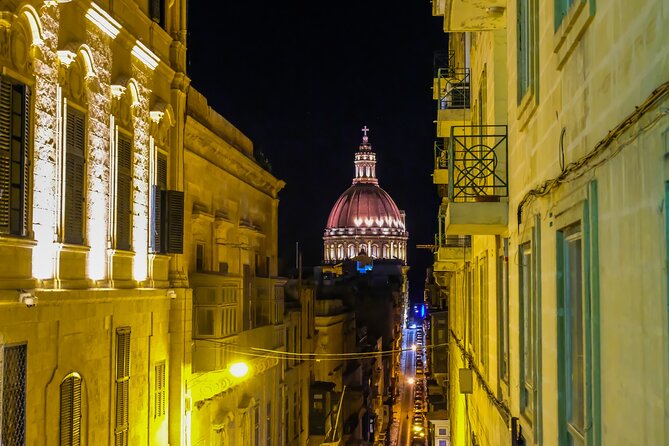
Review · HISTORICAL TOURS
The Dark History of Valletta – Walking Tour
Dark stories give Valletta a sharper edge. This two-hour walk links the capital’s streets with tales of ghosts, murder, vanished boys, and strange symbols, giving you a fresh way to read the city. I like the strong storytelling and the way the route ends near the Grand Master’s Palace, close to places for a drink or meal.
I also like the reasonable $24.03 price, especially for a small-to-medium group capped at 35 people. The main drawback is the route itself: Valletta is hilly, and one reviewer found the walk down to the bottom and back up demanding. Good shoes and decent mobility matter.
In This Review
- Key points at a glance
- Why Valletta’s dark side works so well on foot
- Meeting at Tritons’ Fountain in Floriana
- Oliver Starkey and Valletta’s ghostly problem
- A murder story with a painful letter
- The church mystery involving more than 100 boys
- Jean de Valette beyond the familiar legend
- The grotesque statue overhead
- Mario’s storytelling and the pace of the walk
- Hills, distance, and who should book
- Is $24.03 good value?
- Timing, weather, and cancellation advice
- Should you book The Dark History of Valletta?
- FAQ
- Where does the tour begin?
- Where does the tour end?
- How long does the tour last?
- What language is the tour offered in?
- How much does the experience cost?
- How far in advance is the tour usually booked?
- Is the tour suitable for people with limited mobility?
- Are service animals allowed?
- What happens if the weather is poor?
- What is the cancellation policy?
Key points at a glance
- Oliver Starkey’s ghostly parties: Hear how a 16th-century knight was said to disturb neighbours in the 1990s, and how the problem was finally settled.
- A murder story told in stages: A shocking letter sent by a lovesick man becomes part of a carefully paced story that unfolds from stop to stop.
- The mystery of more than 100 boys: Learn why boys entered a church but never came out, one of the tour’s most unsettling questions.
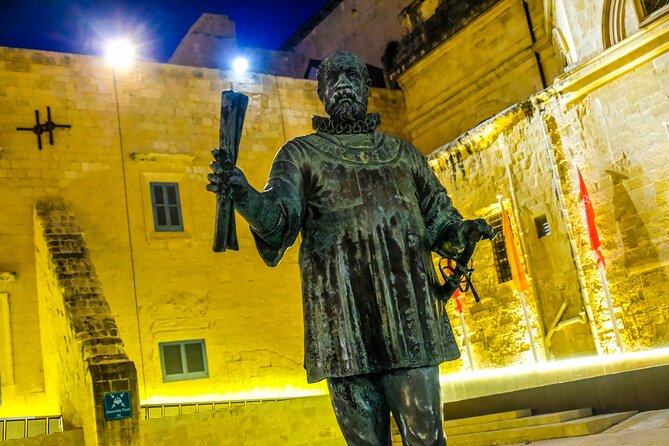
- Valletta’s founder gets a closer look: The tour examines the truth about Jean de Valette, rather than leaving you with a simple heroic portrait.
- A grotesque figure overhead: Look up for the statue whose hidden meaning adds an eerie detail to the city streets.
- Easy evening finish: The walk begins at Tritons’ Fountain in Floriana and ends beside the Grand Master’s Palace, near bars and restaurants.
Why Valletta’s dark side works so well on foot
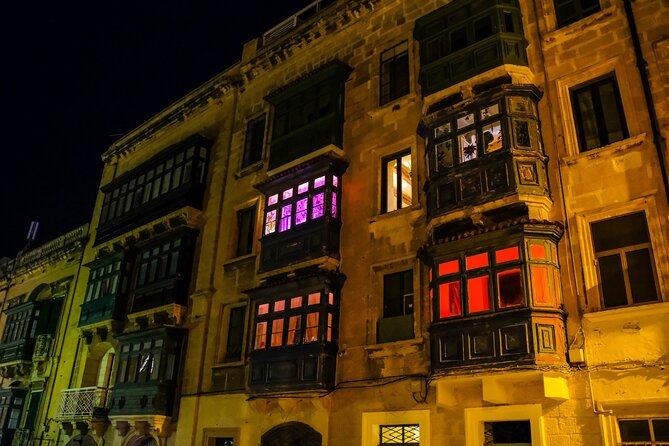
Valletta can feel formal at first glance. Its streets, churches, palaces, and stone buildings often suggest military order and grand civic pride. This tour shifts your attention toward the unsettling stories tucked into that polished setting.
I like this approach because the stories are tied to the city itself. You are not sitting in a theatre hearing a general ghost show. You are walking through Valletta while the guide points out places connected with crime, death, strange beliefs, and old power.
The subject matter is dark, but the format is not presented as a museum lecture. The tour uses a sequence of short stories, questions, and reveals. That makes the two hours pass quickly, especially if your guide has the pacing described by one family who joined the walk.
Their guide, Mario, reportedly held back the final parts of stories until the group reached the next location. That cliffhanger style gives the route a clear rhythm. You hear the beginning of a disturbing tale, walk through Valletta, then get the next piece at the right moment.
That style also helps if you already know Malta. One regular visitor to the island still picked up new information, which tells me the tour is not aimed only at first-time visitors.
More History Tours in Malta:
- Malta: Prehistoric Temples, Limestone Heritage & Blue Grotto
★ 4.2 · 412 reviews - Maltese Islands History Audio-Visual Show and La Sacra Infermeria Tour
★ 4.0 · 344 reviews - Valletta: Self-Guided Historical Walking Tour (Audio Guide)
★ 3.7 · 251 reviews
Meeting at Tritons’ Fountain in Floriana
The walk begins at Tritons’ Fountain, listed at Vjal Nelson in Floriana. This is just outside Valletta, so you should allow enough time to reach the meeting point before the start.
The tour then moves into Valletta and continues through the capital’s streets. The end point is the Grand Master’s Palace, placing you in the center of the city rather than sending you back to the starting point.
That one-way arrangement is useful. You finish near bars and restaurants, so you can continue your evening without retracing the entire route. It also means you should think about where you will leave your car or meet onward transport, since the tour does not return to Tritons’ Fountain.
The experience is offered in English and includes a mobile ticket. Confirmation arrives at booking, which keeps the practical side simple.
Oliver Starkey and Valletta’s ghostly problem
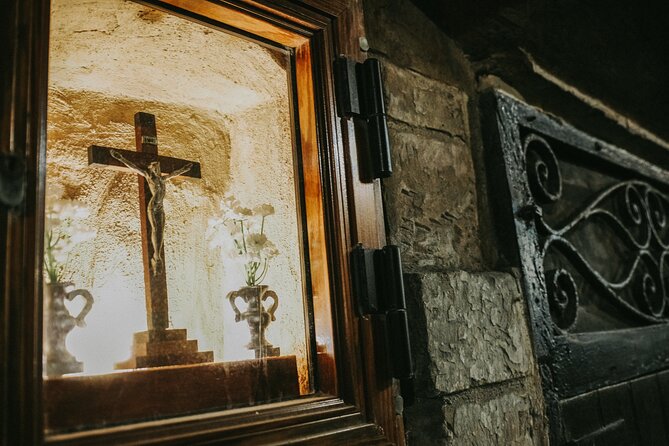
The story of Oliver Starkey is one of the tour’s most memorable hooks. Starkey was a 16th-century knight, but the tale turns toward the 1990s, when his ghost supposedly began throwing parties.
That time jump is part of the fun. You are not hearing only about a remote medieval figure. The story suggests that Valletta’s old inhabitants, buildings, and legends can still intrude on modern life.
The detail that the ghost was eventually persuaded to stop disturbing neighbours gives the story a dry, almost comic finish. It also shows the tone you can expect: eerie subjects, but room for humour and oddity.
I would not book this walk expecting a solemn academic treatment of every event. It is built around memorable tales and spoken performance. If you enjoy a guide who can make a story land at just the right moment, this part should work well.
A murder story with a painful letter
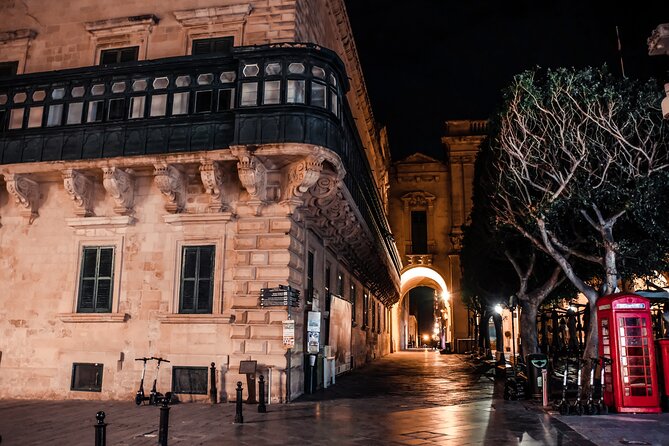
The tour also examines a case involving a lovesick man and a letter sent to his lover shortly before he murdered her. The supplied details do not identify the people involved, so you should expect the guide to provide the fuller context during the walk.
This story sounds especially effective in a walking format because the letter gives the guide a personal starting point. It is not simply a crime fact or a date. The emotional detail makes the event feel closer, while the movement between locations lets the story build rather than arrive all at once.
The subject is plainly disturbing. If you prefer light sightseeing, this may not be the right evening activity. If you want a serious look at the darker side of Valletta, it adds weight to the tour and keeps it from being only a collection of ghost tales.
The family who joined Mario’s tour appreciated his ability to connect each part and delay the ending until the next stop. That is useful here. A good storyteller can avoid rushing through grim material and give you time to understand what happened.
More Walking Tours in Malta:
- The Original Valletta Walking Tour
★ 5.0 · 2,719 reviews - Valletta: 3-Hour Walking Tour
★ 4.7 · 1,605 reviews - Valletta: Guided City Walking Tour
★ 4.8 · 1,256 reviews - Valletta: Street Food and Culture Walking Tour
★ 4.8 · 1,251 reviews
The church mystery involving more than 100 boys
One of the tour’s biggest questions is why more than 100 boys entered a church but never came out. The information available for this experience does not name the church or reveal the answer, so this is one mystery you will need to hear explained on the route.
That lack of detail is actually a good reason to pay attention. The story is designed as a reveal, not as a fact you are handed before the walk. It gives the route a strong question early on and lets the guide explain the circumstances at the location.
For parents, I would consider the ages and interests of your children before booking. The tour deals with murder, ghosts, and a troubling story involving boys. The material may suit older children and teenagers who enjoy serious history, but it is not advertised as a child-focused walk.
Jean de Valette beyond the familiar legend
The route also looks at Jean de Valette, the founder of Malta’s capital. Many city tours give founders a short heroic introduction, then move on. This experience promises to examine the truth about him in a more pointed way.
That angle matters because it can test the neat version of Valletta’s origin story. You may come away with a more complicated view of the man whose name the city carries.
The tour does not list every stop or provide a full lecture outline, so I would treat this as a focused story within a broader walk rather than a complete study of Jean de Valette. For a first introduction to Valletta, it adds useful context. For a specialist history lesson, you may want a separate museum visit or historical tour.
The grotesque statue overhead
Another stop concerns a grotesque statue watching over the people of Valletta from above. The guide explains its hidden meanings, turning an easy-to-miss detail into part of the evening’s story.
This is the sort of detail I value on a walking tour. You may pass a figure, carving, or statue without looking up. Once the guide gives it a meaning, the city becomes easier to read on your own.
The description does not identify the statue, so do not try to find it in advance. Keep your eyes above street level during the walk. The title of this story suggests a visual detail, but the point is the explanation, not simply the sight of a strange face in stone.
Mario’s storytelling and the pace of the walk
Mario received especially strong praise for his storytelling. One family arrived late because traffic had become difficult during an event in Malta. He called to check where they were, waited for them, and filled the time by telling the rest of the group other stories.
That is more than a small courtesy. It shows awareness of how a walking tour works in real life. Traffic can disrupt plans, and a guide who communicates clearly can prevent a late arrival from ruining the evening.
The same account describes a style built around cliffhangers. Mario connected one story to the next and kept the group interested for the full two hours. The walk was described as engaging rather than tiring, although another participant gave a useful warning about the hills.
Guide quality can vary from one departure to another, so I would not assume every group will have exactly the same performance. Still, Mario’s reported approach gives you a clear idea of the standard to hope for: direct, theatrical, and alert to the group.
Hills, distance, and who should book
You need to be comfortable walking uphill and downhill. The route goes down to the bottom of Valletta and then back up, and one participant specifically advised that you need to be mobile and fit.
That is the main practical issue. The tour lasts about two hours, but the time does not tell you how demanding the streets will feel. Valletta’s slopes can make a short urban walk more tiring than the same distance on flat ground.
Wear shoes with a secure sole. Bring water if you are walking in warm weather, although the tour’s exact departure time and refreshment arrangements are not provided.
The experience should suit:
- First-time visitors who want a memorable introduction to Valletta.
- Repeat visitors who already know the main sights but want unusual stories.
- Couples and friends looking for an evening activity with a darker tone.
- Families with older children who can handle stories about murder and death.
- Anyone who prefers a guide-led walk to reading plaques and guidebooks alone.
It may not suit you if you have limited mobility, dislike hills, or want a gentle route focused only on architecture and famous landmarks. Service animals are allowed, and the activity is near public transportation, but the walking demands remain important.
Is $24.03 good value?
At $24.03 per person, I consider this a fair price for a two-hour guided walk, especially if your guide delivers the kind of storytelling described above. You are paying for interpretation and atmosphere, not admission to a major monument.
The value is strongest if you want stories you would be unlikely to find by simply walking Valletta alone. The guide connects a ghostly knight, a murder letter, a church mystery, Jean de Valette, and an overhead statue into one evening route.
The value is weaker if you already have a full schedule of guided sightseeing or if you mainly want to enter historic buildings. The tour lists admission as free, so the price covers the guided experience rather than tickets to attractions.
A group limit of 35 people is helpful, though it is not the same as a tiny private tour. With a full group, you may need to stay close to the guide to hear every detail. The reported attention from Mario suggests that a good guide can manage the group well.
Timing, weather, and cancellation advice
The duration is approximately two hours. The tour requires good weather, so poor conditions can lead to a different date or a full refund.
You can cancel for a full refund if you do so at least 24 hours before the start time. Cancellations or changes made inside that window are not refunded or accepted, and the cut-off follows Malta’s local time.
I would avoid booking this as a tight connection between other fixed plans. The tour ends in Valletta, and the route includes hills, so you may want a little breathing room afterward. The finish near restaurants and bars makes it easy to keep the night going.
The activity is booked, on average, 19 days ahead. That does not guarantee every date will sell out, but it is a useful sign to reserve early if your Malta schedule is fixed.
Should you book The Dark History of Valletta?
Book it if you want Valletta to feel less like a collection of grand buildings and more like a city shaped by human drama. The ghost of Oliver Starkey, the murder letter, the church mystery, Jean de Valette, and the grotesque statue offer plenty of conversation for the rest of your evening.
I would especially choose it for a first or second night in Malta, when you are still learning the capital’s streets. Repeat visitors can also benefit, since the route focuses on stories that standard sightseeing may skip.
Skip it if steep streets are a serious problem or if murder and ghost stories are not your idea of a good night out. For everyone else, the $24.03 cost, two-hour length, English presentation, and central finish make this a practical way to see a different side of Valletta.
FAQ
Where does the tour begin?
It begins at Tritons’ Fountain, at Vjal Nelson in Floriana, Malta.
Where does the tour end?
The walk ends at the Grand Master’s Palace in Valletta, close to bars and restaurants.
How long does the tour last?
The tour lasts approximately two hours.
What language is the tour offered in?
The tour is offered in English.
How much does the experience cost?
The listed price is $24.03 per person.
How far in advance is the tour usually booked?
It is booked an average of 19 days in advance.
Is the tour suitable for people with limited mobility?
The route includes walking down to the bottom of Valletta and back up. You should have good mobility and be comfortable with hills.
Are service animals allowed?
Yes, service animals are allowed.
What happens if the weather is poor?
The experience requires good weather. If it is canceled because of poor weather, you will be offered another date or a full refund.
What is the cancellation policy?
You can cancel at least 24 hours before the start time for a full refund. Cancellations or changes made less than 24 hours before the start time are not accepted or refunded.
Just added in Malta
- Wakeboarding Adventure in Malta: Learn to Ride★ 5.0 · 4 reviews
- Gozo: Wine Tasting and Paired Dinner Experience★ 4.9 · 43 reviews
- Victoria, Gozo: Sunset Walking Food and Drink Tour★ 5.0 · 6 reviews
- World War II Malta Full-Day Walking Tour★ 4.3 · 18 reviews
- Malta: 5 hr Vintage Bus Tour – Mdina & Blue Grotto inc. food★ 5.0 · 22 reviews
- Valletta: Private Massage from a world renowned masseuse★ 4.6 · 9 reviews
- Valletta Street Food & History Tour With Private Transfers★ 4.5 · 15 reviews
- Valletta: Private Walking Tour With A Guide ( Private Tour )★ 5.0 · 1 review
Historical Tours, compared.

Prehistoric Temples, Limestone Heritage & Blue Grotto
Read our review →
Maltese Islands History Audio-Visual Show and La Sacra Infermeria Tour
Read our review →
Self-Guided Historical Walking Tour (Audio Guide)
Read our review →
Wonderful Valletta, gastronomy, art, and history in the Mediterranean
Read our review →
Private Historical City Walking Tour with Rabat Town
Read our review →
The Limestone Heritage Park and Gardens (Entry Ticket)
Read our review →
Browse the lists this tour appears in