
Review · HISTORICAL TOURS
Wonderful Valletta, gastronomy, art, and history in the Mediterranean
Valletta rewards a slow walk. This two-hour tour brings together fortified streets, Knights-era buildings, and Caravaggio stories, then adds a taste of Maltese food and local advice. I like the small group size, capped at 10 people, and I also like the way guides such as Luis, Moises, and Julia have been praised for warmth and personal attention. The main caution is that the food portion may be lighter than the title suggests, and one disappointing outing included poor communication and too much modern politics.
At $54.31 per person, this is not a bargain-priced stroll. I think it can be worthwhile if you want a structured introduction to Valletta and useful suggestions for eating and drinking afterward, but you should check the meeting details carefully before setting out. The tour is offered in English, lasts about two hours, and is recommended by 92 percent of participants, with a 4.7 rating from 72 reviews.
In This Review
- Key points to know before booking
- Starting at Victoria Gate, Valletta’s practical front door
- Valletta’s Knights, empires, and a capital built for conflict
- Narrow lanes and the Caravaggio connection
- Pastizzi, pizza, and the limits of the food stop
- Local life and the danger of too much opinion
- Is $54.31 fair for two hours?
- Who will enjoy this Valletta walk most?
- Practical details that can make the walk better
- Should you book Wonderful Valletta?
- FAQ
- How long does the Valletta tour last?
- Where does the tour begin?
- Where does the tour end?
- What language is the tour offered in?
- How many people can join the tour?
- What food is included in the experience?
- Is the tour available every day?
- Is the tour accessible by public transportation?
- Can I cancel for a full refund?
Key points to know before booking
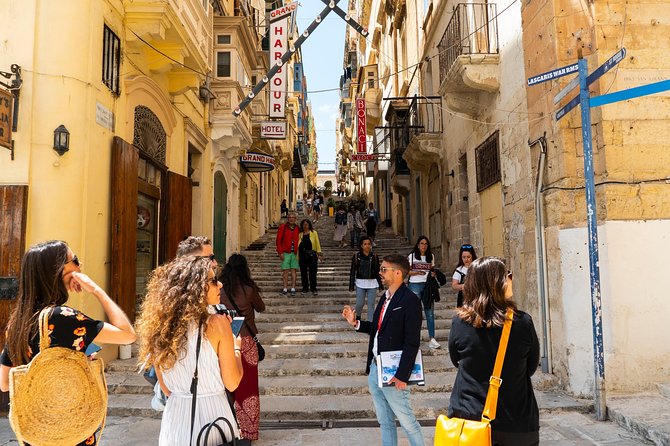
- A compact introduction to Valletta: The route runs from Victoria Gate to St. John’s Co-Cathedral, covering the capital’s origins, historic buildings, narrow lanes, and major sights.
- Small groups matter here: The maximum group size is 10, making it easier to hear the guide and ask questions in Valletta’s tight streets.
- Maltese food is part of the plan: You should expect an introduction to pastizzi and local places to eat, though the actual tasting may be limited.
- Caravaggio adds an art angle: The tour includes the lanes connected with the painter’s escape from justice and discussion of his place in Valletta’s story.
- Guide quality is central: Luis, Moises, and Julia have each received warm praise for energy, care, and local recommendations.
- Check details before walking: The meeting point is listed at Victoria Gate, while the endpoint is St. John’s Co-Cathedral. One booking had an incorrect meeting location and late confirmation.
Starting at Victoria Gate, Valletta’s practical front door
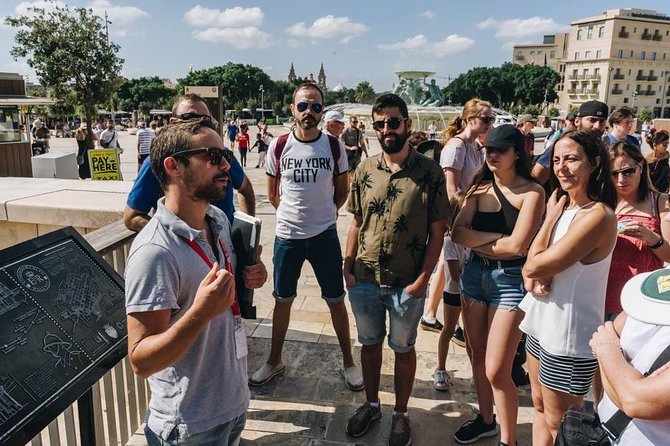
The tour begins at Victoria Gate, listed at Liesse in Valletta. This is a sensible place to start because it brings you directly into the old city, rather than asking you to meet somewhere vague on the edge of town. Still, I would confirm the exact meeting instructions shortly after booking. One poor experience involved a wrong location and a guide time that arrived very late, so this is one detail worth taking seriously.
Valletta is small enough to explore on foot, but its compact size can fool you. The streets rise and fall, lanes twist, and the best views often appear at the end of a short climb. A guide can help you understand how the city fits together before you wander off on your own.
The tour is scheduled daily between 11:00 a.m. and 5:00 p.m., with a duration of roughly two hours. The precise start time should be confirmed, especially if you are fitting the walk around a ferry, shore excursion, meal, or museum visit.
The small group limit is a real advantage. With no more than 10 people, you are more likely to hear the guide in a narrow lane and get an answer when you ask about a church, balcony, street sign, or restaurant. That matters more in Valletta than it might in a wide city square.
More History Tours in Malta:
- Malta: Prehistoric Temples, Limestone Heritage & Blue Grotto
★ 4.2 · 412 reviews - Maltese Islands History Audio-Visual Show and La Sacra Infermeria Tour
★ 4.0 · 344 reviews - Valletta: Self-Guided Historical Walking Tour (Audio Guide)
★ 3.7 · 251 reviews
Valletta’s Knights, empires, and a capital built for conflict
The heart of the walk is Valletta’s past. The guide explains why this small capital was once so heavily contested, with attention to the Ottoman Empire, the Knights, Napoleon, the British, and the Second World War.
You are not simply being shown old stone walls. The point is to understand why Valletta was built where it was, why its defenses mattered, and how different powers shaped daily life. The city’s story reaches from the early sixteenth century through its British period and into modern Malta.
I like this approach because Valletta can otherwise feel like a beautiful collection of streets without a clear sequence. A guide gives those streets a timeline. You begin to see how military planning, religion, trade, and colonial rule all left marks on the same small area.
The tour also points out reminders of Malta’s British past, including the familiar red telephone boxes and the country’s official use of English alongside Maltese. These details help connect the grand political story with things you can spot while walking.
One point deserves care. A dissatisfied participant felt that some claims were presented as fact when they were closer to Maltese legend or personal interpretation. That is a fair concern on any history walk. If a story sounds dramatic, ask the guide whether it is documented history, local tradition, or a popular tale. You will get a better sense of Malta by knowing the difference.
Narrow lanes and the Caravaggio connection
The art portion centers on Caravaggio. The route takes you through lanes connected with the painter’s escape from justice and discusses his relationship with Malta.
This is a good fit for anyone who enjoys art with a little drama attached. Caravaggio was not presented simply as a painter whose work hangs in a church. His troubled life gives the streets another layer, and the setting helps you picture how a historical figure might have moved through Valletta’s lanes.
The art content appears to be focused rather than extensive. You should not expect a full museum visit or a long survey of Maltese painting. Instead, Caravaggio provides one memorable thread within a broader city walk.
That balance works well for a first visit. You get an art story without losing the main focus on Valletta itself. If Caravaggio is your main reason for booking, though, you may want to pair this tour with a separate visit to St. John’s Co-Cathedral, the stated endpoint, rather than assuming the walk includes a full interior tour.
The endpoint is on Triq San Gwann at St. John’s Co-Cathedral. The description does not promise admission, an interior visit, or a guided tour inside, so treat the cathedral as the finishing point unless the operator confirms otherwise.
Pastizzi, pizza, and the limits of the food stop
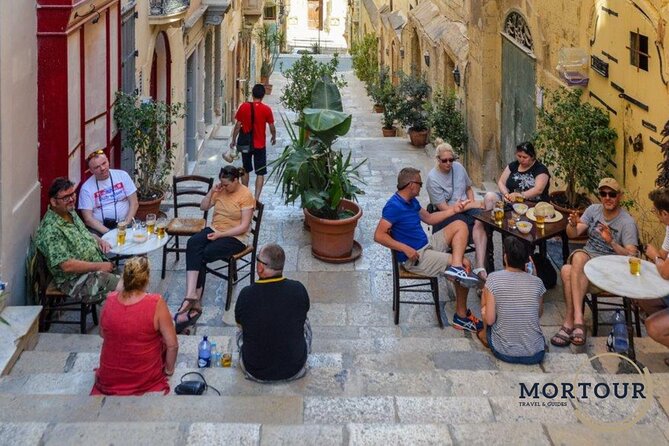
Food is meant to be one of the tour’s pleasures. You are introduced to pastizzi, Malta’s famous savory pastry, and shown where you might eat pizza, share a drink, or enjoy a cocktail with jazz.
Pastizzi is an especially useful food suggestion because it is strongly tied to everyday Maltese eating. A small pastry can also give you a quick, affordable taste of local life without turning a two-hour walking tour into a long restaurant meal.
The guide’s recommendations may be just as valuable as the tasting itself. Luis has been praised for suggesting places to eat and drink after the walk, and the tour aims to leave you with a better sense of where to try Maltese dishes on your own.
Still, keep your expectations measured. One participant described receiving only a taste of local liquor and felt that this did not amount to a full gastronomy experience. That criticism is important. The available information confirms a food and drink element, but it does not promise a multi-course meal, several tastings, or restaurant reservations.
I would book this for food orientation, not for a dedicated culinary tour. If your priority is sampling several Maltese specialties, you may need to plan an additional meal afterward. The tour is better understood as a city walk with food guidance woven into it.
A completely different kind of day:
- Malta: Gozo & Comino Islands, Blue Lagoon & Seacaves Tour
★ 4.5 · 15,672 reviews - Comino: Blue Lagoon, Crystal Lagoon, and Seacaves Tour
★ 4.6 · 5,673 reviews - Malta: Blue Lagoon, Beaches & Bays Trip by Catamaran
★ 4.7 · 5,496 reviews - Malta: Gozo, Comino, Blue & Crystal Lagoon, & Caves Cruise
★ 4.6 · 5,092 reviews
Local life and the danger of too much opinion
A strong part of the experience is its effort to show more than postcard Valletta. One guide was praised for including areas used by local people as well as the main sightseeing zone. That can make the walk feel more grounded and help you notice how the capital functions beyond its monuments.
The guides also appear to bring plenty of personality. Luis has been described as friendly, chatty, and passionate about his adopted city. Moises has been praised for treating participants more like friends visiting Malta than customers, while Julia received high marks for making everyone feel comfortable and cared for.
That warmth is valuable on a small walking tour. Valletta is not a city that needs a stiff lecture. A good guide can point out a street, explain a custom, share a local story, and then suggest where you might spend the evening.
But personality needs balance. One participant felt that modern Maltese politics took up too much of the two hours, leaving too little time for history. Political context can be useful, especially in a country shaped by larger powers, but you should expect the amount of current affairs to depend partly on the individual guide.
If you prefer a tightly scripted historical tour, this may feel loose. If you enjoy conversation and local viewpoints, the same quality may be a benefit. I would tell the guide early whether you want more architecture, art, food, or present-day Malta. In a group of 10 or fewer, that request should be possible to accommodate.
Is $54.31 fair for two hours?
At $54.31 per person, the cost is on the high side for a two-hour walking tour, especially when the food component may be limited. The price needs to be justified by the guide, the small group, and the time you save finding your way through Valletta.
I see the strongest value for a first-time visitor with limited time. Two hours can give you a working map of the capital, a basic historical framework, a Caravaggio connection, and several ideas for later meals and drinks. If the guide is as engaging as Luis, Moises, or Julia have been described, the personal attention adds real value.
The price is less appealing if you already know Valletta well, plan to explore independently, or are booking mainly for food. You may feel you are paying a premium for a general introduction rather than a full culinary or art experience.
The maximum of 10 people helps the value calculation. A small group is easier to manage, and a good guide can respond to individual interests. I would consider the tour a reasonable splurge for an arrival day, but I would compare it with the cost of a longer or more food-focused option if gastronomy is your main goal.
Who will enjoy this Valletta walk most?
I think this suits you best if you want:
- A first look at Valletta before exploring alone
- A guide who mixes major sights with local observations
- Short historical explanations rather than a full academic lecture
- A small group and the chance to ask questions
- Food suggestions for pastizzi, pizza, Maltese dishes, and drinks
- A Caravaggio story within a wider city tour
It may not suit you if you want a formal history course, a guaranteed series of tastings, or a tour with no discussion of current Maltese politics. The food offering is not detailed enough to promise a full meal, and the style may vary with the guide.
The walk is also useful for people who want recommendations after the official route ends. You finish near St. John’s Co-Cathedral, in a good position to continue sightseeing, stop for food, or follow up on the guide’s suggestions.
Practical details that can make the walk better

Wear shoes suited to uneven streets and inclines. The tour is on foot through alleys and historic areas, so comfort matters more than looking polished.
Bring water and allow extra time after the tour. The walk lasts about two hours, but the food suggestions and nearby sights may tempt you to continue. Since the ending point is St. John’s Co-Cathedral, you can plan the rest of your afternoon around that area.
The tour is offered in English and accepts mobile tickets. Service animals are allowed, the meeting point is near public transportation, and most people can participate. The operator says the tour requires good weather and a minimum number of participants, so cancellation is possible if those conditions are not met.
Free cancellation is available up to 24 hours before the start time for a full refund. Changes or cancellations made less than 24 hours before the scheduled start are not accepted for a refund.
I would also save the operator’s Instagram account, @mortourguides, if you need a current contact point or want to check the latest updates. The biggest practical lesson is simple: confirm the start time and exact meeting location before you leave.
Should you book Wonderful Valletta?
I would book this tour if you want a friendly, small-group introduction to Valletta, especially at the beginning of a Malta visit. Its best features are the local guide interaction, the compact route through major historical themes, the Caravaggio connection, and the practical food and drink advice.
I would not book it expecting a full gastronomy tour or a guaranteed scholarly account of every historical claim. At $54.31, the experience depends heavily on getting a strong guide and clear communication. Confirm the meeting details, ask for the balance of history and current affairs you prefer, and treat the food element as a tasting and recommendation session rather than a meal.
For a first visit, I think it can be a useful way to get oriented and feel more at home in Valletta. For repeat visitors or serious food-focused explorers, the price may be better spent elsewhere.
FAQ
How long does the Valletta tour last?
The tour lasts approximately two hours.
Where does the tour begin?
The listed starting point is Victoria Gate, VGW7+9FV, Liesse, Il-Belt Valletta, Malta.
Where does the tour end?
The tour ends at St. John’s Co-Cathedral on Triq San Gwann in Valletta.
What language is the tour offered in?
The tour is offered in English.
How many people can join the tour?
The maximum group size is 10 participants.
What food is included in the experience?
The tour includes an introduction to pastizzi and Maltese gastronomy, along with suggestions for pizza, Maltese dishes, cocktails, and places to eat and drink. The exact number of tastings is not specified.
Is the tour available every day?
The stated operating schedule is Monday through Sunday, from 11:00 a.m. to 5:00 p.m., for the period from December 12, 2019, through February 13, 2027.
Is the tour accessible by public transportation?
Yes. The meeting point is listed as being near public transportation.
Can I cancel for a full refund?
Yes, if you cancel at least 24 hours before the experience start time. Poor weather or failure to meet the minimum number of participants may also result in a different date or a full refund.
Just added in Malta
- Wakeboarding Adventure in Malta: Learn to Ride★ 5.0 · 4 reviews
- Gozo: Wine Tasting and Paired Dinner Experience★ 4.9 · 43 reviews
- Victoria, Gozo: Sunset Walking Food and Drink Tour★ 5.0 · 6 reviews
- World War II Malta Full-Day Walking Tour★ 4.3 · 18 reviews
- Malta: 5 hr Vintage Bus Tour – Mdina & Blue Grotto inc. food★ 5.0 · 22 reviews
- Valletta: Private Massage from a world renowned masseuse★ 4.6 · 9 reviews
- Valletta Street Food & History Tour With Private Transfers★ 4.5 · 15 reviews
- Valletta: Private Maltese Cuisine Walking Tour★ 4.8 · 8 reviews
Historical Tours, compared.
Prehistoric Temples, Limestone Heritage & Blue Grotto
Read our review →
Maltese Islands History Audio-Visual Show and La Sacra Infermeria Tour
Read our review →
Self-Guided Historical Walking Tour (Audio Guide)
Read our review →
Private Historical City Walking Tour with Rabat Town
Read our review →
The Limestone Heritage Park and Gardens (Entry Ticket)
Read our review →
Browse the lists this tour appears in