
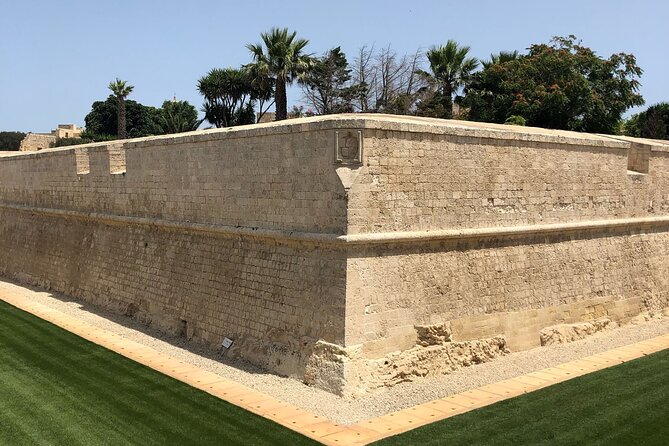
Review · WALKING TOURS IN MDINA AND RABAT
Mdina and Rabat Private Walking Tour
Mdina rewards a slower look. This private walk gives you a personal introduction to Malta’s former capital, with narrow lanes, old palaces, churches, city gates, and wide views from the bastions. I especially like the private guide, since your pace and interests can shape the visit, and I like the mix of famous sights and smaller architectural details that are easy to miss alone. The main drawback is the price: at $337.34 for up to four people, it offers fair value for a full group but feels costly for one or two people.
The tour lasts about two hours and is offered in English, with several departure times during the day. Guides such as Mario and Matthew have received especially strong praise for clear storytelling and broad knowledge of history, architecture, language, religion, and geology. You should also know that the route is focused mainly on Mdina, even though the experience is called a Mdina and Rabat tour.
In This Review
- Key points to know before booking
- Why a private walk works well in Mdina
- Mdina Main Gate and the story of an old capital
- Natural history and St. Agatha’s local legend
- Inguanez Street and Mdina’s noble residences
- Pjazza Mesquita and the city’s screen fame
- Banca Giuratale and the heart of civic Mdina
- St. Paul’s Cathedral and the cost of going inside
- Bastion Square and Malta’s high views
- Palazzo Falson and the people behind the house
- The Carmelite Priory and Palazzo Santa Sofia
- Greek’s Gate and what the route really covers
- Guides, pace, and the human side of the tour
- Price, admissions, and the value for your group
- Who should book this Mdina walk?
- Should you book the Mdina and Rabat tour?
- FAQ
- How long is the Mdina and Rabat Private Walking Tour?
- Where does the tour begin?
- Where does the tour end?
- Is the tour private?
- Are admission fees included?
- Can I cancel for a full refund?
Key points to know before booking
- A private route through Mdina: Only your group participates, so the guide can adjust the pace and explanation to suit you.
- Mario and Matthew earned strong praise: Mario is noted for connecting geography, language, architecture, and culture, while Matthew patiently helped a group member with walking difficulties.
- Thirteen stops in about two hours: Expect a brisk overview rather than long museum visits or extended time inside each church.
- Several entry fees are extra: The National Museum of Natural History, St. Paul’s Cathedral, and Palazzo Falson Historic House Museum are not included.
- Best value for up to four people: The per-person cost drops to about $84.34 when four people share the booking.
- The route ends at Greek’s Gate: The published meeting point is Mdina Main Gate, while the stated end point is Greek’s Gate, so confirm the final arrangement before setting off.
Why a private walk works well in Mdina
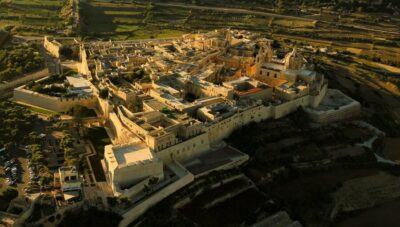
Mdina is compact, but it is not simple. Its lanes turn sharply, its buildings often hide behind plain walls, and the same street can reveal a church, a noble residence, or a film location within a few steps. A guide helps you connect those details instead of seeing them as a collection of attractive stone facades.
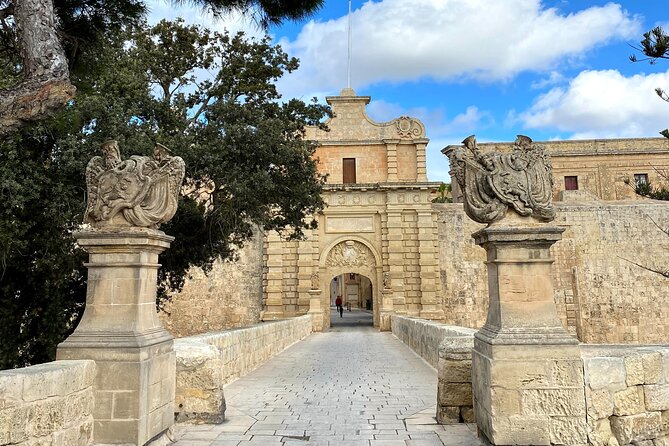
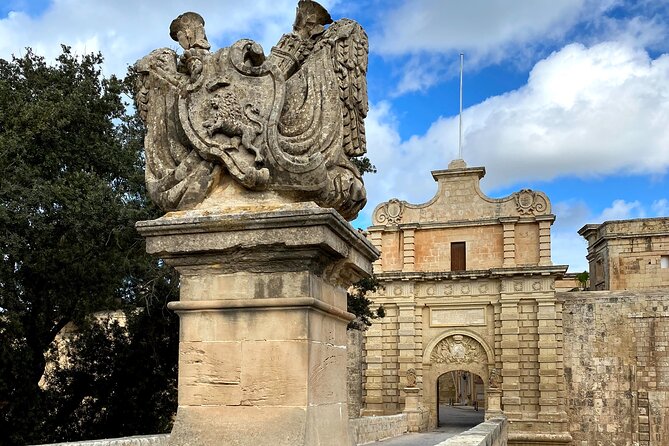
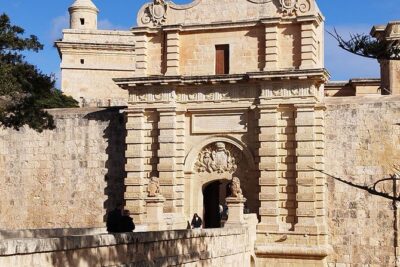
You begin at Mdina’s Main Gate, the grand Baroque entrance to the old city. This is a useful meeting point because it gives the guide a natural place to explain Mdina’s role as Malta’s former capital before you enter the quieter streets.
The private format matters most if you have different interests within your group. You can ask for more architecture, more stories about Malta’s rulers, or a slower pace for someone who has trouble walking. A guide can also spend less time on a subject you already understand.
The tour is described as suitable for most people, and children must be accompanied by an adult. Service animals are allowed, and the city is near public transportation. Still, this is a walking tour through narrow historic streets, so you should be comfortable being on your feet for roughly two hours.
More Walking Tours in Mdina and Rabat
- Malta: Mdina and Rabat Walking Tour with Catacombs
★ 4.8 · 1,126 reviews - Mdina and Rabat: Guided City Walking Tour
★ 4.8 · 549 reviews - Mdina and Rabat Walking Tour inc. Catacombs and St. Paul’s Grotto
★ 5.0 · 341 reviews
Mdina Main Gate and the story of an old capital
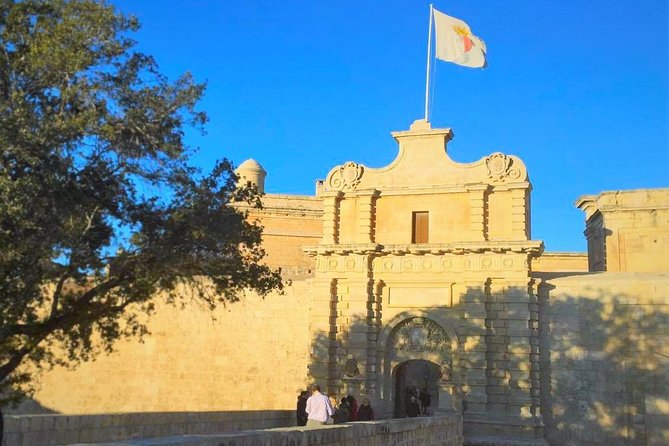
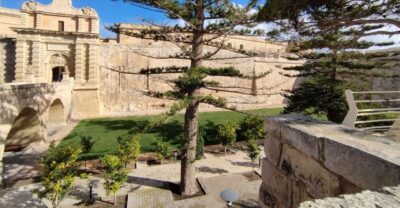
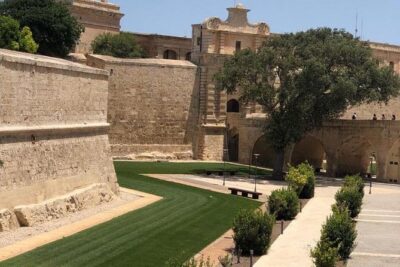
The Main Gate is more than a place to meet. It is the first visual signal that Mdina has a formal, defensive past. The Baroque design gives the entrance a ceremonial feel, while the lanes beyond it quickly become quieter and more enclosed.
From here, the guide sets the tone for the walk. You will hear how Phoenician, Roman, Arab, Norman, and later rulers shaped Mdina. That sequence is one of the most useful parts of the tour because it explains why the city’s street pattern, names, buildings, and customs do not belong to one period alone.
The tour is not designed as a long academic lecture. Instead, the guide uses stops along the route to put each part of Mdina into context. The best guides make this feel like a conversation rather than a list of dates.
Natural history and St. Agatha’s local legend
The National Museum of Natural History occupies an important historic building, and the guide explains the story behind it during a short stop. Admission is not included, so you should treat this as an exterior visit unless you decide to enter separately.
That distinction matters. With thirteen stops packed into about two hours, the tour gives you orientation rather than a full museum program. If natural history is a priority, plan additional time outside the walking tour.
At Church St. Agatha, the focus shifts from building history to local legend. The guide shares the story of how Mdina was saved from tragedy, giving the church a place in the city’s storytelling as well as its religious life.
The church stop is listed as free, but the schedule allows only about ten minutes. That is enough for an explanation and a quick look, not a long, quiet examination of every detail.
Inguanez Street and Mdina’s noble residences
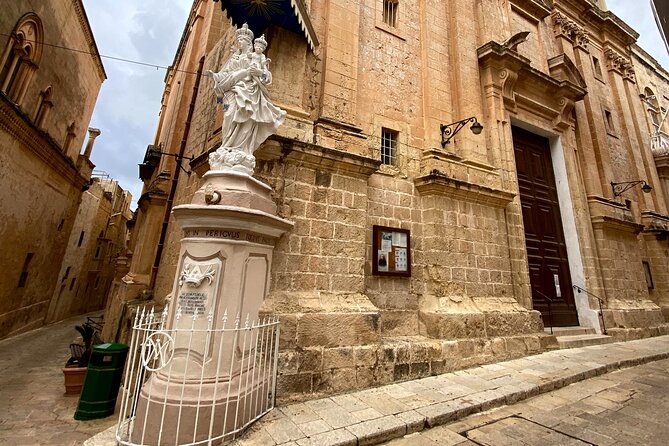
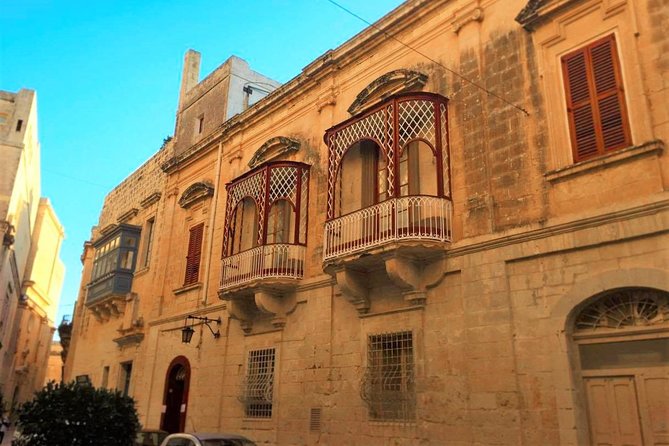
Inguanez Street offers a look at Palazzo Inguanez, associated with one of Malta’s oldest noble families. This is the kind of stop that can pass unnoticed if you wander without context. A palace may appear simply as another handsome stone building, but the guide helps you read it as part of Mdina’s social structure.
This is also where a private guide can add useful detail without slowing an entire public group. If you are interested in noble families, building styles, or how the city’s elite lived, ask for more explanation here.
The stop itself is brief, about five minutes. That keeps the overall route moving, but it also means you should not expect an extended interior visit.
More Mdina and Rabat tours:
- Malta: Highlights of Malta & Mdina Full Day Tour with Lunch
★ 4.4 · 2,688 reviews - Malta: Mdina, Dingli Cliffs and San Anton Botanical Gardens
★ 4.3 · 991 reviews - Mdina and Rabat Insider’s Tour
★ 5.0 · 528 reviews - Valletta: Vintage Bus to Valletta, Sliema, Rabat & Mdina
★ 4.1 · 433 reviews
Pjazza Mesquita and the city’s screen fame
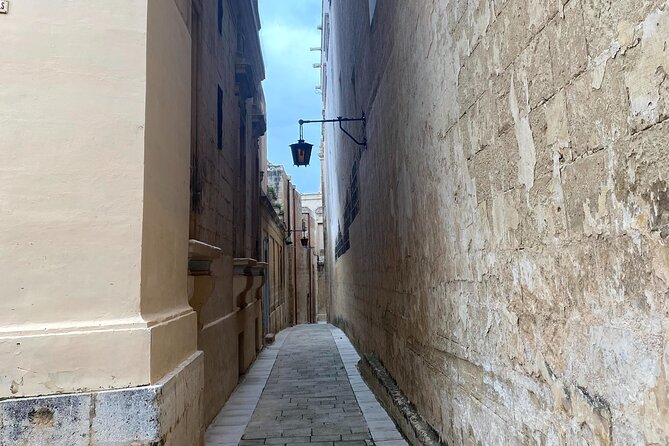
Pjazza Mesquita brings a lighter note to the tour. The guide points out scenes connected with famous television series filmed here. Mdina’s old stone lanes and quiet squares have a ready-made cinematic quality, and this stop lets you see the city through that modern lens.
I like this kind of pause because it connects the old city to something many people already recognize. It also gives families and younger visitors an easy way into the setting before the tour returns to palaces, churches, and civic buildings.
The television connection should not take over the visit. Mdina is more than a film set, and the value of this stop is the way it adds one layer to the city’s identity.
Banca Giuratale and the heart of civic Mdina
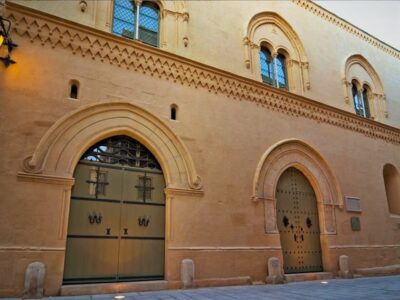
The Banca Giuratale is one of the clearest examples of Mdina’s Baroque civic architecture. Its ornate facade belonged to the former town hall, making it a useful place to discuss how the city was governed.
This stop shows why a guide is helpful. Without explanation, you might admire the facade and continue walking. With context, you can see the building as a symbol of local administration and public authority.
Only about five minutes are scheduled here, but that is enough to appreciate the exterior and hear the basic story. If you want detailed architectural analysis, you may need to ask for it directly.
St. Paul’s Cathedral and the cost of going inside
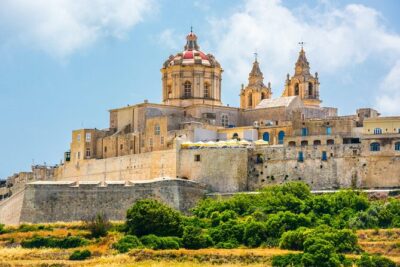
The Metropolitan Cathedral of Saint Paul is one of the most important stops on the route. It is described as the traditional seat of the Bishops of Malta, and its presence gives Mdina much of its religious and civic weight.
Admission is not included. That is one of the tour’s practical limitations because the cathedral is not just a passing facade. If you want to see the interior, budget separately and check the visiting arrangements for your chosen date.
The schedule allows around ten minutes. This is enough for a guided introduction, but a serious look at the cathedral requires more time. You may prefer to take the tour’s overview, then return independently if the building catches your interest.
The same advice applies to any stop where you want quiet time for photographs or close inspection. This experience covers a lot of ground in two hours, so it is best viewed as a framework for Mdina rather than the final word on each sight.
Bastion Square and Malta’s high views
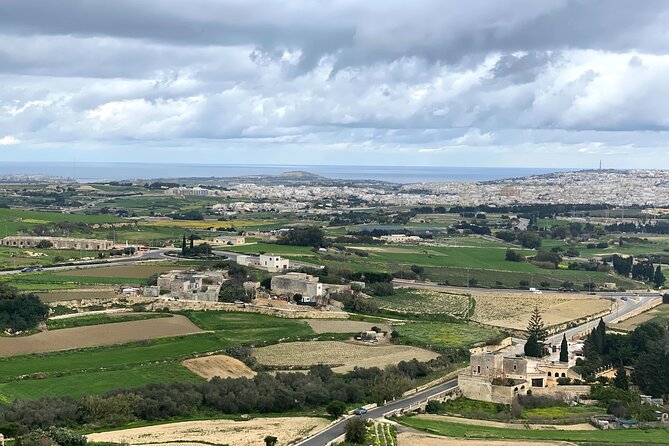
At Bastion Square, the tour reaches one of its strongest visual moments. From one of the highest points on the island, you can take in a broad panorama and understand Mdina’s position in relation to the surrounding area.
This stop gives the route welcome breathing room after the close streets and formal buildings. I would keep your camera ready, but do not rush the explanation. The view helps make sense of Mdina’s defensive position and why control of this elevated site mattered.
The stop is scheduled for about ten minutes and admission is free. Weather will affect how much you get from it, but the location itself is one of the tour’s most useful orientation points.
Palazzo Falson and the people behind the house
Palazzo Falson Historic House Museum offers a more personal look at Mdina. Instead of focusing on a cathedral or a government building, it asks you to consider the life of the man behind the creation of this house museum.
Admission is not included, and the schedule allows about ten minutes. That is enough to understand why the building matters, but not enough for a complete museum visit. If historic houses are your interest, you should plan a separate return visit rather than trying to absorb everything during the walking route.
This stop adds variety. The tour moves from public power and religious authority to private collecting and domestic life. That change helps Mdina feel like a lived-in city rather than a row of grand monuments.
The Carmelite Priory and Palazzo Santa Sofia
The Carmelite Priory is dedicated to Our Lady of Mount Carmel. The guide introduces the historic church during a short visit, with about five minutes set aside.
That timing makes this a quick orientation stop. You can learn why the church matters, look around, and continue. If you prefer long church visits, the schedule may feel tight.
Palazzo Santa Sofia follows with one of Mdina’s most important architectural claims: it is the oldest existing building in Malta. The wording is significant. You are not simply seeing an old palace. You are looking at a surviving piece of the city’s earliest built fabric.
This is a good place to ask the guide how the building’s age is understood and how it fits with Mdina’s later Baroque appearance. The contrast between old surviving structures and later facades is one of the most interesting threads in the walk.
Greek’s Gate and what the route really covers
Greek’s Gate is described as the oldest surviving gate in Mdina, and it provides a fitting final stop. Like the Main Gate, it is both an architectural feature and a reminder that Mdina was built around controlled entry and defense.
The route information gives Mdina Main Gate as the start and Greek’s Gate as the end. Another description says the walk concludes at the original departure point. Since those details do not fully match, I would confirm the endpoint when booking or before the tour begins.
The name includes Rabat, but the listed stops are in Mdina. The guide may explain the relationship between the two places, yet you should not book this expecting a separate, extended Rabat walking route unless that is confirmed directly.
Guides, pace, and the human side of the tour
The guide is the main reason to choose this experience over a self-guided walk. Mario is praised for bringing together geography, history, linguistics, architecture, and culture. That combination is useful in Mdina because the city’s character comes from how those subjects overlap.
Another guide, Matthew, met his group exactly at 2 p.m. outside the Main Gate and waited patiently while a member with walking problems caught up. That detail matters more than a general promise of flexibility. It shows the pace can be handled with care, at least when you communicate your needs clearly.
You should still tell the provider about mobility concerns before the tour. The activity is described as suitable for most people, but it remains a walking experience through old streets, with a packed schedule of stops.
Several departure times are available throughout the day. Choose a time that gives you room before or after the tour, especially if you want to enter the cathedral or either museum.
Price, admissions, and the value for your group
The listed price is $337.34 per group of up to four people. Shared by four, that works out to about $84.34 per person. For a private English-language tour with a professional guide, that can be reasonable if your group wants personal attention and a clear introduction in a short amount of time.
For two people, the cost rises to about $168.67 each. For one person, it is a substantial spend for a two-hour walk. The value depends heavily on group size and how much you care about having the guide to yourselves.
The professional guide and private format are included. Hotel pickup and drop-off, food, and drinks are not included. Entry to the National Museum of Natural History, the Metropolitan Cathedral of Saint Paul, and Palazzo Falson Historic House Museum is also not included.
That means the headline price is not the full cost if you plan to enter every paid sight. I would treat the tour as a guided introduction, then decide which places deserve a separate admission.
Free cancellation is available if you cancel at least 24 hours before the start time. Changes or cancellations made inside that window are not accepted for a refund.
Who should book this Mdina walk?
I would recommend it most strongly to first-time visitors who want the city explained without joining a large group. It also suits families, couples, and small groups with mixed interests because the guide can adapt the discussion.
It is a good choice if you value stories over a simple list of landmarks. Mario’s ability to connect language, religion, architecture, and geology is exactly the sort of broad explanation that can turn a short walk into a useful introduction to Malta.
You may want another plan if you prefer long museum visits, extended photography stops, or a slow architectural study. Two hours and thirteen stops create a brisk rhythm.
It may also be less appealing if you are comfortable researching Mdina on your own and are traveling alone. In that case, the private price is hard to justify unless having a personal guide is central to your visit.
Should you book the Mdina and Rabat tour?
Book it if you want a private, story-led introduction to Mdina and can share the $337.34 cost with three other people. The strongest value comes from the guide’s ability to connect Malta’s many layers and adjust the pace for your group.
Before paying, confirm two things: which sights you plan to enter and whether the final stop is Greek’s Gate or the Main Gate. If you want a separate Rabat visit, ask exactly what is included. With those points clear, this is a well-focused way to get your bearings in Mdina and decide which buildings deserve a longer look.
FAQ
How long is the Mdina and Rabat Private Walking Tour?
The tour lasts approximately two hours.
Where does the tour begin?
You meet the private guide at Mdina Main Gate in Mdina, Malta.
Where does the tour end?
The stated endpoint is Greek’s Gate in Mdina. Another description says the tour concludes at the original departure point, so you should confirm the endpoint before starting.
Is the tour private?
Yes. Only your group participates, with a maximum of four people based on the listed price.
Are admission fees included?
Admission is included for the general Mdina walking experience, but entry to the National Museum of Natural History, the Metropolitan Cathedral of Saint Paul, and Palazzo Falson Historic House Museum is not included.
Can I cancel for a full refund?
Yes, if you cancel at least 24 hours before the experience start time. Cancellations or changes made less than 24 hours before the start are not refunded or accepted.
Just added in Mdina and Rabat
- Malta: 5 hr Vintage Bus Tour – Mdina & Blue Grotto inc. food★ 5.0 · 22 reviews
- Valletta & Mdina: Private Tour★ 4.5 · 16 reviews
- Shore Excursion: Private Full-Day Tour of Valletta & Mdina★ 5.0 · 4 reviews
- Private Tour in Malta Prehistoric Temples & Mdina★ 5.0 · 4 reviews
- Private Tour in Valletta and Mdina★ 5.0 · 1 review
- Rabat Mdina and San Anton Gardens Group Tour with St. Paul’s Catacombs★ 3.5 · 16 reviews
- Valletta, Mosta and Mdina Night Tour★ 3.5 · 15 reviews
- Malta Shore Excursion: Private tour of Valletta and Mdina★ 4.5 · 8 reviews
Walking Tours in Mdina and Rabat, compared.
Mdina and Rabat Walking Tour inc. Catacombs and St. Paul’s Grotto
Read our review →
Private Historical City Walking Tour with Rabat Town
Read our review →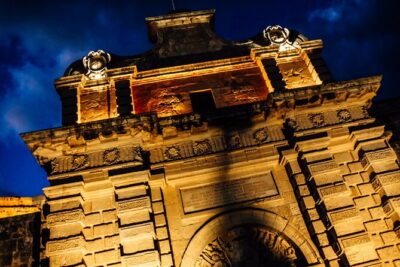
Browse the lists this tour appears in