
Review · WALKING TOURS IN MDINA AND RABAT
Best of Mdina and Rabat Walking Tour
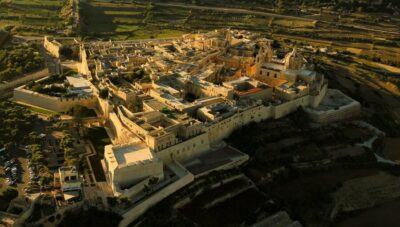
Mdina keeps its secrets behind honey-colored walls. This two-hour walk opens the door to Malta’s Silent City, then carries you into Rabat for a look at the quieter town beside it. I like the efficient route, which covers major sights without demanding a full day, and I like the guide’s stories about palaces, churches, filming locations, and daily life. The main concern is group size: once more than 15 people join, hearing the guide can become difficult.
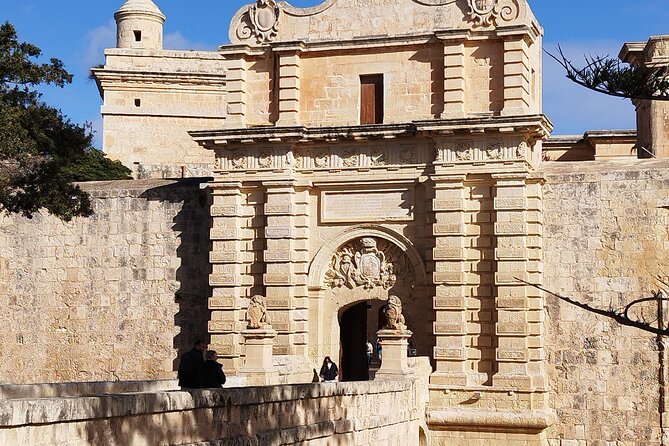
You meet at Mdina Gate, an easy landmark, where the guide carries a red City Walking Tours umbrella. I also like that the tour ends near the Basilica of St Paul in Rabat rather than returning you to the starting point. That gives you a useful head start for exploring Rabat on your own, though you should remember that church and museum admission fees are not included.
In This Review
- Key points to know before you book
- Why Mdina and Rabat work so well together
- Meeting at Mdina Gate with the red umbrella
- Vilhena Palace and Mdina’s French Baroque entrance
- Pjazza Mesquita and Mdina’s screen-famous corner
- Villegaignon Street and the grandest views of Mdina’s past
- Pjazza San Publju and the Metropolitan Cathedral
- Rabat’s quieter streets beyond the walls
- What the guide adds to the walk
- Is $24.10 good value for two hours?
- Who will enjoy this Mdina and Rabat walk?
- Practical advice for making the most of it
- Should you book the Best of Mdina and Rabat Walking Tour?
- FAQ
- How long does the Best of Mdina and Rabat Walking Tour last?
- Where does the tour begin?
- Where does the tour end?
- Is the tour offered in English?
- Are entrance fees included?
- What is the cancellation policy?
Key points to know before you book
- Mdina Gate meeting point: Find your guide at the Main Gate of Mdina, marked by a red City Walking Tours umbrella.
- Two historic towns in two hours: The route links Mdina’s grand palaces and squares with Rabat’s quieter streets.
- Game of Thrones location: Pjazza Mesquita was one of Mdina’s filming locations for the series.
- Guide-led context: The walk adds stories and explanations to sights you could otherwise pass without understanding.
- Group size matters: The tour allows up to 20 people, and audio equipment may be limited when the group is large.
- Simple pricing: At $24.10 per person, the tour is a reasonably priced way to get your bearings before exploring alone.
Why Mdina and Rabat work so well together
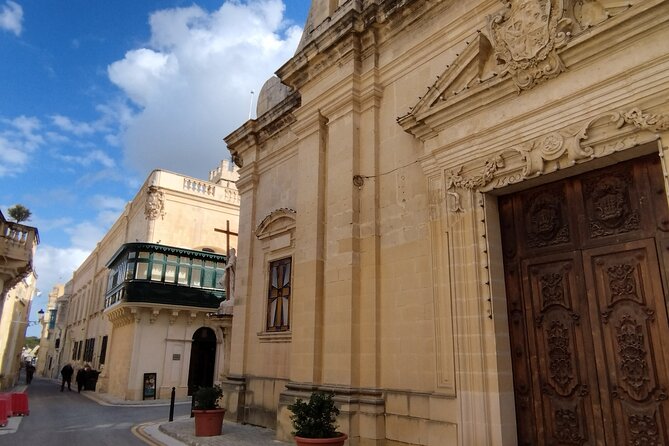
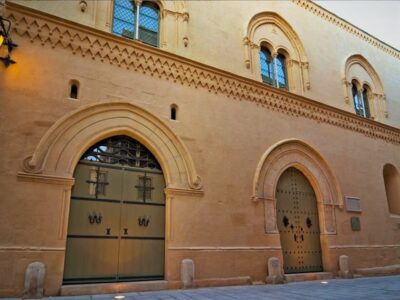
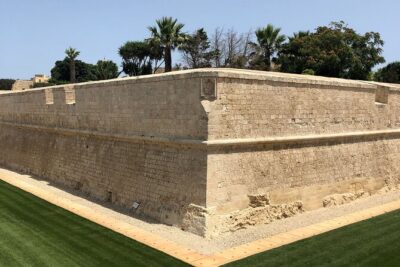
Mdina and Rabat sit side by side, but they offer different moods. Mdina is the walled old city, built for power and defense, with grand palaces, formal squares, churches, and narrow streets that seem designed to slow you down. Rabat lies just outside the walls and feels more like a lived-in Maltese town.
That contrast gives this tour its purpose. A walk limited to Mdina might leave you with a polished view of Malta’s past. Adding Rabat shows you what lies just beyond the ceremonial center. The route moves from the city’s imposing gate and aristocratic buildings to quieter streets and a more rural local character.
You spend about two hours on foot, with no museum visits or church entries built into the price. That makes the tour a good introduction rather than a complete survey. I would use it to understand the layout, note places worth returning to, and decide which paid sights deserve more of your time.
The tour is offered in English, and confirmation arrives when you book. Children must be accompanied by an adult. Service animals are allowed, and most people can take part, but you should expect a walking tour through historic streets rather than a coach-based outing.
More Walking Tours in Mdina and Rabat
- Malta: Mdina and Rabat Walking Tour with Catacombs
★ 4.8 · 1,126 reviews - Mdina and Rabat: Guided City Walking Tour
★ 4.8 · 549 reviews - Mdina and Rabat Walking Tour inc. Catacombs and St. Paul’s Grotto
★ 5.0 · 341 reviews
Meeting at Mdina Gate with the red umbrella
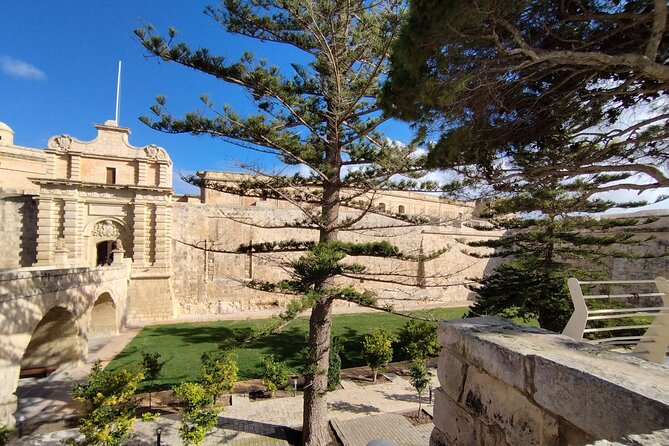
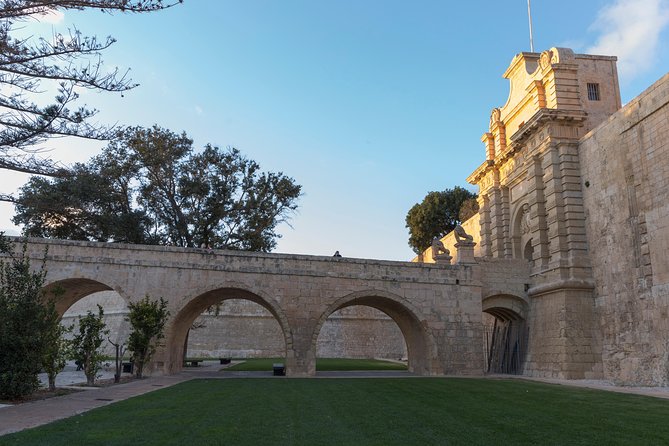
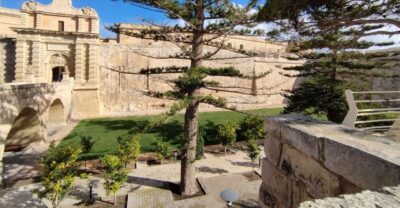
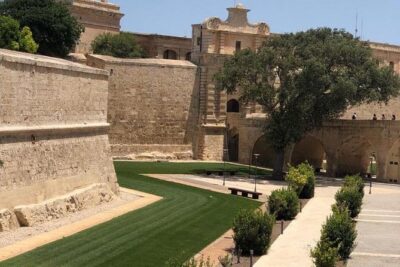
The starting point is the Main Gate of Mdina. This is practical because the gate is a clear landmark, and you do not need to search for a small office or hotel lobby. Look for the City Walking Tours guide holding a red umbrella.
The first part of the walk lasts about 30 minutes and introduces Mdina as a medieval city. You pass important palaces, convents, churches, and typical streets while the guide explains how the town fits together. This opening is useful because Mdina can feel like a maze when you first arrive. A guide helps you understand which streets are central and which buildings matter.
The gate area can also be the busiest part of the experience. One participant found the entrance crowded with children, buses, and other large groups, making it hard to hear. If your guide uses a receiver and earpiece, check that the equipment works before the walk gets underway. That small step could make a big difference.
The maximum group size is 20 people. That is not enormous, but it is large enough for the guide to disappear around a corner or for voices to get lost in a noisy square. A smaller group would offer a more intimate experience. Still, a clear meeting point and a fixed route keep the tour easy to follow.
Vilhena Palace and Mdina’s French Baroque entrance
Vilhena Palace is one of the first major sights on the route. Built in the early 18th century, it was designed by the French architect Charles Francois de Mondion. Its French Baroque style gives Mdina’s entrance a formal, almost theatrical character.
You spend about 10 minutes here, which is enough for an exterior explanation and a look at the building’s position within the city. The palace is a useful reminder that Mdina was not only a military stronghold or a medieval relic. It also served as a setting for Malta’s ruling elite, with grand architecture meant to project authority.
The tour does not include a museum or interior visit at Vilhena Palace. That keeps the pace moving, but it also means you should not book this walk expecting extended time inside historic buildings. The value comes from seeing the palace in context and learning why it matters.
I find this kind of short stop useful early in a tour. You get a visual anchor without spending half the morning indoors. If the architecture catches your attention, you can decide later if you want to return or seek out more information.
Pjazza Mesquita and Mdina’s screen-famous corner
The walk continues to Pjazza Mesquita, a peaceful square tucked inside Mdina. You spend only about five minutes here, but the stop adds a modern layer to the old city because it served as one of the filming locations for Game of Thrones.
The appeal is not only the television connection. The square helps show how Mdina’s narrow lanes, stone walls, and quiet corners create an atmosphere that filmmakers can use without much alteration. The setting already feels dramatic. You do not need elaborate scenery when the streets themselves provide it.
This is a quick photo stop, not a full filming-location tour. The guide’s explanation gives you a reason to notice the square, then the group moves on. If the television connection means little to you, the architecture and calm setting still make the pause worthwhile.
Because Mdina is compact, several stops follow one another without long transfers. You are not losing time to transport. The tradeoff is that the pace can feel brisk if you want to examine every doorway and take photographs at every turn.
More Mdina and Rabat tours:
- Malta: Highlights of Malta & Mdina Full Day Tour with Lunch
★ 4.4 · 2,688 reviews - Malta: Mdina, Dingli Cliffs and San Anton Botanical Gardens
★ 4.3 · 991 reviews - Mdina and Rabat Insider’s Tour
★ 5.0 · 528 reviews - Valletta: Vintage Bus to Valletta, Sliema, Rabat & Mdina
★ 4.1 · 433 reviews
Villegaignon Street and the grandest views of Mdina’s past
About 30 minutes are devoted to Villegaignon Street, Mdina’s main street. This is the longest single stop and the heart of the Mdina portion of the walk.
The street is lined with palaces and gives you a strong sense of the city’s former importance. As you move along, the guide points out buildings and explains how the street functions within the old city. This is where a local guide adds the most value. Without context, you might see attractive stone facades. With context, you begin to understand who built them, why the street was important, and how Mdina’s formal side differs from its quieter lanes.
The walk also captures the pleasure of simply being in Mdina. The streets are the main attraction. You get a sense of stepping away from modern Malta, even though the city remains a real place rather than a preserved museum set.
Guide quality appears to be one of the tour’s strongest features. Nadine, one named guide, received praise for giving an excellent overview of the city and its past while offering useful suggestions for things to do after the walk. Another guide was described as clear and well informed, with plenty of stories but without overwhelming the group with dates and figures.
That balance matters. A walking tour can become a procession of names and numbers. The best moments here seem to come when the guide connects buildings to stories, giving you something memorable to carry into the rest of your Malta visit.
Pjazza San Publju and the Metropolitan Cathedral
Pjazza San Publju is Mdina’s main square. It is dominated by the Metropolitan Cathedral, dedicated to Saint Peter and Saint Paul, and provides a fitting focal point for the old city.
The scheduled visit lasts about 10 minutes. You should expect an explanation of the square and cathedral rather than a paid interior visit. Since church entrance is not included, you will need to check the arrangements yourself if you want to go inside.
This is a good place to pause and take in the scale of Mdina’s religious center. The square is more open than the lanes you have just walked, so it gives you a chance to reset before leaving the walled city. The cathedral also helps explain the close relationship between civic life and religious life in Malta’s historic towns.
If you are especially interested in church art or architecture, the short stop may leave you wanting more. That is not necessarily a flaw. The tour is built as an overview, and the guide gives you enough information to decide if the cathedral deserves a separate visit.
Rabat’s quieter streets beyond the walls
After Mdina, the walk heads into Rabat. The name means suburb in a Semitic language, fitting its former role as the settlement outside Mdina. The character changes quickly. Instead of grand palaces and fortified streets, you get a typical Maltese town with a calmer, more rural feel.
The Rabat portion lasts about 20 minutes. You walk along ordinary local streets, which may sound less dramatic than Mdina’s palaces, but this is an important part of the experience. It shows you a side of Malta that is not arranged solely for sightseeing.
I like this transition because it prevents the tour from becoming a polished loop through one historic center. You see the relationship between the walled city and the town beside it. The walk also gives you a chance to slow down after Mdina’s concentrated sights.
The tour ends close to the Parish Church of Rabat, near the Basilica of St Paul at 64 Triq Ir-Rebha. This is a useful finish. You can continue exploring Rabat instead of retracing your steps to Mdina, and the guide may offer suggestions for what to do next. If you are using public transport, the tour is near public transportation, though the supplied details do not specify a particular bus route or timetable.
What the guide adds to the walk
The route itself is compact and easy to understand. You could locate Mdina Gate, walk down Villegaignon Street, find Pjazza Mesquita, and reach Rabat without a guide. The reason to pay $24.10 is the explanation between those points.
The strongest part of the guiding appears to be the mix of history and stories. You get background on the city, details about important buildings, and a clearer sense of how Mdina and Rabat connect. The guide also helps you notice sights that may otherwise blend into the honey-colored stone.
You should expect a broad overview, not a specialist lecture. The guide is described as informative without going too far into facts and figures, which suits a two-hour introduction. If you already know Malta’s history in detail, you may find the content familiar. If this is your first visit, the format should give you a useful framework.
Audio equipment is the weak point. One person reported static and noise with the receivers and recommended better earpieces or a personal loudspeaker. Another person was disappointed because a group of more than 15 did not have enough headsets, leaving a participant with hearing loss in one ear unable to follow properly.
That issue deserves attention. At the meeting point, ask whether everyone who needs a headset has one. Stay close to the guide, especially at the gate and in crowded areas. If hearing clearly is essential for you, the uncertain audio setup is a real consideration.
Is $24.10 good value for two hours?
At $24.10 per person, the price is fair for a licensed guide and a focused two-hour introduction to two historic towns. You are paying for interpretation, route planning, and the chance to see Mdina and Rabat in one outing. You are not paying for museum or church tickets, so the cost remains predictable if you only want the walk.
The value is strongest for a first visit. You can get your bearings, learn which buildings and squares deserve another look, and finish in Rabat with time left in the day. A private tour would likely offer more personal attention, but this shared format keeps the price modest.
The maximum of 20 people is the other side of the bargain. A large group can make the guide harder to hear and can slow movement through tight streets. When the group is closer to 10 or 15, the experience should feel easier. The booking information says it is often reserved 18 days ahead, so planning early is sensible if your Malta dates are fixed.
Who will enjoy this Mdina and Rabat walk?
I would recommend it to a first-time Malta visitor who wants a clear introduction without giving up a whole day. It also suits anyone who prefers streets, buildings, and stories to a long indoor museum visit.
Families can take part, provided children are accompanied by an adult. Most people can participate, but you should be comfortable walking for two hours through historic town streets. Service animals are allowed.
The tour is a good fit if you want:
- A compact introduction to Mdina’s main sights
- A short look at Rabat beyond the city walls
- Guide commentary in English
- A central meeting point that is easy to identify
- Suggestions for further sightseeing after the walk
- A low-cost way to orient yourself early in your Malta visit
I would think twice if you need guaranteed one-to-one attention, perfect audio equipment, or extensive interior visits. In those cases, a smaller private walk or a tour with confirmed personal audio may suit you better.
Practical advice for making the most of it
Arrive at Mdina Gate with enough time to find the red umbrella. The gate can attract other groups and vehicles, so do not assume every guide in the area belongs to this tour.
Wear comfortable shoes and keep your attention on the street as well as the buildings. The appeal is in the changing rhythm of the route, from the formal gate and palace to narrow lanes, open squares, and Rabat’s quieter roads.
Ask the guide for suggestions before the tour ends. Nadine was especially praised for helping people plan what to do afterward, and the finishing point near the Basilica of St Paul makes those recommendations useful.
If you plan to enter a church or museum, budget separately. No admission fees are included. Also remember that cancellation is free only if you cancel at least 24 hours before the start time. Changes made inside that 24-hour window are not accepted.
Should you book the Best of Mdina and Rabat Walking Tour?
Book it if you want a reasonably priced, well-paced introduction to Mdina and Rabat, especially on your first Malta visit. The route covers the essential streets and squares, adds the atmosphere of a Game of Thrones filming location, and shows how the grand walled city connects with the quieter town outside it.
The guide quality is the biggest reason to choose it. Guides such as Nadine bring useful stories, historical context, and practical tips without turning two hours into a lecture. The main risk is the audio equipment when the group grows large.
For the best chance of a comfortable experience, reserve ahead, arrive early, and ask for a headset if you need one. If you accept that this is an overview rather than a museum tour, $24.10 buys a helpful introduction and a smart starting point for more independent exploring.
FAQ
How long does the Best of Mdina and Rabat Walking Tour last?
The walk lasts approximately two hours.
Where does the tour begin?
The tour begins at the Main Gate of Mdina in Malta. Look for the guide holding a City Walking Tours red umbrella.
Where does the tour end?
The walk ends close to the Parish Church of Rabat, near the Basilica of St Paul at 64 Triq Ir-Rebha, Rabat.
Is the tour offered in English?
Yes. The tour is offered in English.
Are entrance fees included?
No. Entrance fees to museums and churches are not included in the tour price.
What is the cancellation policy?
You can cancel for a full refund if you cancel at least 24 hours before the experience start time. Cancellations or changes made less than 24 hours before the start are not accepted.
More Walking Tours in Malta
- The Original Valletta Walking Tour
★ 5.0 · 2,719 reviews - Valletta: 3-Hour Walking Tour
★ 4.7 · 1,605 reviews - Valletta: Guided City Walking Tour
★ 4.8 · 1,256 reviews - Valletta: Street Food and Culture Walking Tour
★ 4.8 · 1,251 reviews
Just added in Malta
- Wakeboarding Adventure in Malta: Learn to Ride★ 5.0 · 4 reviews
- Gozo: Wine Tasting and Paired Dinner Experience★ 4.9 · 43 reviews
- Malta: 5 hr Vintage Bus Tour – Mdina & Blue Grotto inc. food★ 5.0 · 22 reviews
- Victoria, Gozo: Sunset Walking Food and Drink Tour★ 5.0 · 6 reviews
- World War II Malta Full-Day Walking Tour★ 4.3 · 18 reviews
- Valletta: Private Massage from a world renowned masseuse★ 4.6 · 9 reviews
- Valletta Street Food & History Tour With Private Transfers★ 4.5 · 15 reviews
- Valletta: Private Walking Tour With A Guide ( Private Tour )★ 5.0 · 1 review
Walking Tours in Mdina and Rabat, compared.
Mdina and Rabat Walking Tour inc. Catacombs and St. Paul’s Grotto
Read our review →
Private Historical City Walking Tour with Rabat Town
Read our review →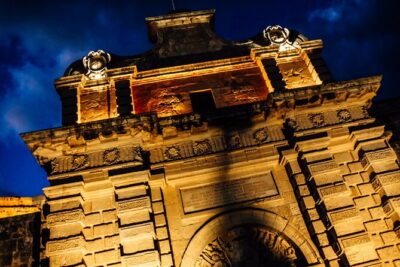

Browse the lists this tour appears in