
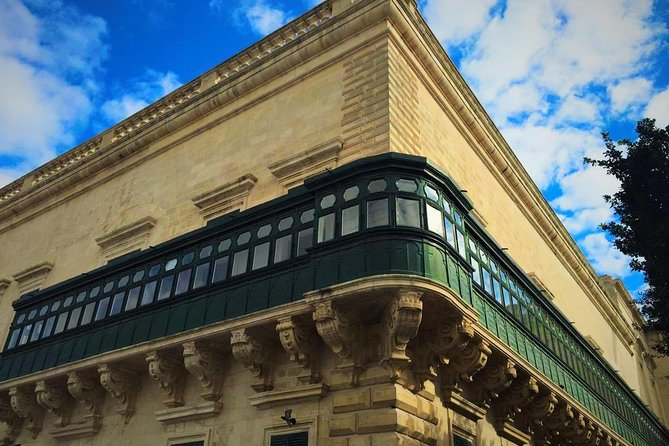
Review · WALKING TOURS IN VALLETTA
The Original Valletta Walking Tour
Valletta rewards curious walkers. This three-hour tour gives you a clear introduction to Malta’s compact capital, from the modern City Gate to the gardens above Grand Harbour. I especially like the small-group limit of 25 and the guides’ strong command of Maltese history, art, and local stories. The main drawback is that several grand interiors, including St. John’s Co-Cathedral and the Grand Master’s Palace, cost extra.
I also like the gentle pace, with plenty of stops and a reported break midway. Guides such as Matthew, Carmel, Giulia, and Mario have been praised for clear English, humor, and patience. If you prefer to wander silently or spend a long time inside each monument, this may feel too guided and, at times, too detailed.
In This Review
- Key points at a glance
- Why Valletta works so well on foot
- Starting at the New Parliament Building
- Parliament, the Royal Opera House, and Valletta’s rebuilt entrance
- Upper Barrakka Gardens and the Grand Harbour
- From Auberge d’Italie to St. John’s Co-Cathedral
- St. George’s Square and the Grand Master’s Palace
- The guide makes the difference
- Pace, group size, and physical effort
- Who should book this Valletta walk?
- Should you book it?
- FAQ
- Where does the Valletta walking tour start?
- Where does the tour end?
- How long does the walking tour last?
- How much does the tour cost?
- What language is the tour offered in?
- What is included in the price?
- Are attraction admission fees included?
- How large is the group?
- Is hotel pickup included?
Key points at a glance
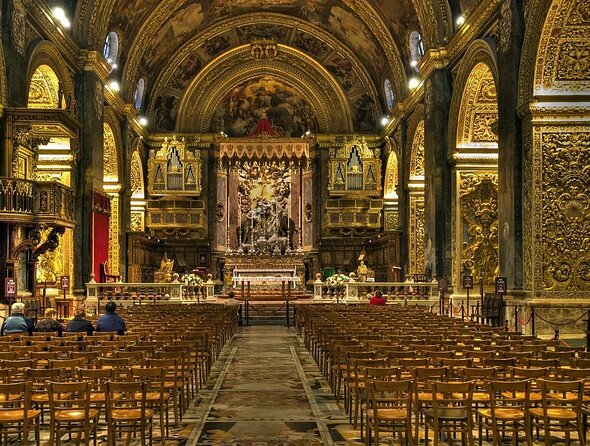
- Three hours across Valletta’s core sights: The route covers the City Gate, Parliament, Barrakka Gardens, St. John’s Co-Cathedral, St. George’s Square, and more.
- A strong history focus: Expect explanations of the Knights of St. John, the Great Siege, Malta’s many cultural influences, and Valletta’s role as European Capital of Culture in 2018.
- A manageable walking pace: The route uses frequent stops rather than one long march, with a short rest built into the morning.
- Excellent guide feedback: Matthew, Carmel, Giulia, and Mario are singled out for clear delivery, humor, patience, and impressive subject knowledge.
- Small group, but not private: The group can reach 25 people, so the experience is more personal than a large coach tour but not intimate every time.
- Bring money for interiors: Admission to the new Museum of Fine Arts, St. John’s Co-Cathedral, and the Grand Master’s Palace is not included.
Why Valletta works so well on foot
Valletta is compact, but its story is unusually dense. The city was built by the Knights of St. John in 1565 and is protected as a UNESCO World Heritage Site. Within a short walk, you move from military planning and Baroque churches to modern government buildings, public gardens, and views across the Grand Harbour.
That makes a guided walk useful. You can certainly stroll along Republic Street alone, but the details are easy to miss. A carved facade, a surviving stone corner, or a monument may look decorative until someone explains the siege, order, architect, or political event connected with it.
I would choose this tour early in a Valletta stay. It gives you a map in your head and helps you decide which interiors deserve a later visit. The route ends in central Valletta, so you can continue exploring, stop for lunch, or return to a church or museum that caught your attention.
The tour costs $26.60 per person. For three hours with a professional guide, that is a fair price, particularly if you are visiting for the first time or arriving on a cruise ship with limited time. You are paying mainly for explanation and orientation, not entry tickets. Add the cost of any paid interiors you want to enter.
More Walking Tours in Valletta
- Valletta: 3-Hour Walking Tour
★ 4.7 · 1,605 reviews - Valletta: Guided City Walking Tour
★ 4.8 · 1,256 reviews - Valletta: Street Food and Culture Walking Tour
★ 4.8 · 1,251 reviews
Starting at the New Parliament Building
The meeting point is in front of the New Parliament Building on Republic Street. This is a useful starting place because you begin beside Valletta’s modern entrance rather than being dropped into the middle of its older streets without context.
Your guide first introduces the city and explains how Valletta developed after the Knights of St. John founded it in the sixteenth century. The opening is brief, but it frames what follows: this is not simply a walk through pretty stone streets. It is a city shaped by military needs, religious power, foreign rule, war, rebuilding, and modern civic life.
The first stop lasts only a few minutes at Valletta City Gate. That short pause is enough to gather the group and set the scene. The modern Parliament building and entrance also provide an immediate contrast with the older Baroque structures you will see later.
One practical warning: the meeting point can be confusing if you are coming from the cruise port. A useful route is to turn right from the port, walk roughly 200 meters, cross at the marked crossing, and take the elevator up. From there, walk through the gardens, pass through the arched gate, and head toward the square. The elevator is reported to cost one euro for a return trip, and the walk from the port can take about 15 minutes.
Check the building carefully before crossing the bridge. The meeting spot is before the bridge, and a phone map may sometimes direct you to a completely different place. If you are running late, WhatsApp may help, but you need to have it installed and available.
Parliament, the Royal Opera House, and Valletta’s rebuilt entrance
From the Parliament building, the group pauses at Pjazza Teatru Rjal, the open-air theater built around the ruins of the Royal Opera House. This is one of Valletta’s most telling modern scenes. Ancient stone, wartime damage, and contemporary design share the same space.
The stop is short, so do not expect an extended architectural lecture here. You will get the story behind the ruins and see how Valletta has adapted old structures rather than pretending the past remained untouched.
The route then reaches Our Lady of Victories Church, one of the early religious buildings connected with Valletta’s founding years. The guide poses the question of which famous Maltese hero was buried there, a good example of how the tour uses stories and human figures rather than only dates and building names.
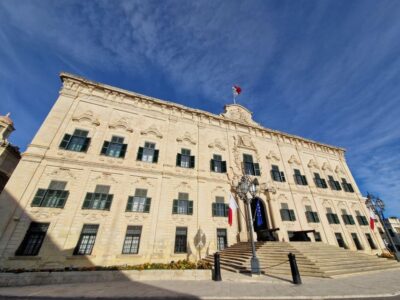
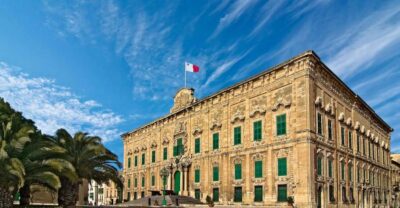
At Il-Berga ta’ Kastilja, you pause to admire the facade of this important edifice. The Auberge de Castille is one of the city’s most imposing buildings, and the exterior stop helps you understand how the Knights organized themselves through separate auberges, or residences, linked to different national groups.
This early part of the walk is especially useful if you have little background on Malta. Instead of treating each building as an isolated monument, the guide connects religion, military organization, government, and the daily role of the Knights.
Upper Barrakka Gardens and the Grand Harbour
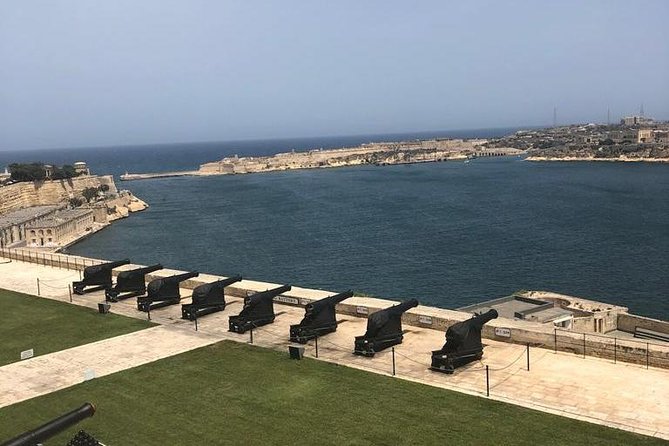
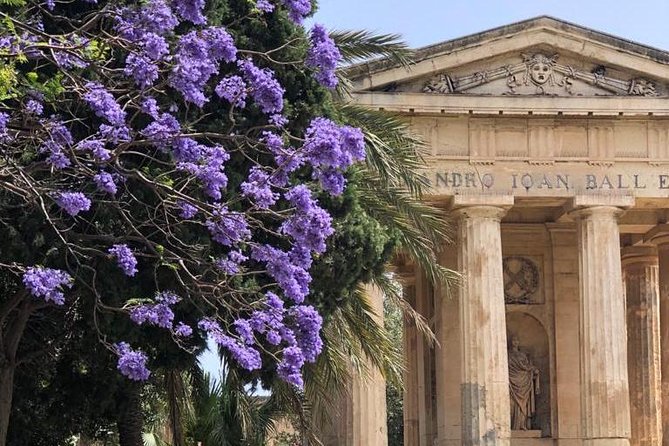
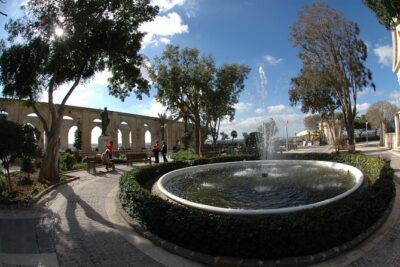
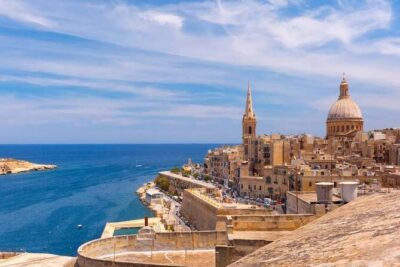
The Upper Barrakka Gardens are given about 30 minutes, making this the longest stop on the route. That is sensible. The gardens provide one of Valletta’s best viewpoints, looking down over the Grand Harbour and the fortified shorelines beyond.
This is also the natural breathing space in a tour that includes a lot of information. Several guides have built in a break of roughly 15 minutes, sometimes allowing time for coffee. The exact rhythm can vary, but you should expect a pause rather than three solid hours of standing and listening.
I would pay close attention here even if you are not usually a history fan. The view helps explain why Malta mattered to competing powers. Valletta’s position, walls, harbor, and defensive forts are easier to understand from above than from street level.
Your guide also discusses Valletta’s role as the 2018 European Capital of Culture. That adds a modern layer to the story. The city is not presented as a frozen monument, but as a living capital that has had to balance preservation, public life, culture, and redevelopment.
The Lower Barrakka Gardens and the waterfront area are also included in the broader walk, although the Upper Barrakka Gardens receive the longer scheduled stop. Fort St. Elmo, the Great Siege Monument, and the Siege Bell Memorial help connect the scenery with Malta’s wartime past.
A completely different kind of day:
- From Malta: Full-Day Gozo UTV Tour with Lunch and Boat Ride
★ 4.6 · 4,408 reviews - From Malta: Full-Day Gozo Quad Tour with Lunch and Boat Ride
★ 4.8 · 1,419 reviews - Gozo Full-Day Jeep Tour with Private Boat to Gozo & return
★ 4.5 · 1,048 reviews - Valletta: City Walking Tour in a Small Group
★ 4.9 · 957 reviews
From Auberge d’Italie to St. John’s Co-Cathedral
The route continues to Auberge d’Italie, now associated with the new Museum of Fine Arts. The stop here is brief, around five minutes, and museum admission is not included. If you want to explore the collection, plan a separate visit rather than expecting the walking tour to take you through the galleries.
This is an important distinction. The tour is designed to show you the city and explain its landmarks. It does not include entry to every major attraction, and the short stop at the museum is mainly an exterior orientation.
At Palazzo Parisio, the guide asks which world-famous historical figure once lived there. The building becomes a prompt for a story about Valletta’s residents and visitors, not just another facade to photograph. Since the walk covers many names and dates, take a quick note if a particular palace or person interests you.
St. John’s Co-Cathedral is one of the major highlights. The guide discusses the artists represented inside and explains why the church matters to Valletta’s artistic and religious identity. Admission is not included, so you may only view the exterior during the tour unless you purchase a separate ticket.
I would consider returning to St. John’s Co-Cathedral after the walk. The tour’s explanation can give the interior more meaning, but the schedule does not allow a long visit among the artworks and chapels. One fortunate example shows why the advice can matter: a guide strongly encouraged one group to enter, and the cathedral happened to open for a service after previously being closed for a holiday.
St. George’s Square and the Grand Master’s Palace
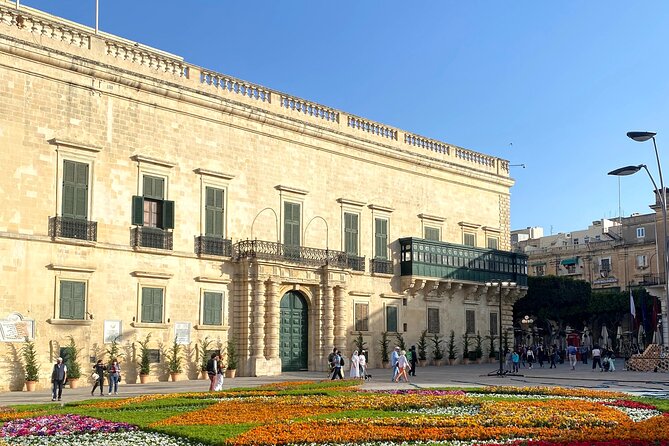
St. George’s Square is the final major section of the walk. It is Valletta’s main square and a good place to discuss the city’s civic and political center.
The Grand Master’s Palace receives around ten minutes. Its importance reaches across several centuries, and the guide explains how the building served different roles over time. Admission is not included, so check your schedule and budget if you want to go inside later.
The tour ends in St. George’s Square on Republic Street. This is convenient because you remain in central Valletta rather than finishing at an isolated site. From here, you can continue along Republic Street, stop for food, or revisit the palace and cathedral.
The ending also makes the tour suitable for a short port visit. You are not relying on a long return transfer, though you should allow time to get back to the ship or onward transport.
The guide makes the difference
The strongest feature is the quality of the guiding. Mario is described as offering unusually detailed explanations of geography, art, architecture, and history. His approach suits you if you enjoy a serious lecture with plenty of context, though one account found that his detailed presentations required a fair amount of standing.
Matthew receives praise for answering questions, sharing practical tips, and keeping the group relaxed. Carmel is noted for combining facts with anecdotes, while Giulia is praised for speaking clearly and making Malta’s story easy to follow. These comments suggest a consistent strength in the guiding, but the experience will still depend on who leads your particular departure.
The English is generally described as clear and easy to follow. That matters on a history walk, where unfamiliar names and long sequences of events can quickly become tiring.
The best guides do more than recite dates. They explain why a building mattered, how the city changed, and what you should notice when you return on your own. You should also feel free to ask questions. Several accounts emphasize that guides were patient and willing to add information.
Pace, group size, and physical effort
The walk is not described as physically demanding. Valletta is small, and the tour covers a reasonable amount of ground through stops, explanations, and short pauses. You should still be comfortable walking and standing for several hours.
A maximum of 25 people gives the guide a chance to keep the group together and respond to questions. It is not a private tour, and a full group may feel less personal than a four-person outing. Still, it should be easier to hear and manage than a large city tour.
Wear comfortable shoes and bring water. The tour takes place outdoors for much of the time, and Malta’s weather can change. One January group enjoyed sunshine despite a rain forecast, so a light rain layer is sensible even when the morning looks clear.
There is some confusion possible when two company tours meet near the same location. One short tour and this longer tour may use similar yellow shirts or umbrellas, though their start times are different, listed as 10:00 a.m. and 10:30 a.m. Confirm the correct departure and look for the guide rather than joining the first yellow umbrella you see.
Who should book this Valletta walk?
I would choose it for a first visit, a cruise stop, or a morning when you want the city explained before exploring alone. It is particularly good for people who enjoy history, architecture, art, and stories about how Malta’s many influences shaped its capital.
It also suits you if you want a broad overview without spending your entire day inside museums. The route touches the main landmarks, gives you the key context, and leaves you in central Valletta with time to choose your next stop.
You may want another option if your priority is entering every major building. Paid admission is not included, and the tour’s timing favors exterior explanations over long interior visits. You may also find the information-heavy style too much if you prefer a loose stroll with only occasional commentary.
The tour is offered in English, includes a mobile ticket, and does not include hotel pickup or drop-off. Most people can participate, and service animals are allowed. Free cancellation is available until 24 hours before the start time. Inside 24 hours, the payment is not refunded, and changes are not accepted.
Should you book it?
Book this tour if you want Valletta to make sense quickly. The combination of major sights, a manageable pace, Grand Harbour views, and strong guides makes $26.60 good value for a first look at the city.
I would book well ahead if your schedule is fixed, since it averages about 28 days of advance booking. Just arrive early at the New Parliament Building, confirm you are with the three-hour group, and keep extra money and time available for St. John’s Co-Cathedral or the Grand Master’s Palace.
FAQ
Where does the Valletta walking tour start?
It starts at the New Parliament Building on Republic Street in Valletta, Malta.
Where does the tour end?
The tour ends in St. George’s Square on Republic Street, in central Valletta.
How long does the walking tour last?
The tour lasts approximately three hours.
How much does the tour cost?
The listed price is $26.60 per person.
What language is the tour offered in?
The tour is offered in English.
What is included in the price?
A professional guide and mobile ticket are included.
Are attraction admission fees included?
No. Admission is not included for the new Museum of Fine Arts, St. John’s Co-Cathedral, or the Grand Master’s Palace.
How large is the group?
The tour has a maximum of 25 participants.
Is hotel pickup included?
No. Hotel pickup and drop-off are not included.
Just added in Valletta
- World War II Malta Full-Day Walking Tour★ 4.3 · 18 reviews
- Malta: 5 hr Vintage Bus Tour – Mdina & Blue Grotto inc. food★ 5.0 · 22 reviews
- Valletta: Private Walking Tour With A Guide ( Private Tour )★ 5.0 · 1 review
- Valletta: Private Maltese Cuisine Walking Tour★ 4.8 · 8 reviews
- Valletta Private Walking Tour★ 5.0 · 1 review
- Afternoon Harbours Cruise with Guide and Roundtrip Transfers★ 3.4 · 11 reviews
- Valletta & Mdina: Private Tour★ 4.5 · 16 reviews
- Valletta: Guided Walking Tour★ 3.8 · 5 reviews
Walking Tours in Valletta, compared.


Self-Guided Historical Walking Tour (Audio Guide)
Read our review →Browse the lists this tour appears in