
Review · MDINA AND RABAT TOURS
Mdina: The Knights of Malta Museum Entry Ticket
Step into Malta’s knightly past. This small museum in Mdina uses full-size figures, recreated interiors, dramatic lighting, and a short 3D audio-visual presentation to tell the story of the Knights of Malta and their 200-year rule over the islands. I like the low $8 price and the fact that you can use the open ticket on any museum day, rather than being tied to one fixed time.
I also like the 13-language audio commentary, which makes the presentation useful for international visitors and families. The main consideration is depth: the exhibit covers a huge span of history in about 40 minutes, so parts may feel simplified or repetitive if you already know a great deal about the Knights.
In This Review
- Key points to know before you go
- Entering Casa Magazzini in Mdina
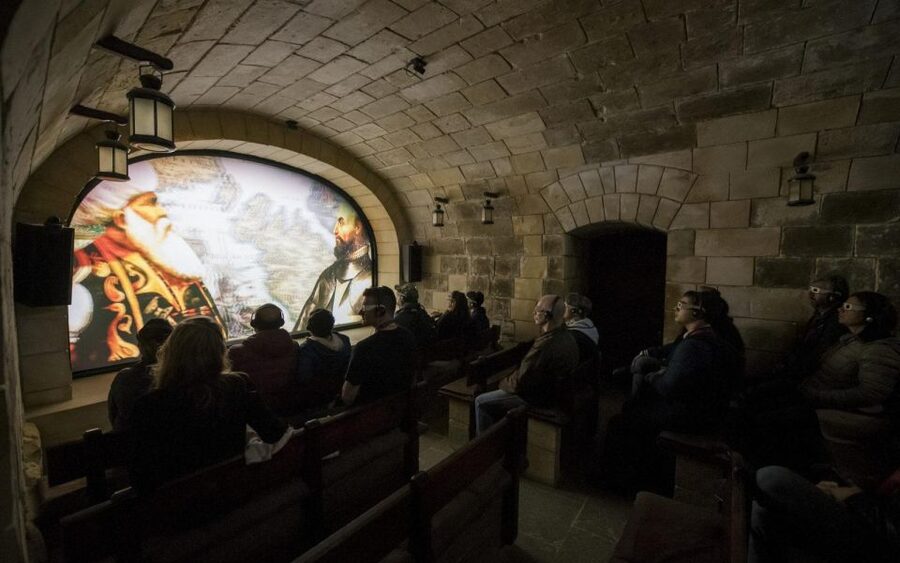
- The 3D introduction sets the scene
- Thirty-four scenes show daily life and conflict
- Grand Masters, hospitals, and the building of Valletta
- Siege, piracy, and the 1693 earthquake
- What the audio guide adds
- Is $8 a fair price?
- Families, strollers, and access
- How to fit the museum into a Mdina day
- Who should book the Knights of Malta Museum?
- Final verdict: a short, affordable Mdina history stop
- FAQ
- How long does the Knights of Malta Museum visit take?
- What is included in the ticket?
- Which audio guide languages are available?
- Can I use the ticket on any day?
- Is the museum open every day?
- Is the venue wheelchair accessible?
- Can I bring a stroller or infant?
- Are hotel pickup, food, or a guide included?
Key points to know before you go
- A 40-minute journey through Malta’s past: The visit includes a 3D digital introduction and a walk through 34 historical scenes.
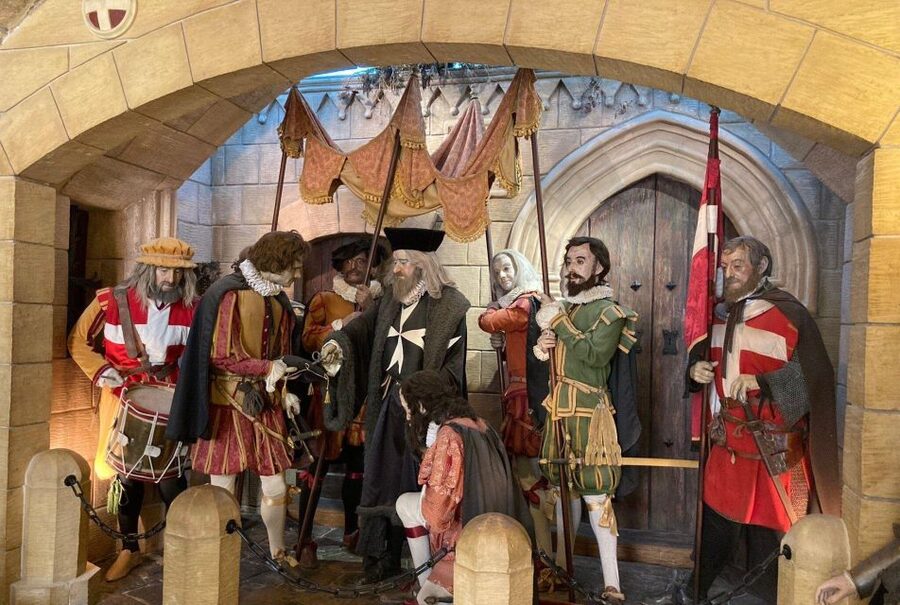
- Full-size figures bring the story to life: Knights, Grand Masters, patients, workers, and ordinary residents appear in staged scenes.
- Thirteen audio languages are available: Choose from English, German, French, Dutch, Spanish, Italian, Russian, Greek, Swedish, Danish, Norwegian, Japanese, and Maltese.
- The open ticket gives you flexibility: You can enter on any day during opening hours, but the ticket is valid for one entry only.
- Mdina’s complicated past is shown through drama: Expect scenes of battles, sieges, piracy, the 1693 earthquake, hospital work, and the building of Valletta.
- Access has limits: The venue is not wheelchair accessible, and it is not suitable for hearing-impaired visitors because the narration is central to the experience.
Entering Casa Magazzini in Mdina
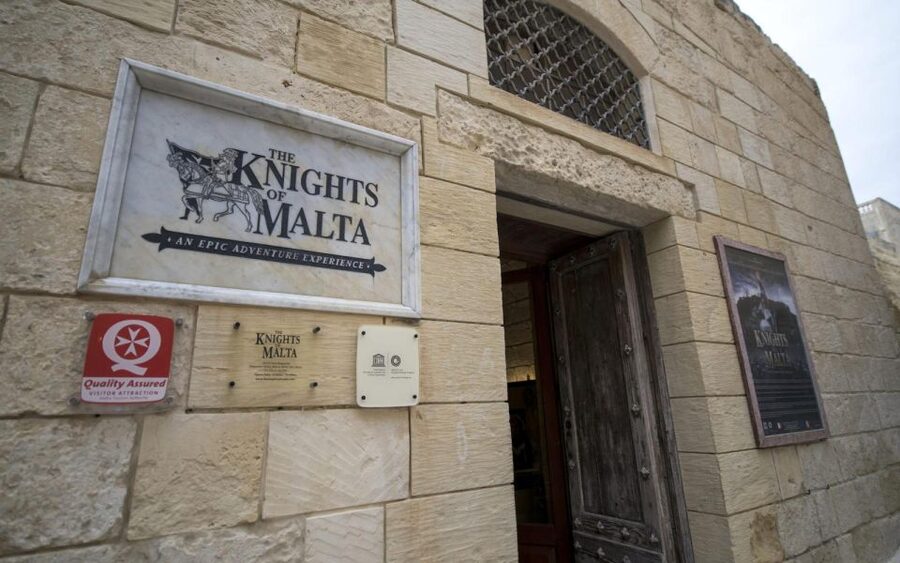
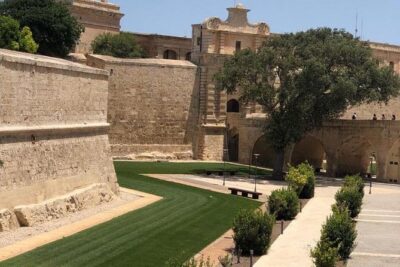
The Knights of Malta Museum is housed at Casa Magazzini, inside Mdina, the old fortified city often called the Silent City. You check in at the reception area when you arrive, then begin with an introductory 3D digital presentation before moving through the staged displays.
I like this format because it gives you a quick orientation before the walkthrough. You are not simply looking at isolated costumes or objects. The show first sets up the basic story, then the figures and scenes give that story a physical shape.
The visit lasts about 40 minutes. That makes it easy to fit between Mdina’s cathedral, palace, city walls, and narrow lanes. It also means you should not expect a full museum afternoon. This is a compact attraction with a clear beginning and end.
The open ticket is useful if you are building your own day in Mdina. You can use it on any day during the museum’s opening hours, rather than arriving at a required appointment time. Still, opening hours can change, so confirm them with the provider during your stay. The museum is open Monday through Sunday throughout the year, except Christmas Day.
More Mdina and Rabat tours:
- Malta: Highlights of Malta & Mdina Full Day Tour with Lunch
★ 4.4 · 2,688 reviews - Malta: Mdina and Rabat Walking Tour with Catacombs
★ 4.8 · 1,126 reviews - Malta: Mdina, Dingli Cliffs and San Anton Botanical Gardens
★ 4.3 · 991 reviews
The 3D introduction sets the scene
The opening audio-visual show uses digital effects, light, sound, and narration to introduce the Knights of Malta. It is available in 13 languages, with English, German, French, Dutch, Spanish, Italian, Russian, Greek, Swedish, Danish, Norwegian, Japanese, and Maltese among the choices.
This is one of the strongest practical features of the ticket. If you do not speak English comfortably, you can still follow the main story in a language that suits you. The narration also helps children understand what they are seeing before they enter the larger display area.
The subject is broad. The presentation covers the Knights’ role as Crusader fighters, their relationship with Malta, their Ottoman enemy, their work in hospitals, and their influence on architecture and public life. Since the whole attraction is short, the storytelling favors major events and striking scenes over long explanations.
I would treat the 3D show as an introduction rather than a scholarly lecture. It gives you the outline of the Knights’ story, but it cannot explain every political dispute, military campaign, or religious issue in detail. That limit is worth keeping in mind when deciding if the museum suits you.
Thirty-four scenes show daily life and conflict
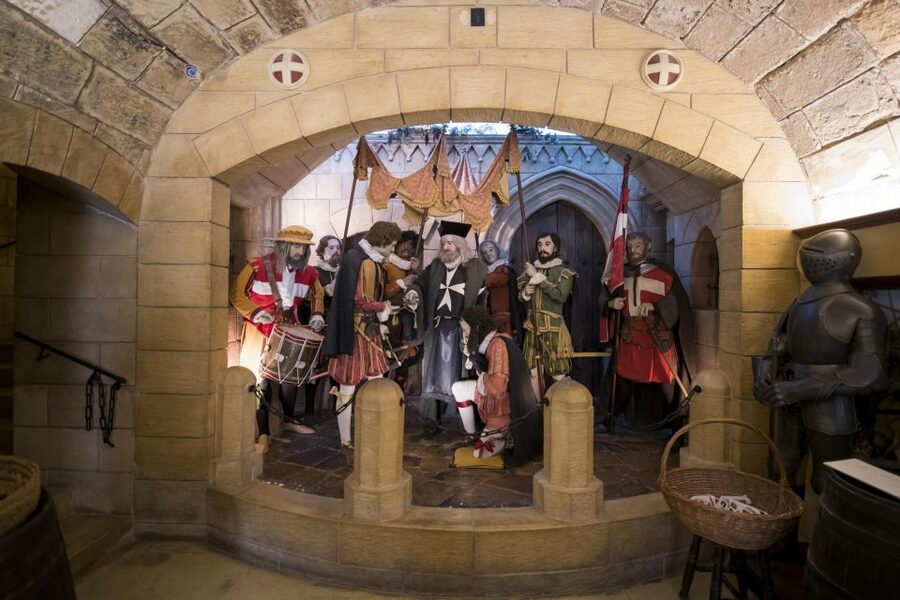
After the introduction, you walk through 34 tableaux covering the Knights’ roughly 200-year rule over Malta. The displays use full-size figures placed in reconstructed interiors and staged settings.
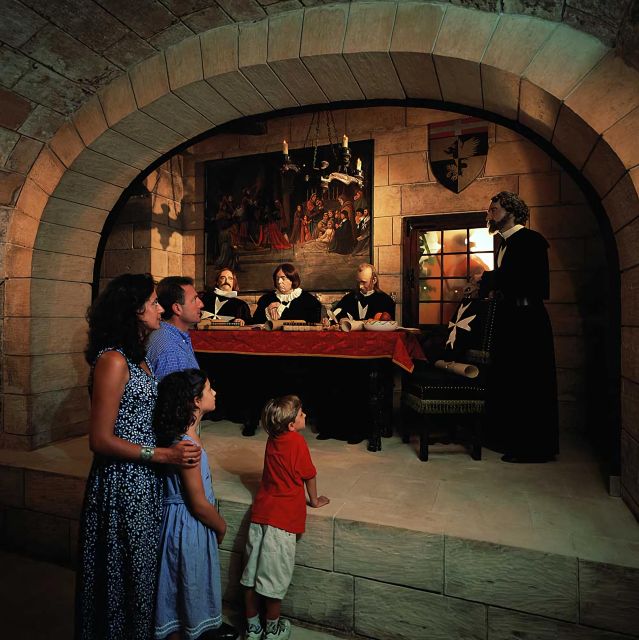
You may see Knights and Grand Masters in discussion, scenes involving ordinary residents, moments of military action, and episodes linked to disaster and disease. This range is important because the attraction does not show the Knights only as soldiers. It also presents them as administrators, builders, caregivers, and men involved in the daily life of the islands.
The visual approach is closer to a historical pageant than a conventional museum collection. You are looking at carefully arranged scenes, not a large collection of original objects. The value comes from the atmosphere and sequence, with one setting leading you toward the next part of the story.
That style works especially well for families. A child may respond more quickly to a full-size figure in a battle scene than to a written panel filled with dates. Adults can use the displays as a prompt to think about the gap between the Knights’ heroic image and the less glamorous realities of war, disease, power, and social order.
The trade-off is that still figures cannot provide the nuance of a live guide. At a rating of 4.3 out of 5 from 63 ratings, the attraction clearly works for many people, but it is not designed to answer detailed questions. One assessment found the exhibit charming and appreciated the short 3D film followed by the walkthrough. Another found the presentation repetitive and too approximate to add much to an existing understanding of the Knights. Both reactions make sense, depending on what you want from the visit.
Grand Masters, hospitals, and the building of Valletta
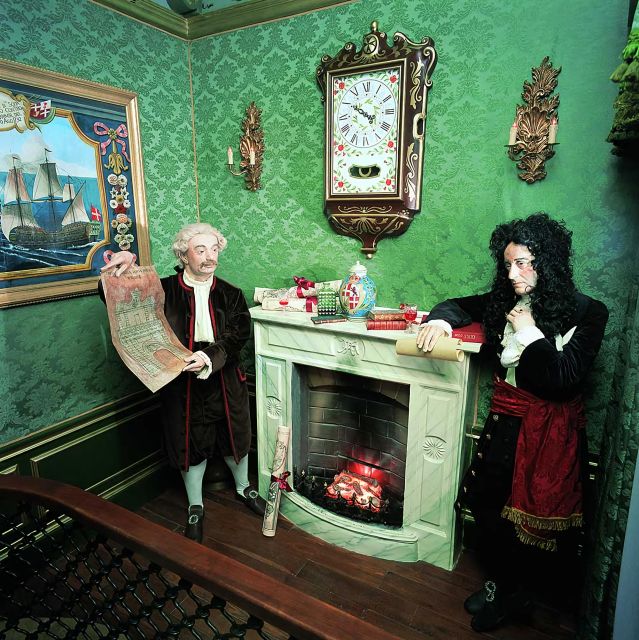
The Knights’ story is not only about swords and sieges. One of the more useful parts of the display is its attention to the order’s public work.
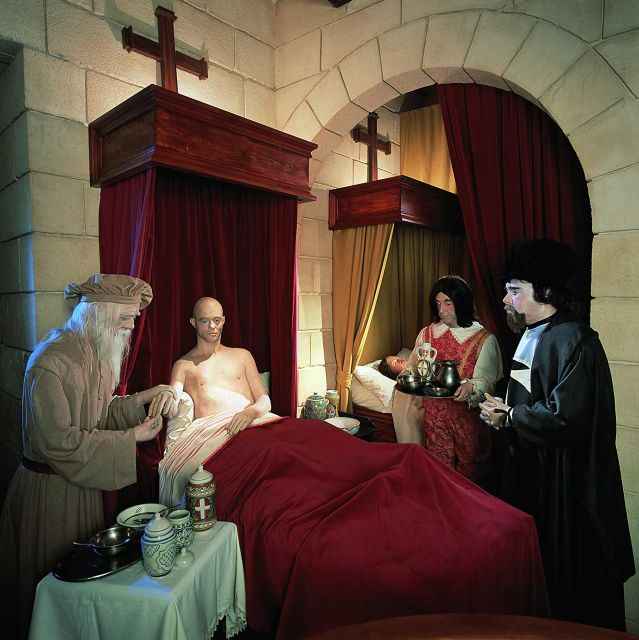
The scenes show the Knights offering service to sick people in their hospital. This helps explain why the order mattered beyond warfare. Their identity combined religious duty, military defense, medical care, and political authority.
The attraction also points to the Knights’ role as builders and patrons. Their vision helped produce Valletta, described here as a city for gentlemen, as well as grand monuments across Malta. You can connect these scenes with what you see elsewhere on the islands, especially if you are visiting Valletta after Mdina.
I like this wider view because it avoids reducing Maltese history to one siege or one group of armored men. The Knights changed the built environment, public institutions, and political life of Malta. Even in simplified form, the museum gives you a reason to look at later sights with more context.
At the same time, the 40-minute format means you should not expect a detailed explanation of architecture or urban planning. If Valletta’s buildings are your main interest, use this attraction as a starting point, then visit the city itself for the full picture.
More Museum Tours in Mdina and Rabat:
- Mdina: St. Paul’s Cathedral and Mdina Museum Entrance Ticket
★ 4.5 · 89 reviews - Palazzo Falson Historic House Museum entrance ticket
★ 4.7 · 22 reviews - Malta Classic Car Collection Museum Entry Ticket
★ 4.9 · 247 reviews - Skip the Line: Malta Classic Car Museum Admission Ticket
★ 5.0 · 174 reviews
Siege, piracy, and the 1693 earthquake
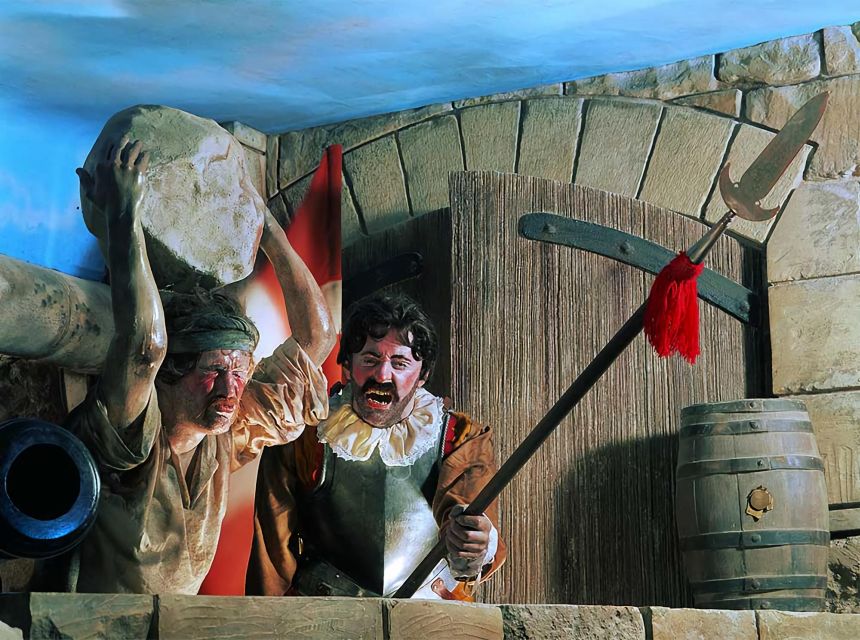
The museum uses drama to show some of the harder chapters in Malta’s past. Piracy and siege warfare appear as major threats, and the Knights are shown facing an Ottoman enemy during a period when control of the Mediterranean had serious military importance.
These scenes are likely to appeal to anyone drawn to fortifications and military history. The lighting and sound effects are designed to suggest the pressure of battle and the danger faced by people living inside fortified cities.
The 1693 earthquake in Mdina also receives attention. This is a useful reminder that Malta’s disasters did not come only from human enemies. Earthquakes, illness, hunger, and other emergencies shaped life alongside war.
I appreciate the attempt to show both triumphs and troubles. The Knights are presented as powerful figures, but the scenes also show fear, suffering, and responsibility. Still, the dramatic presentation can make events feel more theatrical than analytical. If you want precise dates, source material, and competing interpretations, you will need another museum or a book to fill in the gaps.
What the audio guide adds
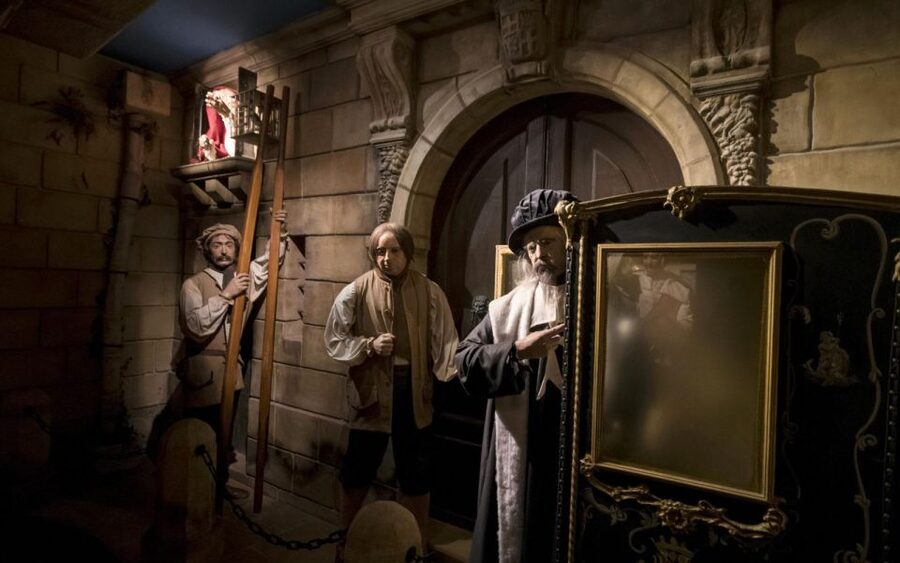
The audio narration is not an optional extra. It provides the historical details that connect the scenes, so I would not rush through the visit without listening.
The language choice is a real advantage. English is available, along with 12 other languages. Maltese is included too, which gives the attraction a local touch and makes it accessible to people who prefer to hear the story in the island’s own language.
The host or greeter speaks English, but the recorded commentary gives you the wider language support. Since there is no live guide included, the narration carries the explanatory side of the visit.
There is one clear limitation. The attraction is not suitable for hearing-impaired people because the audio-visual narration is central to understanding the presentation. The lighting and figures may still be visible, but the experience was designed around sound and spoken explanation.
Is $8 a fair price?
At $8 per person, I consider this a reasonably priced short attraction. The visit takes about 40 minutes, and you receive admission, the 3D introduction, and the audio commentary without paying separately for each part.
The value depends on your expectations. If you want a quick, family-friendly way to learn the basic story of the Knights, the price is easy to justify. It also works well as a filler between Mdina’s larger sights, especially because the ticket is open for use on any day during opening hours.
If you are already well read on the Knights of Malta, the exhibit may feel too general. The criticism that some parts are repetitive or approximate is worth taking seriously. You are paying for a staged historical experience, not a detailed academic museum.
Food, drinks, transport, hotel pickup, and a personal guide are not included. That is not a problem for most people because the ticket is for entry only, but you should plan your route to Mdina separately. The venue also does not offer re-entry, so visit when you are ready to stay for the full presentation and walkthrough.
Families, strollers, and access
Children are allowed, and the combination of light, sound, figures, and battle scenes may hold their attention better than a room of text panels. The museum is not stroller accessible, but a secure storage place is set aside for strollers.
If you are bringing a very young child, an infant harness is advised. That lets you move through the venue without depending on a stroller.
The venue is not wheelchair accessible. This is an important limitation, so check your needs carefully before booking. Pets are not allowed.
Because the experience uses dramatic lighting and scenes of battle, adults should decide if it suits particularly sensitive children. The supplied information does not give a specific age recommendation, so families will need to use their own judgment.
How to fit the museum into a Mdina day
The flexible entry makes the museum easy to place into a broader Mdina visit. You could use it near the start of your time in the fortified city to get the basic story first, then view Mdina’s streets and buildings with the Knights in mind.
Another approach is to visit after seeing the city’s major religious and civic sights. In that order, the museum can act as a short historical recap that links the architecture and fortifications to the people who shaped them.
I would allow at least the full 40 minutes, plus a little extra time for check-in. Since there is no re-entry, avoid treating it as a quick stop you can leave and return to later.
The open ticket gives you freedom across the museum’s operating days, but it does not guarantee fixed hours. Check the schedule during your stay, particularly if your Mdina visit falls near a public holiday or another change in the venue’s timetable.
Who should book the Knights of Malta Museum?
I would recommend this attraction to families, first-time visitors to Mdina, and anyone who enjoys historical displays with theatrical presentation. The low price, short duration, flexible entry, and wide language selection make it easy to add to a day of sightseeing.
It is also a good choice if you want a basic introduction before visiting Valletta or other Maltese sites connected with the Knights. The scenes about hospitals, architecture, sieges, and the earthquake give you several useful themes to watch for elsewhere.
I would be more cautious if you are seeking detailed scholarship, original documents, or an extensive collection of artifacts. The presentation can simplify events, and some parts may feel repetitive. For those visitors, the museum is best treated as a visual introduction, not the final word on the Knights of Malta.
Final verdict: a short, affordable Mdina history stop
Book this ticket if you want a compact presentation that makes Malta’s knightly past easier to picture. The 3D show, 34 staged scenes, and 13-language audio guide offer solid value at $8, especially for families and visitors with limited time.
Skip it if you need wheelchair access, cannot use spoken narration, or already know the Knights’ story in detail. For everyone else, it is a modest but useful addition to Mdina, with enough drama to hold your attention and enough historical context to improve the rest of your Malta sightseeing.
FAQ
How long does the Knights of Malta Museum visit take?
The complete experience lasts approximately 40 minutes, including the introductory 3D digital audio-visual show and the walkthrough.
What is included in the ticket?
The ticket includes admission to the Knights of Malta Museum and the audio-visual introduction with commentary in 13 languages.
Which audio guide languages are available?
Commentary is available in English, German, French, Dutch, Spanish, Italian, Russian, Greek, Swedish, Danish, Norwegian, Japanese, and Maltese.
Can I use the ticket on any day?
Yes. The ticket is open and can be used on any day within the museum’s opening hours. It is valid for one entry only, with no re-entry.
Is the museum open every day?
The museum is open Monday through Sunday throughout the year, except Christmas Day on December 25. Opening hours may change, so confirm them during your stay.
Is the venue wheelchair accessible?
No. The venue is not wheelchair accessible.
Can I bring a stroller or infant?
Infants are allowed, but the venue is not stroller accessible. A secure storage area is available for strollers, and an infant harness is advised for visitors with very young children.
Are hotel pickup, food, or a guide included?
No. Hotel pickup and drop-off, food and drinks, and a personal guide are not included.
Just added in Mdina and Rabat
- Malta: 5 hr Vintage Bus Tour – Mdina & Blue Grotto inc. food★ 5.0 · 22 reviews
- Valletta & Mdina: Private Tour★ 4.5 · 16 reviews
- Shore Excursion: Private Full-Day Tour of Valletta & Mdina★ 5.0 · 4 reviews
- Private Tour in Malta Prehistoric Temples & Mdina★ 5.0 · 4 reviews
- Private Tour in Valletta and Mdina★ 5.0 · 1 review
- Rabat Mdina and San Anton Gardens Group Tour with St. Paul’s Catacombs★ 3.5 · 16 reviews
- Valletta, Mosta and Mdina Night Tour★ 3.5 · 15 reviews
- Malta Shore Excursion: Private tour of Valletta and Mdina★ 4.5 · 8 reviews
Mdina and Rabat Tours, compared.
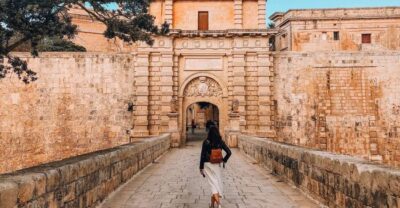
Highlights of Malta & Mdina Full Day Tour with Lunch
Read our review →
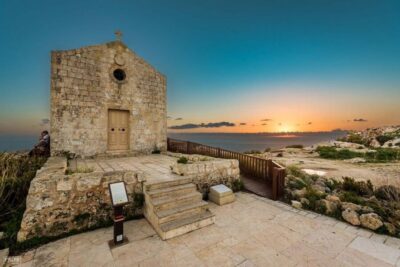
Mdina, Dingli Cliffs and San Anton Botanical Gardens
Read our review →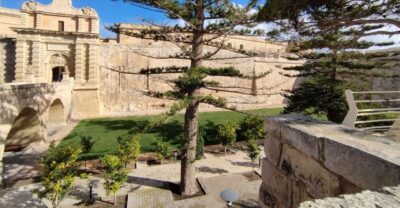

Mdina and Rabat Walking Tour inc. Catacombs and St. Paul’s Grotto
Read our review →Browse the lists this tour appears in