
Review · VALLETTA TOURS
Valletta Private Guided Tour In English, French or Italian
Valletta rewards a closer look. I like the private format, which lets your guide adjust the pace and explain details that can slip past you on a large group walk. I also like the mix of grand sights and quieter side streets, especially the views from Upper Barrakka Gardens and the chance to visit St. John’s Co-Cathedral.
The main consideration is the price: $162 per person is a serious sum for a three-hour walk, especially for a couple or a small party. The value improves when several people share the private guide, and you should also budget extra for the cathedral ticket if you choose to enter.
In This Review
- Key points to know before booking
- Why a private walk makes sense in Valletta
- Beginning at Triton Fountain and City Gate
- Castille Square and Valletta’s grand public face
- Upper Barrakka Gardens and the Grand Harbour
- Merchants Street, Palace Square, and Republic Square
- St. John’s Co-Cathedral: the optional grand finale
- What the guide adds to the experience
- Walking conditions, timing, and practical comfort
- Is $162 per person good value?
- Who should book this Valletta tour?
- Should you book it?
- FAQ
- How long does the Valletta private tour last?
- Which languages are available?
- Is this a private tour?
- Is hotel pickup included?
- Where does the tour meet?
- Is St. John’s Co-Cathedral included?
- How much does St. John’s Co-Cathedral cost?
- When is the cathedral generally open?
- Is the tour wheelchair accessible?
- What should I bring?
Key points to know before booking
- Private guiding in three languages: Choose English, French, or Italian, with a licensed local guide focused only on your group.
- Upper Barrakka Gardens is a highlight: The gardens provide broad views over the Grand Harbour and the Three Cities.
- St. John’s Co-Cathedral is optional: You can decide during the tour, but admission costs extra and the cathedral is normally open Monday through Saturday.
- The route covers Valletta’s major landmarks: Expect City Gate, Parliament, the Royal Theatre, Castille Square, Merchants Street, Palace Square, and Republic Square.
- The walk lasts about three to three and a half hours: Comfortable shoes matter, and you should be ready for a good amount of walking.
- French-language guiding has been warmly praised: One French-speaking guide handled adults and teenagers well, kept the visit lively, and covered the essential sights without dragging things out.
Why a private walk makes sense in Valletta
Valletta is compact, but it is not simple. Its streets form a tight grid, its buildings carry layers of military, religious, and political history, and its views change quickly as you move from an enclosed lane to a bastion overlooking the water.
A guide helps you connect those pieces. Instead of seeing a handsome palace as just another stone building, you learn how Valletta was planned, how it changed over nearly five centuries, and which events shaped the capital.
The private setup is useful for families, couples, and small groups with different interests. You can ask more questions, pause for photographs, or spend less time on a stop that does not appeal to you. A large group often follows a fixed rhythm. Here, the guide can adapt to adults and teenagers, as one French-language tour did particularly well.
That personal attention is the strongest reason to consider this experience. If you already know Valletta well, a private guide may add less value. For a first visit, though, the context can turn a pleasant walk into a much clearer introduction to Malta.
More things to do in Valletta:
- From Malta: Full-Day Gozo UTV Tour with Lunch and Boat Ride
★ 4.6 · 4,408 reviews - The Original Valletta Walking Tour
★ 5.0 · 2,719 reviews - Valletta: 3-Hour Walking Tour
★ 4.7 · 1,605 reviews
Beginning at Triton Fountain and City Gate
The exact meeting point depends on the option you book, so check your confirmation carefully before setting out. The route includes the area around Triton Fountain, a useful starting point for understanding how modern Valletta meets the old fortified city.
From there, you reach the rebuilt City Gate and the Parliament of Malta, designed by Renzo Piano. This area gives you an immediate contrast between Valletta’s historic stone architecture and a more recent architectural approach.
The nearby Royal Theatre adds another layer. Valletta is not only a city of fortifications and churches. It has also been a place for public performance, government, ceremony, and daily city life.
This opening portion helps you get your bearings without wasting time on transportation. The tour is entirely on foot, so you move directly from one sight to the next rather than spending part of the three hours in a vehicle.
Castille Square and Valletta’s grand public face
Castille Square brings you into one of Valletta’s most impressive formal spaces. The Auberge de Castille is one of the important buildings here, and the square reflects the city’s connection with the Order of the Knights of St. John.
This is where a good guide earns the fee. The buildings are striking, but their meaning is not always obvious from the street. Your guide provides the political and historical background that explains why the square looks so imposing and why this part of Valletta mattered.
I would pay attention to the changes in scale. Some parts of the city feel ceremonial, with broad squares and grand facades. A few minutes later, you may be walking through a narrower lane where the experience is more local and ordinary.
That contrast is part of the pleasure of the route. You are not simply being taken from postcard to postcard. You also get a sense of how the city works between its major monuments.
Upper Barrakka Gardens and the Grand Harbour
Upper Barrakka Gardens is one of the tour’s essential stops. From here, you can look across the Grand Harbour toward the Three Cities, with the fortifications and waterfront spread out below.
This view gives you a better understanding of Malta’s geography and military importance than a description alone can provide. Valletta’s defensive position becomes clear when you see the harbor, the bastions, and the opposing shoreline together.
Bring a camera, but do not rush this stop. The gardens offer a natural pause in a walking tour that otherwise moves through streets and squares. It is also a good place to ask your guide to identify the main features across the harbor.
The garden visit is especially valuable early in your time in Valletta because it helps you picture the city as a fortified harbor capital. You are not just looking at water. You are seeing the setting that shaped the city’s purpose.
A few more options to weigh up in Valletta
- Valletta: Guided City Walking Tour
★ 4.8 · 1,256 reviews - Valletta: Maltese Food and Drink Guided Walking Tour
★ 4.7 · 601 reviews - Malta: Marsaxlokk, Blue Grotto, and Qrendi Guided Tour
★ 4.1 · 547 reviews - Valletta: Self-Guided Historical Walking Tour (Audio Guide)
★ 3.7 · 251 reviews
Merchants Street, Palace Square, and Republic Square
The route continues through central Valletta, including Merchants Street, Palace Square, and Republic Square. These are among the best places to see the capital in motion, with grand buildings, shops, churches, and public spaces close together.
Palace Square, also called St. George’s Square, is tied to the formal heart of the city. Republic Square offers another important civic setting. Your guide’s narration helps distinguish the different roles these spaces played rather than treating them as interchangeable plazas.
Merchants Street adds a more everyday side. It is one of the places where you can see how Valletta’s monumental past fits alongside ordinary commerce and city movement.
The tour also includes Valletta’s side streets. This matters because the capital’s character is often strongest away from the obvious monuments. The lanes reveal changes in architecture, doorways, balconies, stonework, and the practical shape of a city built within defensive walls.
The pace may feel full for anyone who wants long, unhurried photography stops. Three hours is enough to see a lot and hear the main story, but not enough to examine every building in detail.
St. John’s Co-Cathedral: the optional grand finale
St. John’s Co-Cathedral is optional, and you decide with the guide on the day. The entrance ticket is not included, so you pay separately at the site.
The cathedral normally opens Monday through Saturday from 9:00 a.m. to 4:00 p.m., except on public holidays. Admission is listed as €15 for adults, €12 for seniors and students, and free for children under twelve, although prices can change without notice.
If the cathedral is open and you are interested in art or religious history, I would strongly consider adding it. The building began as the conventual church of the Order of the Knights of St. John. It was built in only five years, then embellished over more than two centuries.
That long process explains why the interior is so different from the plain, defensive impression Valletta can give from outside. The cathedral is known for its ornate decoration, treasures, and elaborate interiors. It is not a quick doorway photo. Allow the guide to explain how the church developed and why it became such an important expression of the order’s wealth and faith.
The optional arrangement is practical. If someone in your group has already visited, does not want to pay the extra fee, or prefers more time outdoors, you are not forced into the admission. On the other hand, if the cathedral is central to your plans, confirm the day and opening hours before booking because the provider is not responsible for closures.
What the guide adds to the experience
The guide is a licensed local professional, and the narration is meant to carry the tour beyond a list of dates and names. You learn how Valletta began, how it changed, and what events shaped its present form.
The best evidence of the guiding style comes from the French-language experience. A French-speaking guide was praised for speaking excellent French, adapting well to a group of adults and teenagers, and keeping the visit lively while concentrating on the essentials.
That is useful information if you are booking for a mixed-age group. Teenagers often need a quicker pace and clear stories, while adults may want more historical detail. A private tour gives the guide a better chance to balance both.
You can book in English, French, or Italian. If language is important to your group, select the right option carefully. A tour is much more valuable when everyone can follow the explanation and join the questions.
Walking conditions, timing, and practical comfort
The advertised duration is three hours, while the route may run closer to three and a half hours. That difference matters if you have a restaurant reservation, a cruise departure, or another timed activity afterward.
You will be on foot for the entire experience. Comfortable shoes are essential. Mobility-impaired participants are welcome, but the tour includes quite a bit of walking, so think realistically about your energy and comfort.
The activity is wheelchair accessible, though the overall demands of a city walking route still deserve attention. Ask about the exact meeting point and route details when booking if your group has specific mobility needs.
Bring cash. You may need it for the cathedral admission or other small expenses, and food and drinks are not included. Hotel pickup and drop-off are also not part of the tour, so plan your own way to the meeting point.
The city can feel lively around its main streets and squares. If you prefer quiet sightseeing, listen closely during the side-street portions and use the private format to request a slower pace when possible.
Is $162 per person good value?
At $162 per person, this is not a budget walking tour. The price needs to be judged against what you receive: a private group, a licensed local guide, a choice of three languages, and roughly three hours of focused sightseeing.
For a larger family or small group, the cost may feel more reasonable because you are sharing the guide rather than paying for several separate tours. For one or two people, the same price is harder to justify unless you place a high value on privacy and personal questions.
The cathedral ticket is extra, so include that in your total if you want the full experience. Food, drinks, transportation, and other admissions are also excluded.
I would compare the price with your priorities. If you want a fast orientation to Valletta and prefer to explore independently afterward, the private format can save you time and confusion. If you mainly want to stroll and take photographs, a less expensive group walk may be enough.
The value is strongest for first-time visitors, families with teenagers, and people who want history explained in a chosen language. It is weaker for repeat visitors who already know the main sights or for anyone seeking a very slow architectural study.
Who should book this Valletta tour?
I would recommend it to you if you want a clear introduction to Valletta without arranging several separate visits. The route covers the key public spaces, major buildings, gardens, harbor views, and side streets in one concentrated outing.
It also suits groups with different ages and interests. The guide can give adults historical context while keeping younger participants involved, and the French-language experience suggests that this flexibility can work well in practice.
You should think twice if you dislike walking, need long breaks, or want every admission included in the price. You should also check the cathedral schedule before booking if that interior is a must-see.
Free cancellation up to 24 hours before the activity and the reserve-now, pay-later option give you some useful flexibility. The meeting point varies by booking choice, so that detail deserves attention before you finalize your plans.
Should you book it?
Book this tour if you want personal guiding, a strong first look at Valletta, and a chance to shape the pace around your group. The Upper Barrakka Gardens view, the city’s layered architecture, and the optional St. John’s Co-Cathedral make the three hours feel well spent.
Skip it if $162 per person strains your budget or if you are happy exploring with a guidebook. For everyone else, especially families and small groups sharing the cost, this is a focused and flexible way to understand Malta’s capital before exploring it on your own.
FAQ
How long does the Valletta private tour last?
The tour lasts three hours, although the walking experience may take approximately three to three and a half hours.
Which languages are available?
You can take the tour in English, French, or Italian.
Is this a private tour?
Yes. The activity is arranged for a private group rather than a shared group.
Is hotel pickup included?
No. Hotel pickup and drop-off are not included.
Where does the tour meet?
The meeting point can vary depending on the option booked. Check the details for your selected option.
Is St. John’s Co-Cathedral included?
The cathedral visit is optional. You can decide with the guide on the day, but the entrance ticket is not included.
How much does St. John’s Co-Cathedral cost?
The listed admission is €15 for adults, €12 for seniors and students, and free for children under twelve. The fee can change without notice.
When is the cathedral generally open?
It is generally open Monday through Saturday from 9:00 a.m. to 4:00 p.m., excluding public holidays.
Is the tour wheelchair accessible?
Yes, people with mobility impairments are welcome, and the activity is listed as wheelchair accessible. It is still a walking tour with quite a bit of walking.
What should I bring?
Bring comfortable shoes and cash. Food and drinks are not included.
Just added in Valletta
- World War II Malta Full-Day Walking Tour★ 4.3 · 18 reviews
- Malta: 5 hr Vintage Bus Tour – Mdina & Blue Grotto inc. food★ 5.0 · 22 reviews
- Valletta: Private Walking Tour With A Guide ( Private Tour )★ 5.0 · 1 review
- Valletta: Private Maltese Cuisine Walking Tour★ 4.8 · 8 reviews
- Valletta Private Walking Tour★ 5.0 · 1 review
- Afternoon Harbours Cruise with Guide and Roundtrip Transfers★ 3.4 · 11 reviews
- Valletta & Mdina: Private Tour★ 4.5 · 16 reviews
- Valletta: Guided Walking Tour★ 3.8 · 5 reviews
Valletta Tours, compared.
Full-Day Gozo UTV Tour with Lunch and Boat Ride
Read our review →


Full-Day Gozo Quad Tour with Lunch and Boat Ride
Read our review →

Gozo Full-Day Jeep Tour with Private Boat to Gozo & return
Read our review →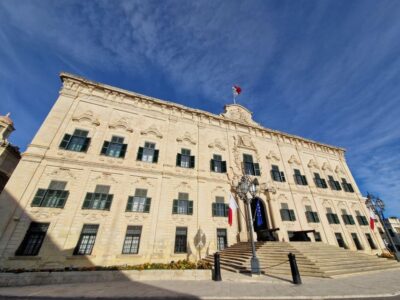
Browse the lists this tour appears in