
Review · MDINA AND RABAT TOURS
Medina, Rabat and the pastizzi experience
Malta’s best stories unfold on foot. This small-group walking tour links Mdina’s cathedral, medieval courts, art museum, Roman remains, Rabat’s Christian sites, and a warm pastizzi at the famous Serkin Crystal Palace Bar. I especially like the maximum group size of six, which should make it easier to hear the guide and ask questions. I also like the way the tour ends with an everyday Maltese snack rather than another grand monument.
The main consideration is pace and weather. You will spend about two and a half hours walking and standing outdoors, and the experience requires good weather. A 104-degree day was manageable for one guest because guide Julia kept the pace easy, but cold wind and heavy rain have also affected tours. Plan your clothing with Malta’s weather in mind.
In This Review
- Key points at a glance
- Starting inside Mdina’s ancient walls
- St. Paul’s Cathedral and Malta’s long religious story
- Medieval law courts and the old Universitas
- Art inside one of Mdina’s oldest houses
- Malta’s only Roman museum
- Forty-five minutes in quieter Rabat
- Christian catacombs and the start of Maltese Christianity
- Pastizzi at Is-Serkin, the Crystal Palace Bar
- Why the small group changes the experience
- Is $65 good value for two and a half hours?
- Weather, walking, and who should book
- Should you book Medina, Rabat and the pastizzi experience?
- FAQ
- Where does the tour start?
- What time does the tour begin?
- How long does the experience last?
- Where does the tour finish?
- How many people can join the tour?
- Is pastizzi included?
- What drink comes with the pastizzi?
- Is admission to the Rabat stop included?
- Can I cancel for a full refund?
Key points at a glance
- Starts at Mdina Gate at 2:30 pm: The tour begins in Malta’s old capital and finishes back at the same meeting point.
- Six-person maximum: This is a far more personal setup than a large city walking tour.
- Four Mdina highlights in one walk: You see St. Paul’s Cathedral, the old law courts, an art museum in one of Mdina’s oldest houses, and Malta’s only Roman museum.
- Rabat adds a different mood: The quieter suburb was part of Roman Melita and is closely tied to the beginnings of Christianity in Malta.
- Pastizzi is included: The final 20-minute stop at Is-Serkin, also called Crystal Palace Bar, gives you a taste of a cheap, beloved Maltese snack.
- Guiding is the real strength: Julia is praised for being friendly, funny, attentive, and clear, while Silvia is noted for bringing personal passion to Malta’s story.
Starting inside Mdina’s ancient walls
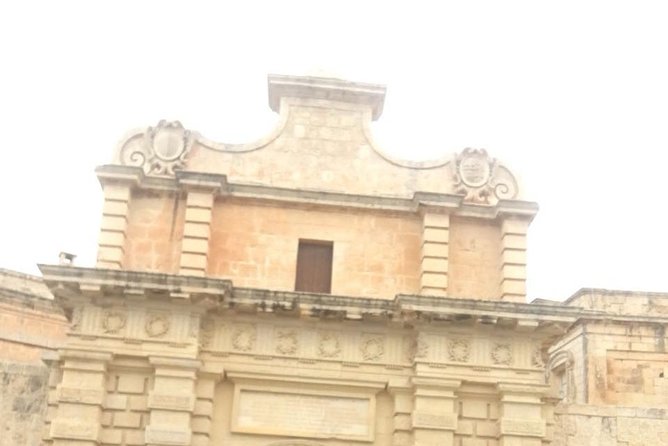
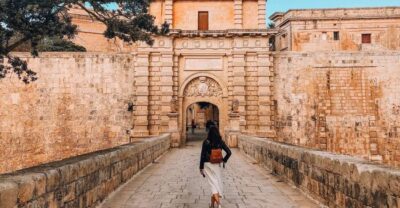
Meet at Mdina Gate, listed with the location code VCM3+V9W, at 2:30 pm. This is a useful starting point because Mdina’s gate immediately puts you in the setting that gives the tour its historical weight. You are not beginning in a modern transport district and then waiting for the sightseeing to start. The old city is the first subject.
The name is commonly written Mdina, though the tour title uses Medina. Mdina is Malta’s historic fortified city, and the route uses it as the first half of a story that continues into Rabat. The two places now feel distinct, but they share an older past as the Roman city of Melita.
With only six people, you should have a good chance to stay close to the guide. That matters in Mdina, where narrow streets and old buildings can make a large group awkward. A small group also suits the style of guiding praised here. Julia, in particular, is described as polite, warm, funny, and highly informed, with a gift for explaining rather than simply reciting dates.
The tour ends back at Mdina Gate. That keeps the route simple, though you should allow extra time afterward if you want to continue exploring Mdina or Rabat independently.
More Mdina and Rabat tours:
- Malta: Highlights of Malta & Mdina Full Day Tour with Lunch
★ 4.4 · 2,688 reviews - Malta: Mdina and Rabat Walking Tour with Catacombs
★ 4.8 · 1,126 reviews - Malta: Mdina, Dingli Cliffs and San Anton Botanical Gardens
★ 4.3 · 991 reviews
St. Paul’s Cathedral and Malta’s long religious story

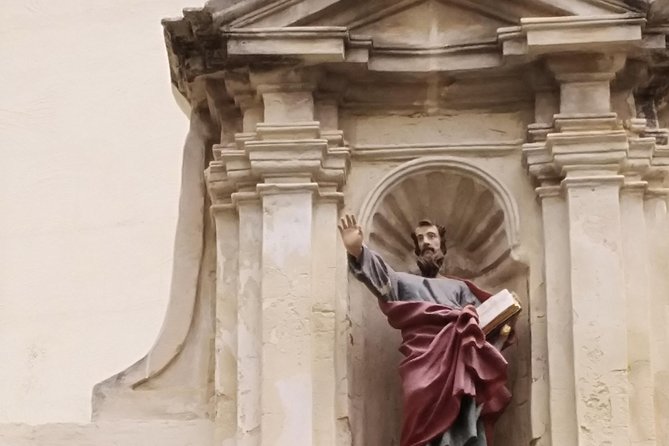
The first major stop is the Cathedral of Saint Paul, described as the most important church among Malta’s 365 churches. It is also the seat of the Diocese. The site has been occupied since the ninth century BC, giving your guide a chance to connect the present church with Malta’s much older past.
That long timeline is one of the strongest reasons to take this walk with a guide. On your own, you can admire the cathedral’s religious importance and architecture, but it is harder to understand what the site represents across so many periods. Here, the focus is not just on a building. It is on the continuity of Maltese settlement, worship, and local identity.
You should check the distinction between seeing a site and entering it. The supplied tour details identify the cathedral as a stop, but they do not promise a separate interior admission or extended visit inside. If you need a full cathedral visit, ask the provider before booking.
The stop also sets up the move toward Rabat. St. Paul is central to Christian tradition in Malta, and Rabat is later presented as the cradle of Christianity on the island. The route therefore has a clear shape: ancient settlement, medieval government, art, Roman remains, then early Christian burial places.
Medieval law courts and the old Universitas
The next stop is the former law courts of the Universitas, the feudal government in medieval Malta. This is a useful pause because it adds civic life to the religious story.
The term Universitas refers to the medieval governing body, not a university in the modern sense. The old courts help you picture Mdina as a place where decisions were made, disputes were handled, and local authority operated under a feudal system.
This kind of stop will appeal to you if you like the less obvious parts of a city. It is not simply another impressive facade. It shows how the city worked. A good guide can make a former administrative building feel relevant by explaining who used it and what role it played.
The walk does not appear to include an extended indoor courtroom visit. Expect an exterior explanation or a short stop connected with the building’s history. That is typical of a compact walking tour, but it means you should not book this experience expecting long museum visits at every location.
Art inside one of Mdina’s oldest houses
The route then reaches one of Mdina’s oldest houses, now used as a museum of fine art collections. The combination of old domestic architecture and art gives the walk a welcome change of subject.
You are not looking only at churches and government buildings. This stop lets you consider how people lived, what objects were valued, and how Malta’s artistic culture fits into the city’s older fabric. The building itself is part of the appeal. A museum placed inside an old house can offer a more intimate setting than a large modern gallery.
The available details do not specify the museum’s name, collection size, or how long you spend inside. I would treat it as a guided highlight rather than a full museum tour. If a particular painting or art period matters to you, ask whether the museum is entered during the walk and how much time is allowed.
For many people, this is a helpful middle point. The tour is not trying to overwhelm you with every major attraction in Mdina. It gives you selected places, then uses the guide’s explanation to connect them.
A completely different kind of day:
- Malta: Gozo & Comino Islands, Blue Lagoon & Seacaves Tour
★ 4.5 · 15,672 reviews - Comino: Blue Lagoon, Crystal Lagoon, and Seacaves Tour
★ 4.6 · 5,673 reviews - Malta: Blue Lagoon, Beaches & Bays Trip by Catamaran
★ 4.7 · 5,496 reviews - Malta: Gozo, Comino, Blue & Crystal Lagoon, & Caves Cruise
★ 4.6 · 5,092 reviews
Malta’s only Roman museum
The Roman stop is especially useful for understanding the relationship between Mdina and Rabat. You visit the only Roman museum in Malta, according to the tour description. That claim makes this a notable part of the route, not just a filler stop between better-known sights.
The Roman museum places Malta within a wider Mediterranean story. The old city of Melita included both areas that are now Mdina and Rabat, so the walk is showing you a historic urban unit that later developed into two neighboring places.
As with the art museum, the information provided does not promise a full museum admission or specify the length of the visit. The itinerary lists the museum as a stop, so you should confirm the exact entry arrangements if indoor museum time is important to you.
Still, the pairing of Roman and Christian sites works well. Roman remains give you the ancient civic setting. Rabat’s catacombs then show how later communities dealt with death, burial, and faith.
Forty-five minutes in quieter Rabat
Rabat is listed as a 45-minute stop, with admission free. This is the part of the walk that changes the mood. Mdina is associated with fortified streets and formal historic buildings, while Rabat is described as a tranquil suburb and the cradle of Christianity in Malta.
The name Rabat means suburb in this context, and its story is closely tied to Mdina. Both formed part of Roman Melita, so the tour is not taking you to a disconnected second destination. It is showing you the other half of the old city.
I like this section because it gives you more than a concentrated run through monuments. You get a sense of how the historic center extends beyond the fortified core. The quieter setting may also make it easier to listen and notice details without the pressure of a crowded sightseeing route.
The 45-minute allocation is enough for an introduction, but not for every church, street, and archaeological site in Rabat. Think of this as a focused orientation. If Rabat interests you, you may want to return later for a longer visit.
Guide quality matters especially here. Julia is praised for mixing history with personal experience and for making the walk enjoyable even in extreme heat. Another account describes Silvia as someone who brings passion to the city’s story and explains Maltese culture as well as its past. The provider lists Silvia, Excursiones en Malta, so you should expect the guide to vary, but the strongest feedback centers on a warm, personal style.
Christian catacombs and the start of Maltese Christianity
One of the Rabat stops is part of the Christian catacombs. Malta has many burial sites, and the tour explains that the vast majority are found in Rabat.
This is a meaningful contrast with the grand public spaces of Mdina. Catacombs reveal private community life, burial customs, and the growth of Christianity. You are moving from institutions that governed or represented society to spaces connected with ordinary people and religious practice.
The details do not name the specific catacomb complex or promise entry into every chamber. Confirm that point if you have a particular archaeological site in mind. The tour description says this is part of the Christian catacombs, so the stop should be understood as an introduction to Rabat’s underground Christian heritage rather than a guarantee of a lengthy archaeological visit.
Because the tour is only about two and a half hours, this portion is likely concise. That can be an advantage if you want a broad first look at Malta. It is less suitable if you prefer to spend an hour studying one archaeological site in detail.
Pastizzi at Is-Serkin, the Crystal Palace Bar
The final stop is the most down-to-earth: Is-Serkin, also called the Crystal Palace Bar. Here you receive pastizzi, a traditional Maltese pastry snack, with a choice of seasonal drink such as tea, coffee, or beer. The tasting portion lasts about 20 minutes and admission is included.
Pastizzi are valued in Malta partly because they are delicious and inexpensive. They are everyday food, not a special-occasion dish designed for tour groups. That makes this ending feel connected to local life. After churches, courts, museums, Roman remains, and catacombs, you sit down with something ordinary and popular.
The choice of drink also makes sense for the season. Hot tea or coffee suits a cold winter afternoon, while a cold beer may be better in summer. One guest completed the walk in very hot weather, while others dealt with wind and cold, so the drink can make the final stop especially welcome.
Do not expect a full meal. Pastizzi are a snack, and the tour does not promise a larger food spread. If you have food allergies, tell the provider when booking. The pastry filling is not specified in the information provided, so ask what is available before eating.
The Crystal Palace Bar stop is also a practical chance to ask your guide about Maltese food and daily life. One particularly useful quality of the guiding style here is the blend of history, culture, and food. You are not just told what the snack is. You get a small window into how people eat cheaply and casually in Malta.
Why the small group changes the experience
The group limit is six people. That is one of the clearest advantages of this tour for me. A small group makes it easier to hear in narrow streets, easier to ask about a confusing historical point, and less likely that the guide will spend the whole walk trying to gather stragglers.
It also supports a more personal style. Julia is praised for being attentive, kind, funny, and able to adjust to difficult weather. Those traits matter more in a small group because the guide’s personality shapes nearly the whole experience.
The tradeoff is that a small tour can feel more dependent on the assigned guide. The strongest accounts specifically praise Julia, while another names Silvia. Both are associated with friendly and passionate guiding, but you cannot assume which person will lead your date.
A 4.7 rating from 19 reviews and a 95 percent recommendation rate suggest a strong record, though the sample is not large. I would read those figures as encouraging rather than conclusive. The consistent praise is more useful than the number itself: people value the guide’s warmth, historical explanations, humor, and attention to the group.
Is $65 good value for two and a half hours?
At $65, this is not the cheapest way to walk around Mdina and Rabat. You can see streets, churches from the outside, and public areas without paying for a guided experience. The price needs to earn its keep through interpretation and convenience.
I think the value is reasonable if you want several sites explained in one compact outing. The tour covers Mdina and Rabat, includes a snack and drink, uses a group of no more than six, and gives you a historical framework that would take more preparation to build alone.
The value is weaker if you want long interior visits, a full meal, or an all-day archaeological tour. The itinerary is broad rather than slow. Several sites are included, but the available details do not promise extensive time inside each museum or monument.
For a first afternoon in the Mdina and Rabat area, I can see the appeal. You get an overview, a local food experience, and practical ideas for places to revisit. The included pastizzi helps, but it is the guide and the small group that justify most of the cost.
Weather, walking, and who should book
You should be comfortable walking and standing for roughly two and a half hours. Most people can participate, and service animals are allowed. The route is near public transportation, which makes the meeting point practical, though the supplied details do not identify specific bus routes.
Weather deserves attention. The tour can be canceled in poor conditions, with the option of another date or a full refund. Even when it runs, Malta can be windy, cold, or intensely hot. Bring water and sun protection in warm weather, and a light layer for the afternoon if conditions look unsettled.
I would recommend this for first-time visitors who want an introduction to Mdina and Rabat without committing to a full-day program. It also suits people who like local food, small groups, and guides who explain how history connects with Maltese culture.
It may not suit you if you dislike walking, need guaranteed indoor access, or want a deep archaeological study of one site. Families and older participants may find the manageable duration useful, but the information does not give a detailed route accessibility assessment, so ask before booking if mobility is a concern.
Free cancellation is available up to 24 hours before the 2:30 pm start for a full refund. Changes or cancellations inside that window are not accepted for a refund, and the provider may also cancel if the minimum number of participants is not met.
Should you book Medina, Rabat and the pastizzi experience?
Book this tour if you want a friendly, compact introduction to Malta’s old capital and its quieter neighbor, with history explained by a small-group guide and a genuine snack at the end. The mix is well chosen: cathedral, medieval government, art, Roman Malta, Christian burial sites, and everyday food.
I would skip it if your priority is lengthy museum entry or a substantial food tour. For most people, though, $65 is fair when the group stays at six, the guide is as personable as Julia or Silvia, and the pastizzi stop gives the afternoon a distinctly Maltese finish.
FAQ
Where does the tour start?
It starts at Mdina Gate in Mdina, Malta. The listed location code is VCM3+V9W.
What time does the tour begin?
The start time is 2:30 pm.
How long does the experience last?
The walking tour lasts approximately two hours and 30 minutes.
Where does the tour finish?
The activity ends back at the meeting point at Mdina Gate.
How many people can join the tour?
The maximum group size is six participants.
Is pastizzi included?
Yes. Pastizzi are included at Is-Serkin, also known as Crystal Palace Bar.
What drink comes with the pastizzi?
The tour includes a seasonal choice of tea, coffee, or beer.
Is admission to the Rabat stop included?
The Rabat stop is listed as 45 minutes with admission free.
Can I cancel for a full refund?
Yes, if you cancel at least 24 hours before the experience start time. Cancellations within 24 hours are not refunded.
Just added in Malta
- Wakeboarding Adventure in Malta: Learn to Ride★ 5.0 · 4 reviews
- Gozo: Wine Tasting and Paired Dinner Experience★ 4.9 · 43 reviews
- Victoria, Gozo: Sunset Walking Food and Drink Tour★ 5.0 · 6 reviews
- World War II Malta Full-Day Walking Tour★ 4.3 · 18 reviews
- Malta: 5 hr Vintage Bus Tour – Mdina & Blue Grotto inc. food★ 5.0 · 22 reviews
- Valletta: Private Massage from a world renowned masseuse★ 4.6 · 9 reviews
- Valletta Street Food & History Tour With Private Transfers★ 4.5 · 15 reviews
- Valletta: Private Walking Tour With A Guide ( Private Tour )★ 5.0 · 1 review
Mdina and Rabat Tours, compared.
Highlights of Malta & Mdina Full Day Tour with Lunch
Read our review →
Mdina, Dingli Cliffs and San Anton Botanical Gardens
Read our review →


Mdina and Rabat Walking Tour inc. Catacombs and St. Paul’s Grotto
Read our review →Browse the lists this tour appears in